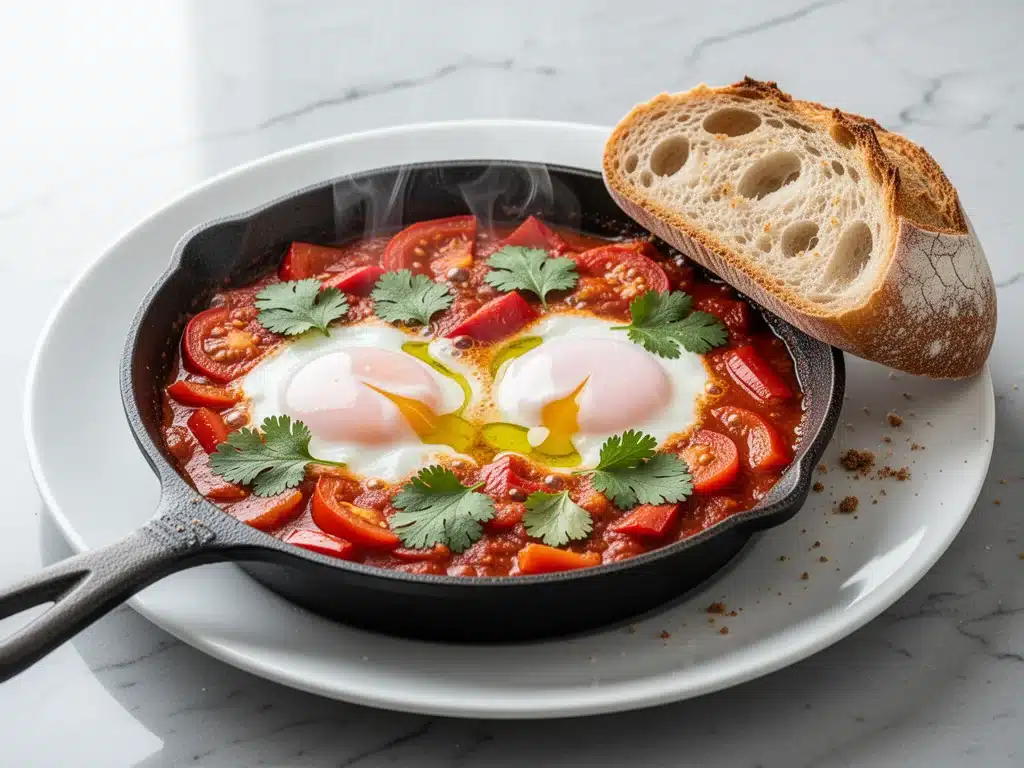
It was one of those Saturday mornings where the sunlight was streaming through the kitchen window, and my partner was still asleep, completely unaware of the chaos about to unfold in our apartment. I had a craving for something that felt fancy but required zero effort. You know that feeling? You want to feel like a chef, but you also really, really want to stay in your pajamas for another hour. That’s when I decided to make shakshuka. Not just any shakshuka—the kind that looks like it came straight out of a trendy Tel Aviv bistro, complete with a dramatic, bubbling red sauce and perfectly poached eggs.
I’ve made this Restaurant-Style Shakshuka with Crusty Bread dozens of times since that lazy morning. It’s become my secret weapon for weekend brunches, and honestly, it’s the only recipe that consistently makes people ask, “Wait, you made this? In our kitchen?” The truth is, it’s incredibly simple, but there’s a specific way to build the sauce that makes all the difference. Most people rush the tomato base, and that’s why their shakshuka tastes like… well, just hot tomatoes. This version takes a little more patience with the spices, and the payoff is huge.
I remember the first time I served this to my friends, they were genuinely impressed. They thought I’d ordered from that expensive place downtown. But here’s the thing about this recipe: it’s forgiving. If your eggs look a little different than the photos online, it’s still delicious. If you use canned tomatoes instead of fresh, it still works. But if you want that restaurant-quality finish, you need to follow the steps closely, especially when it comes to the sauce consistency and the bread. Grab a crusty loaf, and let’s get cooking. This Restaurant-Style Shakshuka with Crusty Bread that impresses every time is about to become your new brunch obsession.
Why You’ll Love This Recipe
There are about ten reasons I keep coming back to this dish, but here are the big ones that make it a staple in our weekly rotation. This isn’t just breakfast; it’s a whole meal experience that feels indulgent without the guilt or the mess.
Zero Stress Brunching — Seriously, this is the ultimate “I want to impress guests but also want to sit down” recipe. You can prep the sauce while your guests chat, and the eggs cook in the same pan. I’ve hosted brunch for eight people with this, and I never once felt stressed because everything cooks in one vessel. No juggling multiple dishes, no last-minute panic.
One Pan Cleanup — I’m not being dramatic when I say this saves my weekends. You sauté the veggies, simmer the sauce, and poach the eggs all in one skillet. At the end, you just wash one pan. That’s it. If you’re someone who dreads the mountain of dishes after a fancy dinner, this is your savior.
Perfectly Balanced Flavors — It’s not just spicy or just sweet. The sweet peppers, the tangy tomatoes, the cumin, the paprika, and the fresh herbs create this complex, warm flavor profile that hits every note. It’s savory, slightly spicy, and deeply satisfying. My husband says it’s better than the shakshuka he had in Morocco, and he’s a tough critic.
Versatile for Any Time of Day — Sure, it’s technically breakfast, but let’s be real. This is great for dinner, too. I’ve made this for weeknight dinners when I’m tired but want something hearty. It’s vegetarian-friendly, gluten-free (if you choose the right bread), and high in protein from the eggs. It’s a crowd-pleaser that works for picky eaters and foodies alike.
Makes You Feel Like a Pro — There’s something deeply satisfying about serving a dish that looks as good as it tastes. The vibrant red sauce against the white eggs, the green cilantro garnish—it’s visually stunning. You’ll feel like you’ve achieved culinary mastery with very little actual effort.
This Restaurant-Style Shakshuka with Crusty Bread that impresses every time is my go-to when I want to treat myself or my loved ones. It’s reliable, delicious, and makes everyone happy. No complicated techniques, just good food that brings people together.
Ingredients You’ll Need
Here’s the best part: you probably have most of these ingredients already. This Restaurant-Style Shakshuka with Crusty Bread that impresses every time relies on simple, accessible items, but the quality of a few key components makes a massive difference. I’m particular about three things here, and I’ll tell you exactly why.
For the Sauce Base
Yellow onion (1 medium, diced / about 200g) — Sweet onions work too, but yellow gives better depth. White onions are too sharp for this. I dice it small so it melts into the sauce.
Red bell pepper (1 large, diced / about 250g) — This adds sweetness and color. Don’t skip it! It balances the acidity of the tomatoes. Green peppers are too bitter for this dish.
Garlic (4 cloves, minced / about 2 tablespoons) — Fresh only. No jarred garlic in this recipe. It changes the flavor profile too much. Mince it finely so it distributes evenly.
Canned crushed tomatoes (28 oz / 800g can) — Use high-quality San Marzano tomatoes if you can find them. They’re sweeter and less acidic. Drain excess liquid if it’s watery, but keep some for the sauce consistency.
Tomato paste (2 tablespoons) — This is the secret weapon. It deepens the tomato flavor and thickens the sauce. Don’t substitute with fresh tomatoes here; the paste is essential for that rich, concentrated taste.
For the Spice Blend
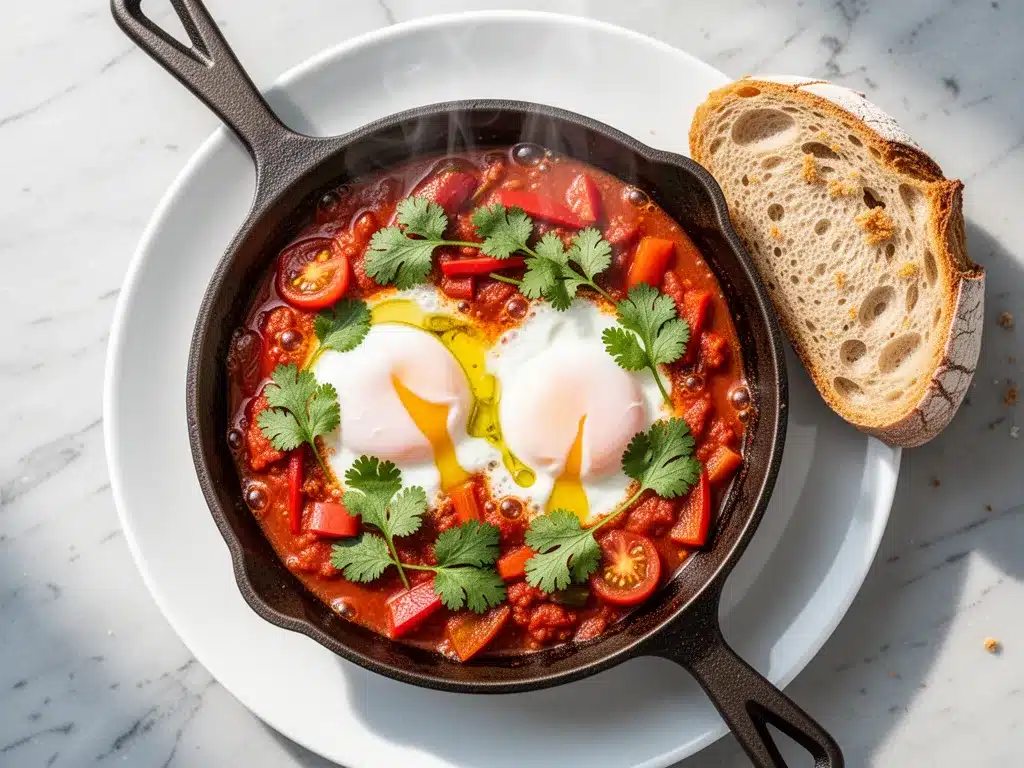
Smoked paprika (2 teaspoons) — This is non-negotiable for that smoky, restaurant-style flavor. Regular paprika is too flat. I always keep a fresh jar because it loses potency over time.
Cumin (1 teaspoon) — Ground cumin adds warmth and earthiness. It’s a classic shakshuka spice. If you don’t have it, the dish will still work but won’t taste authentic.
Cayenne pepper (¼ to ½ teaspoon) — Optional but recommended for a little kick. Start with less if you’re sensitive to spice. You can always add more later.
Salt and black pepper (to taste) — Use kosher salt for better control. Taste as you go.
For the Eggs and Garnish
Eggs (4 large, room temperature) — I use 4 eggs for this skillet, but you can adjust based on size. Room temperature eggs cook more evenly. Cold eggs can shock the sauce.
Feta cheese (½ cup, crumbled / about 60g) — Salty and tangy, it cuts through the richness of the sauce. I crumble it by hand for better distribution.
Fresh cilantro or parsley (¼ cup, chopped) — Adds freshness and color. Cilantro is traditional, but parsley works if you’re not a fan of cilantro. Chiffonade the leaves for a nicer presentation.
Crusty bread (1 loaf, sliced) — Sourdough or ciabatta works best. You need something sturdy enough to soak up the sauce without falling apart. Toast it lightly before serving for extra crunch.
Extra virgin olive oil (2 tablespoons) — For sautéing. Use a good quality oil here—it makes a difference. I keep both regular and extra virgin; use extra virgin for this.
Butter (1 tablespoon) — Optional, but adds richness to the sauce. I add it at the end for a velvety texture.
Lemon wedges (1 lemon) — For squeezing over the top. The acidity brightens the whole dish. Essential for balancing the flavors.
Equipment Needed
You don’t need fancy equipment for this. Here’s what I actually use.
Large skillet or Dutch oven (12-inch) — I use a 12-inch cast iron skillet. It holds heat well and goes from stove to table beautifully. If you don’t have one, a large stainless steel skillet works too. Just make sure it’s wide enough to hold all the ingredients in a single layer.
Wooden spoon — For stirring the sauce. Silicone works too. Don’t use metal on non-stick surfaces.
Sharp knife — For chopping onions, peppers, and herbs. Dull knives make you cry more—learned this the hard way with onions.
Cutting board — Any size works. I use plastic for easier cleanup.
Measuring spoons — Pretty standard stuff. Dollar store versions work fine.
Ladle or large spoon — For making wells in the sauce for the eggs.
Whisk — Optional, but helpful for blending the tomato paste and spices into the sauce smoothly.
How to Make It: Step-by-Step
Alright, let’s make this! I’m walking you through exactly how I do it, including the little tricks I’ve picked up over the years. This Restaurant-Style Shakshuka with Crusty Bread that impresses every time is easier than you think, but precision matters.
Step 1: Prep Your Ingredients (5 minutes)
Before you start cooking, chop your onion, dice the bell pepper, and mince your garlic. Measure out all your spices. I know it seems fussy, but it makes the actual cooking way less stressful. Grate your feta and chop the cilantro. Once you start cooking, things move fast, and you don’t want to be scrambling for ingredients.
Step 2: Sauté the Aromatics (5 minutes)
Heat the olive oil in your large skillet over medium heat. Add the diced onion and cook for 3-4 minutes until it starts to soften and become translucent. Add the diced bell pepper and cook for another 2-3 minutes until it starts to soften. Add the minced garlic and cook for 1 minute, stirring constantly. The garlic should smell amazing but not brown—browned garlic tastes bitter.
Step 3: Build the Sauce (5 minutes)
Add the tomato paste to the skillet and stir it into the vegetables. Cook for 1 minute to toast the paste. This step is crucial for developing depth of flavor. Add the smoked paprika, cumin, cayenne, salt, and black pepper. Stir well to coat the vegetables. Pour in the crushed tomatoes. Stir everything together until well combined. Bring the sauce to a gentle simmer.
Step 4: Simmer the Sauce (10 minutes)
Reduce the heat to low-medium and let the sauce simmer for 10 minutes. Stir occasionally. The sauce should thicken and the flavors should meld. If it looks too thick, add a splash of water. If it’s too thin, let it simmer a bit longer. The sauce should coat the back of a spoon. Taste and adjust seasoning if needed. Add the butter at the end for richness.
Step 5: Create Wells for the Eggs (2 minutes)
Once the sauce is ready, use a large spoon to make 4 wells in the sauce. Make them deep enough to hold the eggs without them breaking. Crack each egg gently into a small bowl first, then slide it into a well. This prevents shell fragments and helps keep the yolk intact. Space the wells evenly in the skillet.
Step 6: Poach the Eggs (5-7 minutes)
Cover the skillet with a lid. Let the eggs cook in the simmering sauce for 5-7 minutes, depending on how runny you like your yolks. Check at 5 minutes. The whites should be set, and the yolks should still be jiggly. If you prefer firmer yolks, let it cook for another 1-2 minutes. Do not overcook, or the eggs will become rubbery.
Step 7: Garnish and Serve
Remove the skillet from heat. Sprinkle the crumbled feta cheese and chopped cilantro or parsley over the top. Serve immediately with crusty bread. Squeeze fresh lemon juice over the eggs before eating. The bread is essential for dipping into the sauce and yolks.
Total Time: About 25 minutes (5 minutes prep, 20 minutes cooking)
Expert Tips & Tricks
Here’s everything I’ve learned from making this dozens of times. These tips will save you from my mistakes.
Toast the Spices — Cooking the tomato paste and spices before adding the tomatoes releases their essential oils and deepens the flavor. This is the #1 tip for restaurant-quality taste. I forgot it once and the sauce was just okay instead of amazing.
Don’t Skip the Simmer — Letting the sauce simmer for 10 minutes allows the flavors to meld and the sauce to thicken. Rushing this step results in a watery, bland sauce. Patience pays off.
Room Temperature Eggs — Cold eggs can cause the sauce to cool down too much when added. Let your eggs sit out for 15 minutes before cooking. If you forget, soak them in warm water for a few minutes.
Control the Heat — Keep the heat low-medium when poaching the eggs. High heat will cook the eggs too fast and make them rubbery. Low heat ensures tender, creamy yolks.
Use a Lid — Covering the skillet traps steam and helps cook the tops of the eggs without flipping them. This is key for achieving that perfect poached look.
Toast Your Bread — Toasting the crusty bread adds texture and prevents it from getting soggy too quickly. Lightly toast it before serving for the best experience.
Variations & Substitutions
Once you’ve nailed the basic version, here’s how you can mix it up. I’ve tried all of these.
Spicy Version — Add 1 teaspoon of red pepper flakes or a diced jalapeño with the onions. For more heat, use hot paprika instead of smoked.
Veggie-Loaded — Add sliced mushrooms or zucchini with the onions. Cook until golden brown. Adds earthiness and makes it feel fancier.
Herb-Focused — Add a handful of fresh spinach or kale to the sauce in the last 2 minutes. It wilts right in and adds nutrition.
Cheese Swap — Use goat cheese instead of feta for a tangier flavor. Or use mozzarella for a meltier texture.
Protein Boost — Add cooked chorizo or bacon bits to the sauce for a meaty version. Or add chickpeas for extra plant-based protein.
Dairy-Free — Skip the feta and butter. Use olive oil throughout. The dish is naturally dairy-free without these additions.
Gluten-Free — Serve with gluten-free bread or use corn tortillas for dipping. Everything else is naturally gluten-free.
Serving & Storage
How to Serve: I usually serve this straight from the skillet at the dinner table—it looks rustic and stays warm. But here are other ways I’ve enjoyed it:
Side Dishes: A simple green salad with balsamic vinaigrette, roasted asparagus, or a slice of avocado. Garlic bread is a classic pairing, but since we’re serving crusty bread for dipping, it’s optional.
Toppings Bar: When I have guests, I put out: extra feta, red pepper flakes, fresh cilantro, lemon wedges, and hot sauce. Everyone customizes their bowl.
Wine Pairing: Not a wine expert, but my wine-snob friend says a crisp Pinot Grigio or a light-bodied Rosé works great with this.
Storage Instructions:
Refrigerator: Store in an airtight container for up to 3 days. The sauce will thicken in the fridge—totally normal. The eggs may continue to cook slightly, so reheat gently.
Reheating: Best method: Add to a skillet with a splash of water or broth over low heat. Cover and heat gently until warmed through. Stir carefully to avoid breaking the yolks. Microwave method: Heat in 30-second intervals, stirring between. It may not look as pretty, but it still tastes good.
Freezing: Honestly, this doesn’t freeze well because of the eggs. The texture changes, and the yolks can become rubbery. Make it fresh or store in the fridge for up to 3 days.
Nutrition Information
I’m not a nutritionist, but here’s the breakdown if you’re tracking.
Per Serving (based on 4 servings):
– Calories: 320
– Protein: 18g
– Carbs: 22g
– Fiber: 4g
– Sugar: 8g
– Fat: 16g
– Saturated Fat: 5g
– Cholesterol: 210mg
– Sodium: 650mg
What’s Good: High in protein from eggs and feta. Good source of vitamins A and C from peppers and tomatoes. Rich in lycopene from cooked tomatoes.
What to Know: Higher in sodium from feta and added salt. Contains dairy and eggs. Moderate in calories, but very filling.
My Take: Look, this is a hearty, flavorful meal. It’s not a diet recipe, but it’s nutritious and balanced. When I want to make it lighter, I reduce the feta and add more vegetables. But usually? I just eat a reasonable portion and enjoy it.
Final Thoughts
So that’s my go-to Restaurant-Style Shakshuka with Crusty Bread that impresses every time! I’ve probably talked your ear off at this point, but when you make a recipe this often, you have a lot to say about it.
This has saved weekend brunches more times than I can count. It’s my answer to “what’s for brunch” when I want something special but don’t want to spend all morning in the kitchen. My family is happy, my guests are impressed, and I’m happy because I’m not stressed about cooking.
Make it yours! Try different add-ins, swap in your favorite vegetables, adjust the spice level. The best recipes are the ones you adapt to your family’s tastes. If you make this, drop a comment and let me know what you think! I love hearing how recipes turn out in your kitchen. And if something doesn’t work, tell me that too—I’m here to help troubleshoot.
Happy cooking! And I hope your kitchen smells half as good as mine does right now.
Frequently Asked Questions
Can I use fresh tomatoes instead of canned?
You can, but the texture and flavor will be different. Fresh tomatoes have more water and less concentrated flavor. If you use fresh, you’ll need about 4-5 large tomatoes, diced, and you’ll need to cook the sauce longer to reduce the liquid. I recommend canned for consistency and ease, but fresh works in a pinch.
Why did my sauce turn out watery?
Usually means you didn’t simmer it long enough, or the tomatoes were too watery. Let the sauce simmer for at least 10 minutes to reduce. If you’re using fresh tomatoes, cook it even longer. You can also add a tablespoon of tomato paste to thicken it.
Can I make this ahead for a dinner party?
Sort of. Make the sauce up to 2 days ahead and store in the fridge. Reheat the sauce gently before adding the eggs. Cook the eggs fresh right before serving (takes 10 minutes). It won’t be quite as good as fresh, but it’s close and saves you stress during the party.
Can I use a non-stick skillet?
Yes, absolutely. Non-stick works great for this recipe. Just make sure it’s large enough to hold all the ingredients. Cast iron is ideal for heat retention, but non-stick is easier to clean.
How do I know when the eggs are done?
The whites should be fully set, and the yolks should still be jiggly. Check at 5 minutes. If you prefer firmer yolks, let it cook for another 1-2 minutes. The residual heat will continue to cook the eggs slightly after removing from heat.
Can I add meat to this?
Absolutely! Cooked chorizo, bacon, or sausage pairs beautifully with shakshuka. Add the meat to the skillet after sautéing the onions and peppers, before adding the tomatoes. Drain excess fat first.
What kind of bread goes best with shakshuka?
Crusty bread like sourdough, ciabatta, or French bread is ideal. You want something sturdy enough to soak up the sauce without falling apart. Toast it lightly before serving for extra crunch and to prevent sogginess.
Pin This Recipe!
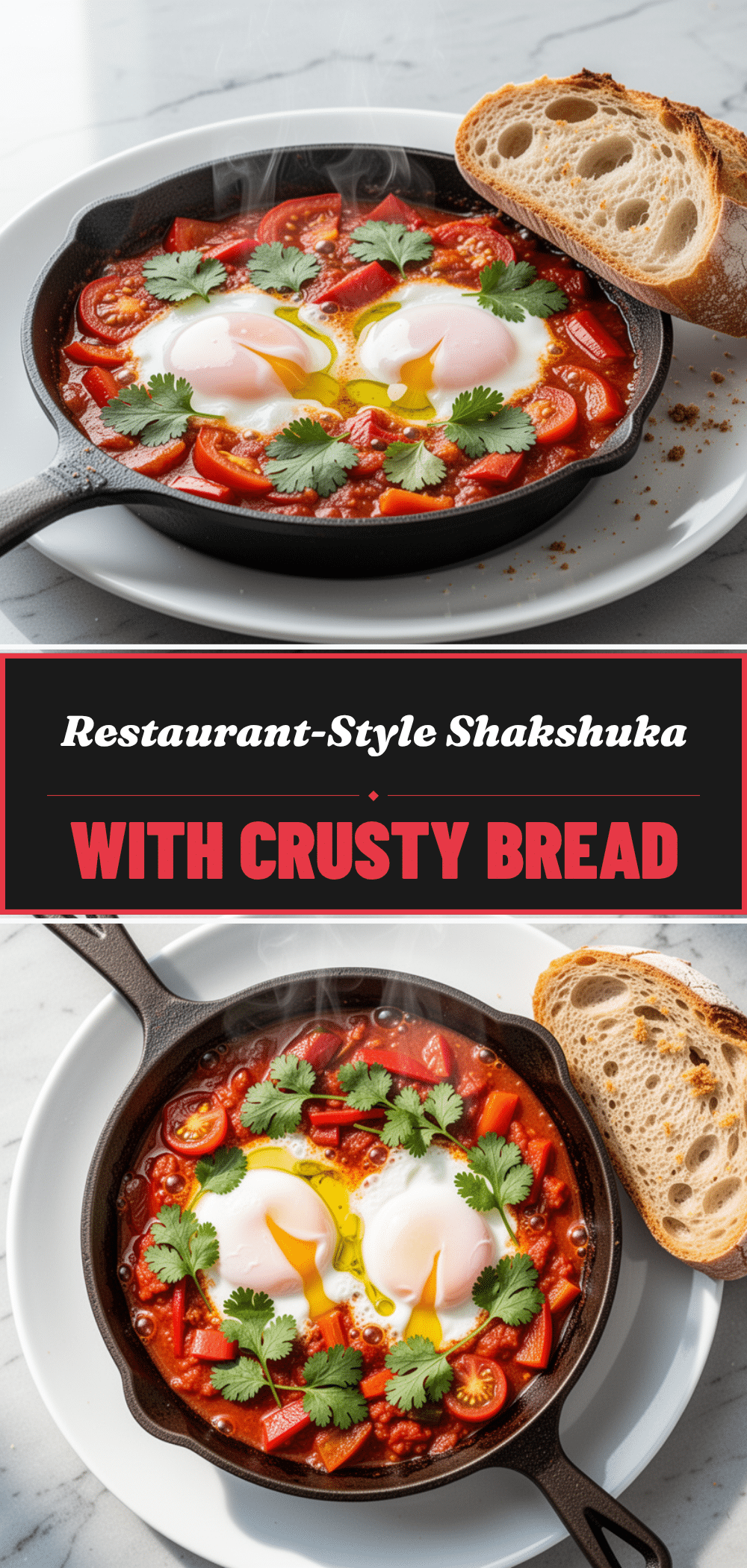
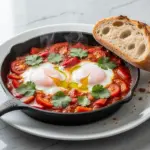
Restaurant-Style Shakshuka with Crusty Bread
- Total Time: 25 minutes
- Yield: 4 servings 1x
Description
A simple yet impressive one-pan brunch dish featuring a rich, spiced tomato sauce with perfectly poached eggs, served with crusty bread.
Ingredients
- 2 tablespoons extra virgin olive oil
- 1 medium yellow onion, diced
- 1 large red bell pepper, diced
- 4 cloves garlic, minced
- 2 tablespoons tomato paste
- 2 teaspoons smoked paprika
- 1 teaspoon ground cumin
- 1/4 to 1/2 teaspoon cayenne pepper
- Salt and black pepper to taste
- 1 can (28 oz / 800g) crushed tomatoes (San Marzano recommended)
- 4 large eggs, room temperature
- 1 tablespoon butter (optional)
- 1/2 cup crumbled feta cheese
- 1/4 cup fresh cilantro or parsley, chopped
- 1 loaf crusty bread (sourdough or ciabatta), sliced
- 1 lemon, cut into wedges
Instructions
- Prep ingredients: Dice the onion, bell pepper, and mince the garlic. Measure out spices and chop herbs.
- Heat olive oil in a 12-inch large skillet over medium heat. Add diced onion and cook for 3-4 minutes until softened.
- Add diced bell pepper and cook for 2-3 minutes until softened. Add minced garlic and cook for 1 minute until fragrant.
- Stir in tomato paste and cook for 1 minute to toast. Add smoked paprika, cumin, cayenne, salt, and pepper; stir to coat vegetables.
- Pour in crushed tomatoes and stir to combine. Bring to a gentle simmer.
- Reduce heat to low-medium and simmer the sauce for 10 minutes until thickened. Stir occasionally. Add butter at the end if using.
- Use a large spoon to create 4 wells in the sauce. Crack eggs into small bowls first, then gently slide them into the wells.
- Cover the skillet with a lid and cook for 5-7 minutes until egg whites are set and yolks are jiggly.
- Remove from heat. Sprinkle with crumbled feta and chopped herbs.
- Serve immediately with toasted crusty bread and lemon wedges.
Notes
Use room temperature eggs to prevent shocking the sauce. Toast the spices and tomato paste before adding tomatoes for deeper flavor. Do not overcook the eggs or they will become rubbery. The sauce can be made ahead and reheated, but eggs should be cooked fresh.
- Prep Time: 5 minutes
- Cook Time: 20 minutes
- Category: Breakfast
- Cuisine: Middle Eastern
Nutrition
- Serving Size: 1 skillet portion wi
- Calories: 320
- Sugar: 8
- Sodium: 650
- Fat: 16
- Saturated Fat: 5
- Carbohydrates: 22
- Fiber: 4
- Protein: 18
Keywords: shakshuka, brunch recipe, one pan meal, eggs in tomato sauce, vegetarian breakfast, restaurant style shakshuka, easy brunch