It was 2 AM. The kitchen smelled like regret and burnt hair. I was staring into a blackened Dutch oven, holding a wooden spoon that had long since surrendered to the heat, wondering if I had just ruined my grandmother’s legacy and my dignity in one fell swoop. This was my fifth attempt at making real New Orleans Shrimp and Andouille Gumbo, and every single time, I’d panicked when the roux turned too dark, dumped it out, and started over.
But this time? This time I didn’t panic. I remembered what my Uncle Ray used to say: “If it looks like molasses and smells like chocolate, you’re good. If it smells like burnt toast, you’re doomed.” So I stood there, stirring slowly, watching that dark liquid swirl, listening to the sizzle change pitch. And then, I added the holy trinity—onions, celery, and bell peppers—and the smell of caramelized vegetables cut through the smoke. That’s when I knew I’d finally nailed it.
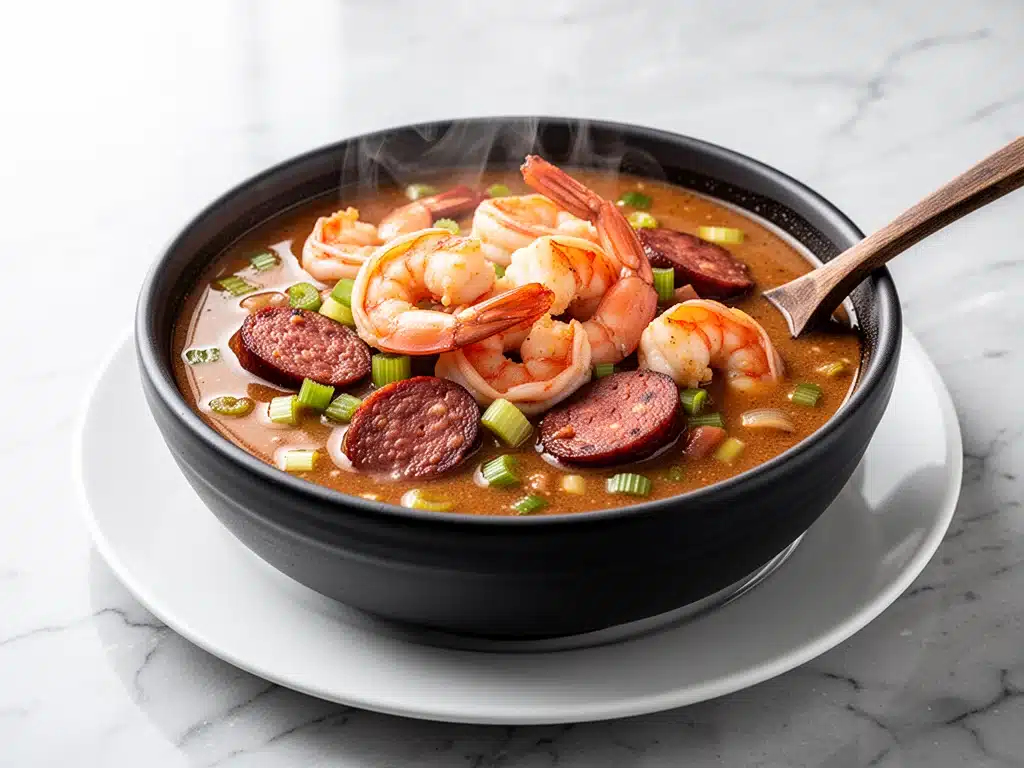
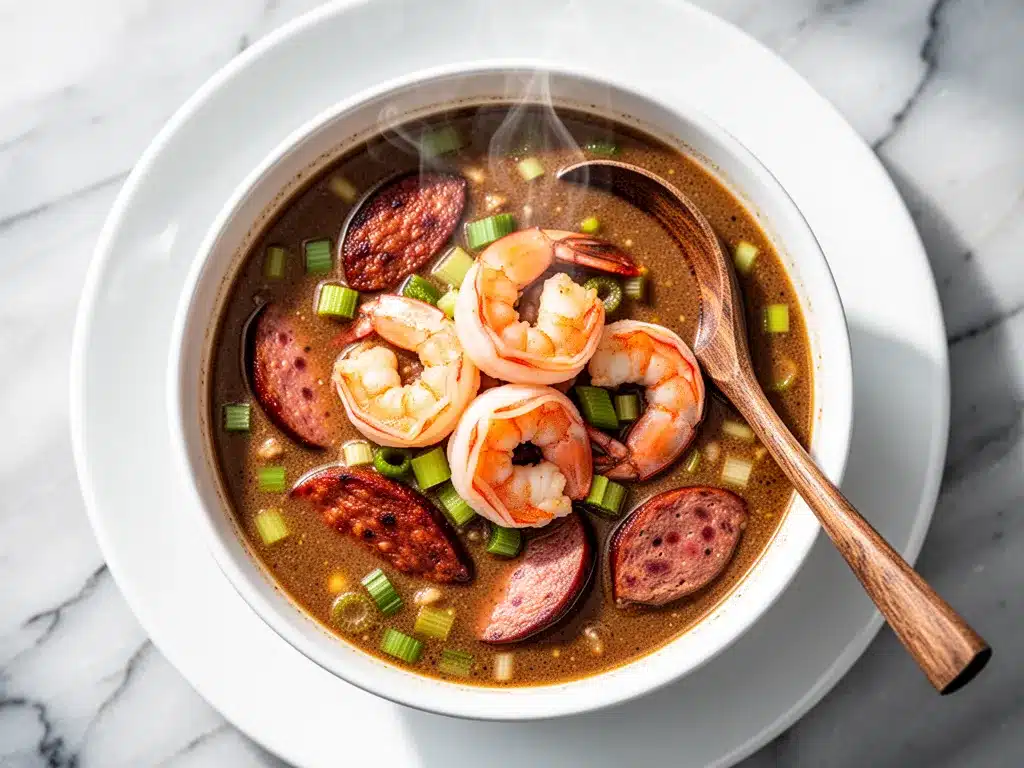
That night, I didn’t just make a dinner; I made a memory. The gumbo was rich, smoky, and deeply complex, with plump shrimp and spicy sausage swimming in a roux that was perfect. It was the kind of dish that makes you pull up a chair and stay for hours. Since then, I’ve made this gumbo more times than I can count. It’s become my go-to for chilly nights, family gatherings, and whenever I need a hug in a bowl. If you’ve been intimidated by gumbo, let me tell you: it’s not as scary as it looks. It’s just patience and a little bit of heat. And once you taste this Real New Orleans Shrimp and Andouille Gumbo, you’ll want to make it on repeat, too.
Why You’ll Love This Gumbo Recipe
There’s something magical about gumbo. It’s not just a stew; it’s a conversation starter, a comfort food, and a cultural artifact all rolled into one. I’ve served this to picky eaters, gumbo snobs, and people who swear they “don’t like seafood,” and every single person has asked for the recipe. Here’s why this version has earned its spot in my regular rotation:
- It’s Actually Authentic — I didn’t cut corners. This recipe uses the classic dark roux method and the holy trinity. No shortcuts, no canned soup bases. Just real ingredients and real flavor. It tastes like I learned it in a New Orleans kitchen.
- One-Pot Wonder — Sure, it takes time, but it’s mostly hands-off stirring. There’s no chopping mountains of veggies while simultaneously managing three pans. You prep once, stir often, and let it do its thing. Cleanup is a breeze.
- Freezer-Friendly — Gumbo tastes even better the next day (or the third day). I make a big batch on Sunday, freeze half in portions, and have restaurant-quality dinner ready to go on busy weeknights. It reheats beautifully.
- Customizable — Got extra chicken? Throw it in. Out of andouille? Use smoked sausage. Love oysters? Add them. This recipe is a canvas for whatever you have in your fridge. It’s forgiving and flexible.
- Deep, Complex Flavor — The dark roux gives this gumbo a nutty, earthy depth that you just can’t get with flour-thickened stews. It’s rich without being heavy, spicy without being overwhelming. It’s the perfect balance.
This isn’t just dinner; it’s an experience. It’s the kind of meal that brings people together, that makes your house smell incredible, and that leaves everyone asking, “What is that magic ingredient?” The answer? Patience. And a lot of good olive oil.
Ingredients You’ll Need
Before we dive into the stirring marathon, let’s talk about what goes into this pot. Some of these are pantry staples, but a few are key to getting that authentic New Orleans flavor. I’ve included metric measurements for my international friends, but I measure in cups because that’s what my heart speaks.
For the Dark Roux
Vegetable oil (1 cup / 240ml) — This is the base. I use a neutral oil with a high smoke point. Canola or vegetable oil works best. Don’t use olive oil here; it’ll burn too fast. You’ll need a full cup, so have it ready.
All-purpose flour (1 cup / 120g) — Equal parts oil and flour. I sift mine to remove lumps, but it’s not strictly necessary. Just make sure it’s fresh.
The Holy Trinity
Yellow onion (2 large, diced / about 400g) — The foundation of Louisiana cooking. Sweet and aromatic. Don’t skip this; it provides the bulk and sweetness.
Green bell pepper (2 medium, diced / about 300g) — Adds a fresh, slightly bitter crunch that balances the richness. Green is traditional; red or yellow works but is sweeter.
Celery (3 stalks, diced / about 150g) — Earthy and aromatic. This is the third pillar of the holy trinity. Make sure it’s crisp, not limp.
The Protein & Broth
Andouille sausage (1 pound / 450g, sliced) — This is non-negotiable for authentic flavor. It’s smoky, spicy, and garlicky. If you can’t find real andouille, smoked kielbasa is a decent substitute, but it won’t be the same. Look for it in the meat section, often near other specialty sausages.
Chicken thighs (2 pounds / 900g, boneless, skinless, cubed) — I use thighs because they stay juicy. Chicken breast dries out in the long simmer. Season them well before adding.
Large shrimp (1 pound / 450g, peeled and deveined) — Fresh is best, but frozen works if you thaw them properly. Don’t overcook these! They’ll turn into rubber if you’re not careful.
Chicken stock (6 cups / 1.5 liters) — Use low-sodium so you can control the salt. Homemade is ideal, but a good quality store-bought stock works fine.
Tomato paste (2 tablespoons) — Adds depth and a hint of acidity. It’s not a tomato gumbo, so don’t add more, or it’ll taste like pasta sauce.
Seasonings & Aromatics
Garlic (6 cloves, minced / about 3 tablespoons) — Yes, six cloves. Gumbo loves garlic. Fresh only. Jarred garlic tastes metallic in this context.
Dried thyme (2 teaspoons) — Earthy and fragrant. If you have fresh thyme, use 1 tablespoon, but add it at the end.
Cayenne pepper (1 teaspoon) — Adjust to taste. I like it hot, but start with half a teaspoon if you’re sensitive to spice. You can always add more.
Bay leaves (2 leaves) — Essential for that slow-simmered depth. Remove before serving.
Filé powder (1 tablespoon) — The secret weapon. Made from ground sassafras leaves, it thickens and adds a unique earthy flavor. Add it off the heat at the very end. Do not boil filé, or it gets stringy.
Salt and black pepper — To taste. The andouille and stock have salt, so taste before adding more.
The Finish
Green onions (4 stalks, sliced) — For garnish. Adds fresh crunch and color.
Cajun seasoning (1 tablespoon) — I use my homemade blend, but Tony Chachere’s or Slap Ya Mama works too. Adjust based on how spicy your andouille is.
Equipment Needed
You don’t need fancy gadgets for this. Here’s what I actually use, and why it matters.
Dutch oven — I use a 7-quart cast iron Dutch oven. It’s heavy, holds heat well, and prevents hot spots that burn the roux. A heavy-bottomed pot works too, but avoid thin aluminum pans.
Wooden spoon — Essential for stirring the roux. Metal spoons can scratch the pot, and silicone might melt if the roux gets too hot. Wood is your friend.
Whisk — For mixing the flour and oil at the start. It helps incorporate the flour smoothly.
Sharp knife and cutting board — For prepping the holy trinity and sausage. A dull knife makes dicing onions a nightmare.
Large ladle — For serving. Gumbo is thick, so a ladle with a wide bowl works best.
Colander — For rinsing the shrimp if you’re using frozen ones.
Measuring cups and spoons — Accuracy matters, especially with the roux ratio.
How to Make It: Step-by-Step
Alright, let’s make this! I’m walking you through exactly how I do it, including the little tricks I’ve picked up over the years. Grab a sturdy spoon and a patient heart.
Step 1: Make the Dark Roux (30-45 minutes)
This is the most critical step. In your Dutch oven, combine 1 cup of vegetable oil and 1 cup of flour over medium heat. Whisk them together until smooth. Then, turn the heat down to medium-low. This is a slow dance. Stir constantly. You’re looking for a color change from blonde to peanut butter to mahogany to dark chocolate. It will take 30 to 45 minutes. Do not walk away. Do not check your phone. If you let it burn, you start over. When it smells like hot chocolate and looks like the color of a copper penny, it’s ready. This takes patience, but it’s the soul of the gumbo.
Step 2: Add the Holy Trinity (5 minutes)
As soon as the roux hits that dark chocolate stage, immediately add the diced onions, bell peppers, and celery. Stir vigorously. The vegetables will stop the cooking of the roux and start to sweat. This should happen quickly, so have your veggies prepped and ready. Stir for about 5 minutes until the onions are translucent.
Step 3: Sauté the Sausage and Chicken (10 minutes)
Add the sliced andouille sausage and the cubed chicken thighs. Stir everything together and cook for about 10 minutes, until the sausage is browned and the chicken is seared on all sides. This builds flavor layers. The fat from the sausage will mix with the roux, creating a rich base.
Step 4: Simmer the Gumbo (45-60 minutes)
Pour in the chicken stock and add the tomato paste, garlic, thyme, cayenne, bay leaves, and Cajun seasoning. Stir well to combine. Bring it to a boil, then reduce the heat to low. Cover partially and let it simmer for 45 minutes to 1 hour. Stir occasionally to prevent sticking. The gumbo will thicken and the flavors will meld. If it gets too thick, add a splash more stock. If it’s too thin, simmer uncovered.
Step 5: Add the Shrimp (5 minutes)
Once the chicken is tender and the gumbo has thickened, add the shrimp. Stir them in and cook for just 3-5 minutes. Shrimp cook very quickly. You’ll know they’re done when they turn pink and opaque. Do not overcook them, or they’ll become tough and rubbery.
Step 6: Finish with Filé (2 minutes)
Remove the pot from the heat. Take out the bay leaves. Sprinkle in the filé powder gradually, stirring constantly. Filé thickens the gumbo and adds its signature earthy flavor. Remember, never boil gumbo after adding filé, or it will become stringy. Taste and adjust salt and pepper as needed.
Step 7: Serve
Ladle the gumbo into bowls over steamed white rice. Garnish with sliced green onions. Serve with hot sauce on the side. Enjoy with crusty bread if you’re feeling fancy.
Total Time: About 2 hours (45 minutes active, 1 hour 15 minutes simmering)
Expert Tips & Tricks
Here’s everything I’ve learned from making this dozens of times. These tips will save you from my mistakes.
The Roux is Key — I can’t stress this enough. A light roux makes a thin, bland gumbo. A dark roux makes a rich, complex, authentic gumbo. If you’re nervous, set a timer. Check the color every 5 minutes. When it smells like chocolate, you’re close. When it smells like burnt toast, you’ve failed. Start over.
Stir Constantly — Not just at the start. Stir the roux every 2-3 minutes. Hot spots can burn the bottom. Use a heat diffuser if your stove runs hot.
Don’t Rush the Veggies — Let the onions, peppers, and celery sweat properly. They should be soft and sweet before you add the liquid. This builds the flavor base.
Shrimp Last — Shrimp cook in minutes. If you add them at the beginning, they’ll be tough. Add them at the very end, just before serving.
Filé Off Heat — Always add filé powder after removing the pot from the heat. Boiling filé ruins its texture and flavor.
Make it Ahead — Gumbo tastes better the next day. Make it a day ahead, refrigerate, and reheat gently. The flavors will deepen.
Freeze It — Gumbo freezes well for up to 3 months. Leave out the shrimp if you’re freezing, and add fresh shrimp when you reheat. Or freeze with shrimp, but know they might be slightly softer upon reheating.
Variations & Substitutions
Once you’ve nailed the basic version, here’s how you can mix it up. I’ve tried all of these.
Cajun Chicken Gumbo — Skip the shrimp and add extra chicken thighs. This is a hearty, meat-heavy version.
Seafood Gumbo — Add crab meat, oysters, or crawfish along with the shrimp. This is luxurious and expensive, but worth it for special occasions.
Vegan Gumbo — Use vegetable stock, skip the meat, and add extra vegetables like okra and mushrooms. Use a vegan roux (oil and flour). It’s surprisingly good.
Gluten-Free Gumbo — Use gluten-free flour for the roux. Everything else is naturally gluten-free. Check your Cajun seasoning for hidden gluten.
Spicy Gumbo — Add more cayenne, hot sauce, or jalapeños. Serve with extra hot sauce on the side.
Mild Gumbo — Use mild andouille or smoked sausage. Reduce or omit cayenne. This is great for kids or those who don’t like heat.
Serving & Storage
How to Serve
I usually serve this straight from the pot at the dinner table. It’s rustic and communal. Here are some side dishes that pair well:
- White rice — Essential. Serve it in the center of the bowl.
- Crusty bread — French bread or cornbread for dipping.
- Coleslaw — A creamy slaw cuts through the richness.
- Green salad — A simple vinaigrette salad adds freshness.
Storage Instructions
Refrigerator: Store in an airtight container for up to 4 days. The gumbo will thicken in the fridge. Reheat gently on the stove, adding a splash of stock if needed.
Freezer: Freeze for up to 3 months. Leave out the shrimp if freezing. Thaw in the fridge overnight and reheat gently.
Reheating: Use a saucepan over low heat. Stir frequently. Add stock or water if it’s too thick. Do not microwave, as it can heat unevenly and make the shrimp tough.
Nutrition Information
I’m not a nutritionist, but here’s the breakdown if you’re tracking. This is per serving (based on 8 servings).
- Calories: 450
- Protein: 35g
- Carbs: 25g
- Fiber: 3g
- Sugar: 4g
- Fat: 22g
- Saturated Fat: 5g
- Cholesterol: 120mg
- Sodium: 800mg
This is a hearty meal, rich in protein and flavor. It’s not a diet food, but it’s balanced with vegetables and lean protein. Enjoy in moderation.
Final Thoughts
So that’s my Real New Orleans Shrimp and Andouille Gumbo! I’ve probably talked your ear off at this point, but when you make a recipe this often, you have a lot to say about it. This gumbo has saved weeknight dinners more times than I can count. It’s my answer to “what’s for dinner” when I want something comforting, flavorful, and deeply satisfying. My family loves it, my friends beg for it, and I make it because it brings me joy.
Make it yours! Try different seafood, adjust the spice, or add your favorite vegetables. The best recipes are the ones you adapt to your family’s tastes. If you make this, drop a comment and let me know what you think! I love hearing how recipes turn out in your kitchen. And if something doesn’t work, tell me that too—I’m here to help troubleshoot.
Happy cooking! And I hope your kitchen smells half as good as mine does right now.
Frequently Asked Questions
Q: Can I use chicken breast instead of thighs?
A: You can, but chicken thighs are better. They stay juicy and tender during the long simmer. Chicken breast can dry out and become stringy. If you must use breast, cut it into larger chunks and monitor the cooking time closely.
Q: Why is my gumbo too thin?
A: It might need more time to simmer. The roux thickens as it cooks, but it takes time. If it’s still too thin after an hour, simmer uncovered to reduce. You can also add a slurry of cornstarch and water, but this isn’t traditional. The best thickener is time and a good dark roux.
Q: Can I make this in a slow cooker?
A: It’s possible, but the roux is tricky. Make the roux on the stove first, then add everything to the slow cooker. Cook on low for 6-8 hours. Add shrimp in the last hour. The texture won’t be quite as rich as stovetop, but it’s easier.
Q: What is filé powder?
A: Filé powder is made from dried and ground sassafras leaves. It’s a traditional thickener and flavoring in Louisiana cooking. It adds an earthy, unique taste. Never boil it, or it becomes stringy. Add it off the heat at the end.
Q: Can I freeze gumbo with shrimp in it?
A: It’s better to freeze without shrimp. Shrimp can become rubbery when frozen and reheated. Add fresh shrimp when you reheat the gumbo. If you must freeze with shrimp, know that the texture will change.
Q: How spicy is this gumbo?
A: It’s moderately spicy, thanks to the andouille and cayenne. You can adjust the heat by using mild sausage or reducing the cayenne. Serve with hot sauce on the side so everyone can customize their bowl.
Q: Can I use okra in this gumbo?
A: Absolutely! Okra is a traditional gumbo thickener and adds a unique texture. Slice fresh okra and add it with the holy trinity. If you’re worried about slime, fry the okra first or use frozen okra.
Pin This Recipe!
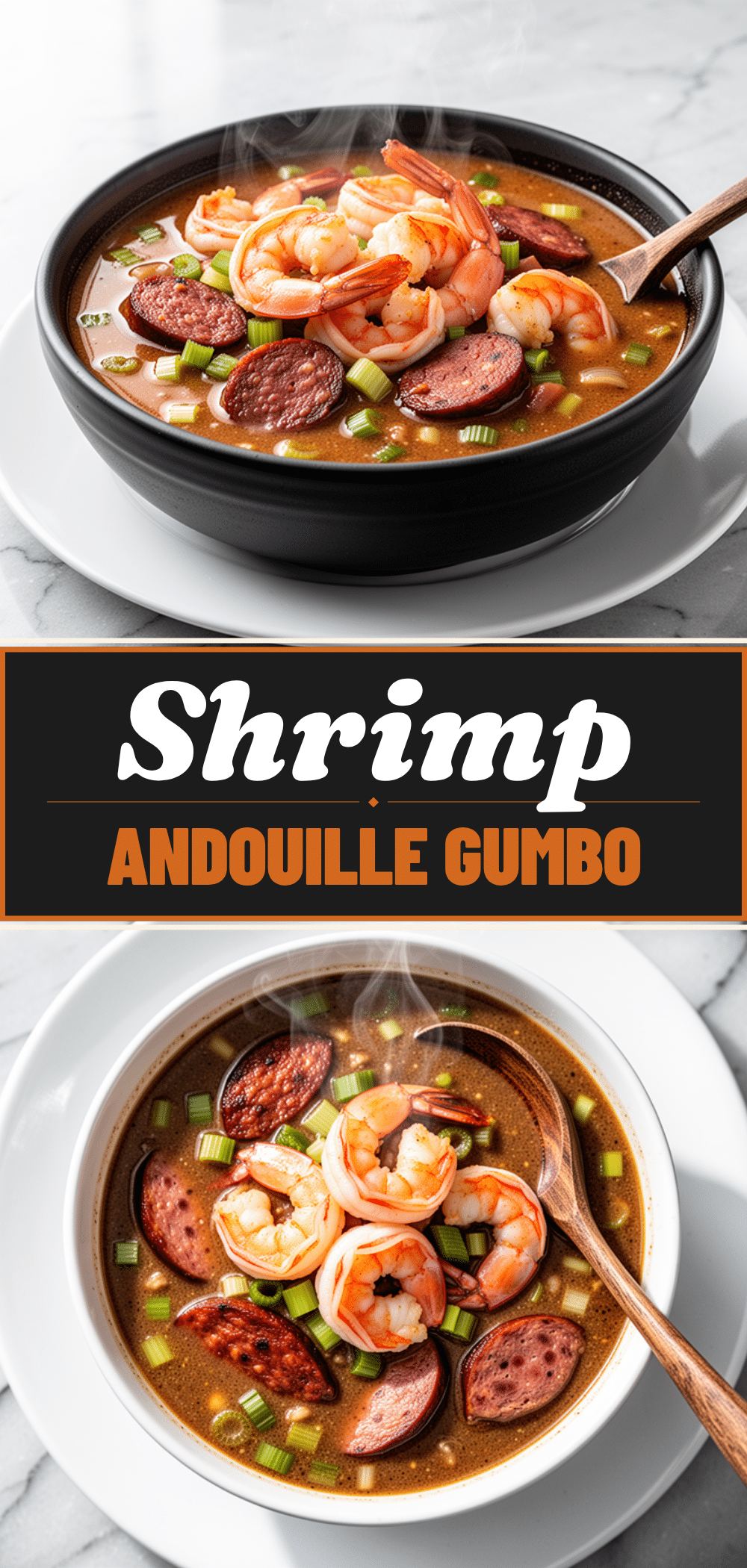

Real New Orleans Shrimp Gumbo: Best Easy Recipe
- Total Time: 2 hours
- Yield: 8 servings 1x
Description
An authentic, rich, and smoky New Orleans Shrimp and Andouille Gumbo made with a classic dark roux and the holy trinity. This one-pot wonder is freezer-friendly, customizable, and delivers deep, complex flavors that bring people together.
Ingredients
- 1 cup vegetable oil
- 1 cup all-purpose flour
- 2 large yellow onions, diced
- 2 medium green bell peppers, diced
- 3 stalks celery, diced
- 1 pound andouille sausage, sliced
- 2 pounds boneless, skinless chicken thighs, cubed
- 1 pound large shrimp, peeled and deveined
- 6 cups low-sodium chicken stock
- 2 tablespoons tomato paste
- 6 cloves garlic, minced
- 2 teaspoons dried thyme
- 1 teaspoon cayenne pepper
- 2 bay leaves
- 1 tablespoon filé powder
- Salt and black pepper to taste
- 4 stalks green onions, sliced
- 1 tablespoon Cajun seasoning
- Steamed white rice for serving
Instructions
- Make the dark roux: In a Dutch oven, combine 1 cup vegetable oil and 1 cup flour over medium heat. Whisk until smooth, then reduce heat to medium-low. Stir constantly for 30-45 minutes until the mixture is the color of dark chocolate and smells like hot chocolate. Do not walk away.
- Add the holy trinity: Immediately add diced onions, bell peppers, and celery to the roux. Stir vigorously to stop the cooking of the roux and sweat the vegetables for about 5 minutes until onions are translucent.
- Sauté protein: Add sliced andouille sausage and cubed chicken thighs. Cook for 10 minutes, stirring occasionally, until sausage is browned and chicken is seared.
- Simmer: Pour in chicken stock, tomato paste, garlic, thyme, cayenne, bay leaves, and Cajun seasoning. Stir to combine. Bring to a boil, then reduce heat to low. Cover partially and simmer for 45-60 minutes, stirring occasionally, until gumbo thickens and chicken is tender.
- Add shrimp: Stir in the shrimp and cook for 3-5 minutes until pink and opaque. Do not overcook.
- Finish: Remove pot from heat and discard bay leaves. Sprinkle in filé powder gradually while stirring. Taste and adjust salt and pepper.
- Serve: Ladle gumbo over steamed white rice. Garnish with sliced green onions and serve with hot sauce on the side.
Notes
The roux is the soul of the gumbo; ensure it reaches a dark chocolate color without burning. Add filé powder only after removing the pot from heat to prevent stringiness. Shrimp cook quickly, so add them at the very end. Gumbo tastes better the next day and freezes well for up to 3 months (omit shrimp when freezing).
- Prep Time: 45 minutes
- Cook Time: 1 hour 15 minutes
- Category: Main Course
- Cuisine: Cajun
Nutrition
- Serving Size: 1 bowl with rice
- Calories: 450
- Sugar: 4
- Sodium: 800
- Fat: 22
- Saturated Fat: 5
- Carbohydrates: 25
- Fiber: 3
- Protein: 35
Keywords: New Orleans gumbo, shrimp gumbo, andouille gumbo, dark roux, holy trinity, Cajun recipe, seafood gumbo, comfort food, one pot meal