It was 6:15 PM on a Tuesday, and I was standing in my kitchen having one of those conversations with myself that I’m pretty sure every home cook has had at least once. I was staring at the clock, then at the empty fridge, and then at the calendar on my phone which had “team meeting” and “grocery store run” circled in red. I was hungry, my family was hungry, and the idea of chopping vegetables, heating up the stove, and standing over a sizzling pan sounded exhausting. I didn’t want takeout—I wanted something that felt like a real dinner, something that didn’t leave me feeling sluggish, but I also didn’t have the energy to manage three different pans of food.
That was the moment I decided to stop looking for complicated “healthy” recipes that required twenty ingredients and forty minutes of prep. I wanted something fast, fresh, and genuinely delicious. I wanted Mediterranean Baked Salmon with Olive Tapenade to become my go-to solution for those chaotic evenings when I need to feed my family something nutritious but don’t have the mental bandwidth to think. And honestly? It worked. It worked so well that it became a staple in our rotation within a month.
The beauty of this dish isn’t just in the flavor—though the briny, tangy olive tapenade is seriously addictive—it’s in the simplicity. You’re roasting everything on one sheet pan. One pan. That means less cleanup, which is half the battle won with weeknight dinners. The salmon stays moist and flaky, the olives and capers create this incredible savory crust, and the whole thing cooks in about 20 minutes. It’s the kind of meal that makes you feel like you’re eating at a nice seaside bistro, even if you’re eating it at the kitchen table in your pajamas.
I’ve tested this recipe dozens of times, tweaking the ratios of olives to capers, trying different types of olives, and figuring out the perfect oven temperature to get that golden, crispy edge without drying out the fish. This is the version that actually works. It’s reliable, it’s budget-friendly, and it’s so good that my kids—who usually pick at anything with a strong flavor—ask for seconds. If you’re looking for a way to make weeknight dinners feel a little more special and a lot less stressful, this is the recipe you need to try.
Why You’ll Love This Mediterranean Baked Salmon
There are a few reasons why Mediterranean Baked Salmon with Olive Tapenade has completely taken over my weeknight routine. It’s not just about the taste, though that’s definitely the biggest selling point. It’s about how this recipe fits into the messy reality of real life. Here’s why I keep coming back to it:
- One Pan, Zero Drama — Seriously, this is the biggest win. You mix the tapenade, you slap it on the salmon, you throw it on a baking sheet, and you bake. That’s it. No searing, no sautéing, no washing a dozen bowls. I love that I can serve this for guests and only have one dish to wash afterward. It’s a game-changer for busy nights.
- Under 30 Minutes Total — From the moment you take the salmon out of the fridge to the moment you’re sitting down, it’s about 25 minutes. The active prep time is maybe 10 minutes. I’ve made this on nights when I walked through the door at 6:30 PM and had dinner on the table by 7:00 PM. It’s fast enough for the most chaotic weeknights.
- Healthy Without Being Boring — Salmon is packed with omega-3s and protein, and the olive tapenade adds healthy fats and antioxidants. But it doesn’t taste “diet food.” It tastes rich, savory, and indulgent. You get that restaurant-quality flavor profile without the guilt or the heavy sauces.
- Ingredient Flexibility — You probably have most of this in your pantry already. Olives? Check. Capers? Check. Lemon? Check. Salmon? If you can’t find fresh, frozen works too. This recipe is forgiving. If you don’t have kalamata olives, green olives work. If you don’t have fresh parsley, dried works in a pinch. It’s pantry-friendly in the best way.
- Meal Prep Friendly — I often make this on Sundays and portion it out for lunches. The flavors actually get better after sitting in the fridge for a day or two. The olive tapenade has time to penetrate the fish, making it even more flavorful. It’s perfect for grabbing a hot lunch from the office without heating up your whole apartment.
This recipe has saved me more times than I can count. It’s my answer to “what’s for dinner?” when I’m tired, when I’m stressed, or when I just want to make something that feels good. It’s simple, it’s delicious, and it’s reliable. That’s all I ask for in a weeknight meal.
Ingredients You’ll Need
One of the best things about this Mediterranean Baked Salmon with Olive Tapenade is that the ingredient list is short and straightforward. You don’t need fancy, hard-to-find items. Most of this is stuff you likely already have in your kitchen. Here’s exactly what you need and why each part matters.
For the Salmon
Salmon fillets (1.5 lbs / 680g) — I recommend using center-cut fillets because they cook evenly and are meaty. Wild-caught salmon has a better flavor and texture, but farmed works fine too. Look for fillets that are about 6 ounces each. If they’re really thick, you might need to bake them a minute or two longer.
Extra virgin olive oil (2 tablespoons) — Use a good quality one here. Since the salmon is baked, the oil is one of the main flavor carriers. Don’t use the cheapest stuff, but you don’t need the fancy boutique oil either. Just something with a bit of fruitiness.
Lemon (1 large) — You’ll need the zest and the juice. The zest adds a bright, floral aroma, and the juice cuts through the richness of the salmon and olives. Fresh lemon is non-negotiable here—bottled juice just doesn’t have that punch.
Garlic (3 cloves, minced) — Fresh garlic only. No jarred stuff for this. It adds that savory backbone that ties everything together. If you’re not a garlic fan, you can reduce it to 1 clove, but I don’t recommend skipping it entirely.
Dried oregano (1 teaspoon) — This gives it that classic Mediterranean herb flavor. If you have fresh oregano, you can use it, but increase the amount to 1 tablespoon. Dried is more concentrated and holds up better to the heat.
Salt and black pepper — To taste. I use kosher salt because it’s easier to control. Season the salmon generously before adding the tapenade.
For the Olive Tapenade
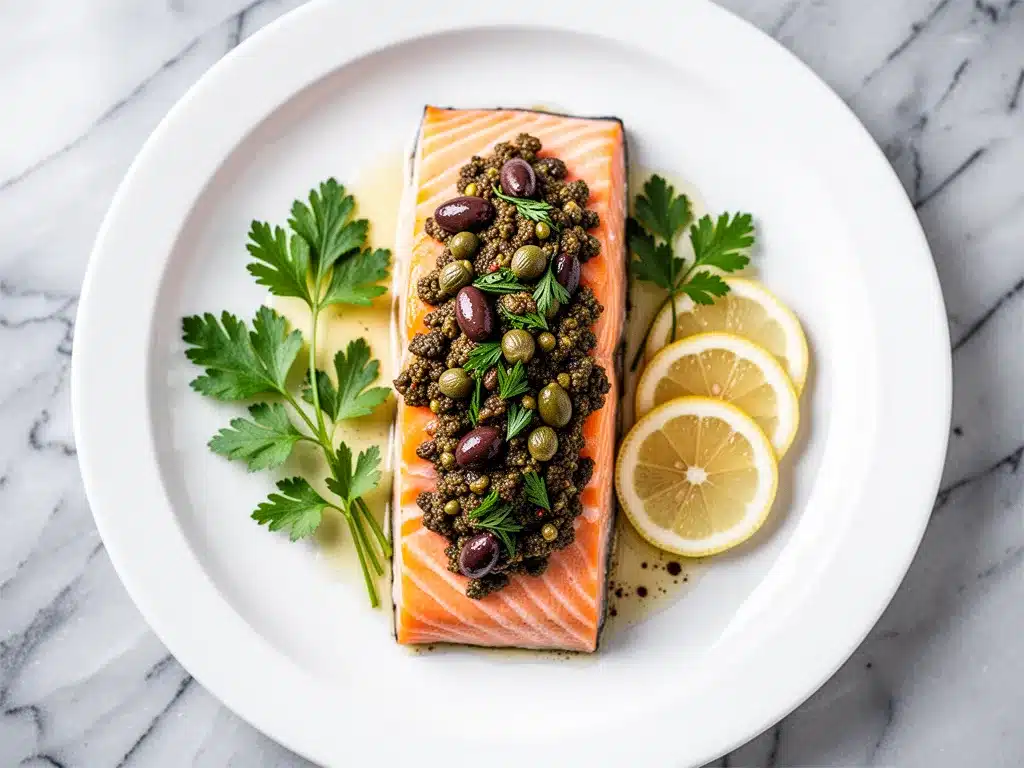
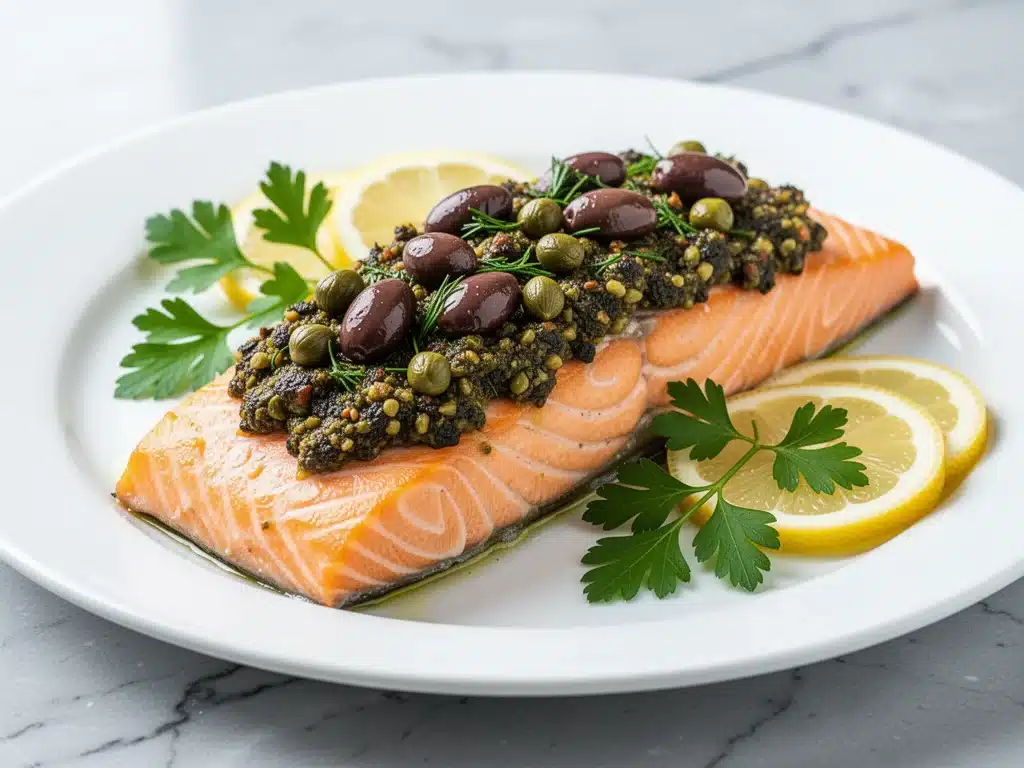
Kalamata olives (1 cup, pitted and chopped) — These are the star of the show. They’re briny, slightly sweet, and have a meaty texture. If you can’t find Kalamata, green olives or a mix of both work. Just make sure they’re pitted—chopping them with pits is a nightmare.
Capers (2 tablespoons, drained) — Capers add that salty, tangy kick that balances the richness of the salmon. Rinse them if they’re very salty, but don’t over-rinse or you’ll lose the flavor. They’re small but mighty.
Red onion (¼ cup, finely diced) — This adds a bit of crunch and sweetness. If you’re sensitive to raw onion, you can sauté it briefly first, but raw works well here because it bakes with the salmon and mellows out.
Fresh parsley (2 tablespoons, chopped) — Parsley adds freshness and color. Flat-leaf parsley is best. It brightens up the dark olives and makes the dish look more appetizing.
Anchovy paste (1 teaspoon, optional) — This is my secret weapon. It adds umami depth without making the dish taste like fish. If you’re averse to anchovies, you can skip it or use a dash of Worcestershire sauce. I don’t recommend skipping it if you want that deep, restaurant-quality flavor.
For Serving
Extra lemon wedges — For squeezing over the top before eating.
Flaky sea salt — A sprinkle on top after baking adds a nice crunch and visual appeal.
Lemon zest — For garnish. It makes the dish pop visually and adds a fresh aroma.
Equipment You’ll Need
You don’t need any fancy gadgets for this recipe. Here’s what I use and why:
Large baking sheet — I use a standard half-sheet pan (18×13 inches). Make sure it’s large enough to fit the salmon fillets in a single layer with a little space between them. If you’re crowding the pan, the salmon will steam instead of roast, and you won’t get those nice edges.
Small mixing bowl — For combining the tapenade ingredients. A small bowl is easier to manage than a big one.
Food processor or mortar and pestle — I use a food processor to chop the olives and capers evenly. It takes about 30 seconds. If you don’t have one, you can finely chop them by hand, but it takes more time and effort. A mortar and pestle works great if you want a rustic texture.
Pastry brush — For brushing the salmon with olive oil. A silicone brush is easier to clean than a bristle brush.
Sharp knife and cutting board — For chopping the olives, onions, and parsley. Keep your knife sharp—it makes chopping much easier and safer.
Zester or microplane — For getting that fine lemon zest. A regular grater works too, but you’ll get more pith, which is bitter.
How to Make Mediterranean Baked Salmon with Olive Tapenade
Alright, let’s get cooking! This is so simple that you’ll wonder why you’ve been making complicated dinners for years. Here’s exactly how I do it.
Step 1: Prep Your Oven and Pan (5 minutes)
Preheat your oven to 400°F (200°C). Line a large baking sheet with parchment paper or foil for easy cleanup. I use parchment because it prevents sticking and makes cleanup a breeze. If you don’t have parchment, foil works, but lightly grease it with olive oil to be safe.
Step 2: Make the Tapenade (5 minutes)
In a small mixing bowl, combine the chopped Kalamata olives, capers, diced red onion, minced garlic, chopped parsley, and anchovy paste (if using). Drizzle in 1 tablespoon of olive oil and squeeze in the juice of half the lemon. Mix everything together with a fork until it’s well combined. It should look like a chunky, fragrant paste. Taste it and adjust the seasoning if needed—add a pinch of salt or pepper if you think it needs it.
Step 3: Prep the Salmon (2 minutes)
Pat the salmon fillets dry with paper towels. This is important—dry salmon roasts better than wet salmon. Place the fillets on the prepared baking sheet, skin-side down if they have skin. Brush the tops lightly with the remaining 1 tablespoon of olive oil. Sprinkle with salt, pepper, and the lemon zest. Don’t be shy with the seasoning; salmon needs a good amount of salt to bring out its flavor.
Step 4: Add the Tapenade (2 minutes)
Take a spoonful of the olive tapenade and spread it generously over the top of each salmon fillet. You want a thick layer—don’t skimp. The tapenade will bake into the fish, creating a savory, crispy crust. If you have leftover tapenade, save it for serving or spreading on bread later.
Step 5: Bake (12-15 minutes)
Place the baking sheet in the preheated oven. Bake for 12-15 minutes, depending on the thickness of your fillets. The salmon is done when it flakes easily with a fork and reaches an internal temperature of 145°F (63°C). I usually check it at 12 minutes. If the fillets are very thick, you might need a minute or two longer. Don’t overcook it, or it will become dry.
Step 6: Serve (2 minutes)
Remove the salmon from the oven and let it rest for 2 minutes. This allows the juices to redistribute. Serve immediately with extra lemon wedges, a sprinkle of flaky sea salt, and a dusting of fresh lemon zest. Garnish with a few extra parsley leaves for color.
Expert Tips for Perfect Salmon
Here’s everything I’ve learned from making this recipe dozens of times. These tips will help you avoid common mistakes and get the best results.
Don’t Overcook the Salmon — This is the #1 mistake people make. Salmon continues to cook for a minute or two after you take it out of the oven. Remove it when it’s just barely opaque in the center. It will finish cooking on the plate. Overcooked salmon is dry and rubbery, and no amount of tapenade can fix that.
Use Fresh Salmon — If you can, buy fresh salmon. If you’re using frozen, make sure it’s thawed completely in the fridge overnight. Pat it dry well before cooking. Frozen salmon can release a lot of water, which can make the tapenade soggy.
Chop the Olives Evenly — If you chop the olives too finely, they’ll turn into a mush. If you chop them too coarsely, you’ll get big chunks of olive in every bite. Aim for a medium chop—small enough to spread evenly, but large enough to have texture.
Adjust the Salt — Olives and capers are both salty, so be careful when adding extra salt to the salmon. Taste the tapenade before adding it. If it’s very salty, you might not need additional salt on the fish. Start with a light hand and add more if needed.
Use a Meat Thermometer — If you’re unsure about doneness, use a meat thermometer. Insert it into the thickest part of the fillet. When it reads 145°F (63°C), it’s done. This takes the guesswork out of cooking salmon.
Variations and Substitutions
Once you’ve nailed the basic version, here’s how you can mix it up. I’ve tried all of these, and they all work well.
Green Olive Tapenade — Swap Kalamata olives for green olives. This gives a brighter, more bitter flavor. I love this version with white fish like cod or halibut.
Roasted Red Pepper Tapenade — Add ½ cup of roasted red peppers to the tapenade. It adds sweetness and color. This version is milder and appeals to picky eaters.
Herb-Crusted Salmon — Skip the olives and capers. Mix fresh herbs (dill, parsley, chives) with breadcrumbs and lemon zest. Top the salmon with this mixture before baking. It’s lighter and more herb-forward.
Spicy Version — Add a pinch of red pepper flakes or a dash of harissa paste to the tapenade. It adds a nice kick that balances the briny olives.
Gluten-Free — This recipe is naturally gluten-free. Just make sure your capers and anchovy paste don’t have any added gluten (most don’t, but check labels).
Dairy-Free — This recipe is naturally dairy-free. No substitutions needed.
Serving and Storage
How to serve this Mediterranean Baked Salmon with Olive Tapenade makes a big difference in how the meal feels.
Side Dishes
I usually serve this with:
- Quinoa or couscous — These grains soak up the delicious juices from the salmon and tapenade.
- Roasted asparagus — Toss asparagus with olive oil and lemon juice, roast on the same sheet pan for the last 10 minutes of cooking.
- Green salad — A simple arugula salad with lemon vinaigrette cuts through the richness of the salmon.
- Orzo pasta — Toss cooked orzo with olive oil, lemon, and parsley. It’s a classic Mediterranean pairing.
Storage
Refrigerator — Store leftovers in an airtight container for up to 3 days. The salmon will hold up well in the fridge, and the flavors will continue to meld. Reheat gently in a skillet over low heat or in the microwave at 50% power to avoid drying it out.
Freezer — I don’t recommend freezing cooked salmon. The texture can become mushy. If you want to prep ahead, you can make the tapenade and freeze it in an ice cube tray. Thaw it in the fridge and spread it on fresh salmon before baking.
Reheating — The best way to reheat is in a skillet with a splash of water or broth. Cover and heat gently. This keeps the salmon moist. Avoid the microwave if you can, as it tends to dry out the fish.
Nutrition Information
I’m not a nutritionist, but here’s the breakdown if you’re tracking. This is per serving (based on 4 servings).
- Calories: 380
- Protein: 34g
- Carbs: 6g
- Fiber: 2g
- Sugar: 2g
- Fat: 24g
- Saturated Fat: 4g
- Cholesterol: 95mg
- Sodium: 580mg
Salmon is a great source of protein and healthy fats. The olives and capers add sodium, so if you’re watching your salt intake, rinse the capers and olives thoroughly. Overall, this is a nutrient-dense meal that supports heart health and brain function.
Final Thoughts
So that’s my go-to Mediterranean Baked Salmon with Olive Tapenade! I’ve probably talked your ear off at this point, but when you make a recipe this often, you have a lot to say about it. This dish has saved me more weeknights than I can count. It’s my answer to “what’s for dinner?” when I’m tired, when I’m stressed, or when I just want to make something that feels good. It’s simple, it’s delicious, and it’s reliable.
Make it yours! Try different types of olives, add some spinach to the pan, or serve it with your favorite grain. The best recipes are the ones you adapt to your family’s tastes. If you make this, drop a comment and let me know what you think! I love hearing how recipes turn out in your kitchen. And if something doesn’t work, tell me that too—I’m here to help troubleshoot.
Happy cooking! And I hope your kitchen smells half as good as mine does right now.
Frequently Asked Questions
Can I use frozen salmon for this recipe?
Yes, you can, but make sure it’s thawed completely in the fridge overnight. Pat it dry very well before cooking. Frozen salmon can release a lot of water, which can make the tapenade soggy. If you’re in a hurry, you can thaw it in cold water, but the fridge method is best for texture.
What if I don’t have Kalamata olives?
Green olives work well as a substitute. They’re a bit more bitter and less fruity, but they still provide that briny flavor. You can also use a mix of both. Just make sure they’re pitted and chopped to a similar size.
Can I make the tapenade ahead of time?
Absolutely! You can make the tapenade up to 3 days ahead and store it in the fridge. In fact, the flavors improve after sitting for a day. Just let it come to room temperature before spreading it on the salmon.
How do I know when the salmon is done?
The best way is to use a meat thermometer. Insert it into the thickest part of the fillet. When it reads 145°F (63°C), it’s done. Alternatively, the salmon is done when it flakes easily with a fork and is opaque throughout. Be careful not to overcook it, as it will continue to cook after you take it out of the oven.
Can I add vegetables to the sheet pan?
Yes! Asparagus, zucchini, cherry tomatoes, and bell peppers all work well. Add them to the pan at the same time as the salmon, or add delicate vegetables like cherry tomatoes in the last 5 minutes of cooking. Just make sure they’re cut into similar-sized pieces so they cook evenly.
Why did my salmon turn out dry?
Most likely, it was overcooked. Salmon cooks quickly, and it’s easy to leave it in the oven too long. Check it at 12 minutes and remove it as soon as it flakes. Also, make sure your oven is preheated properly. If your oven runs hot, you might need to reduce the cooking time by a minute or two.
Pin This Recipe!
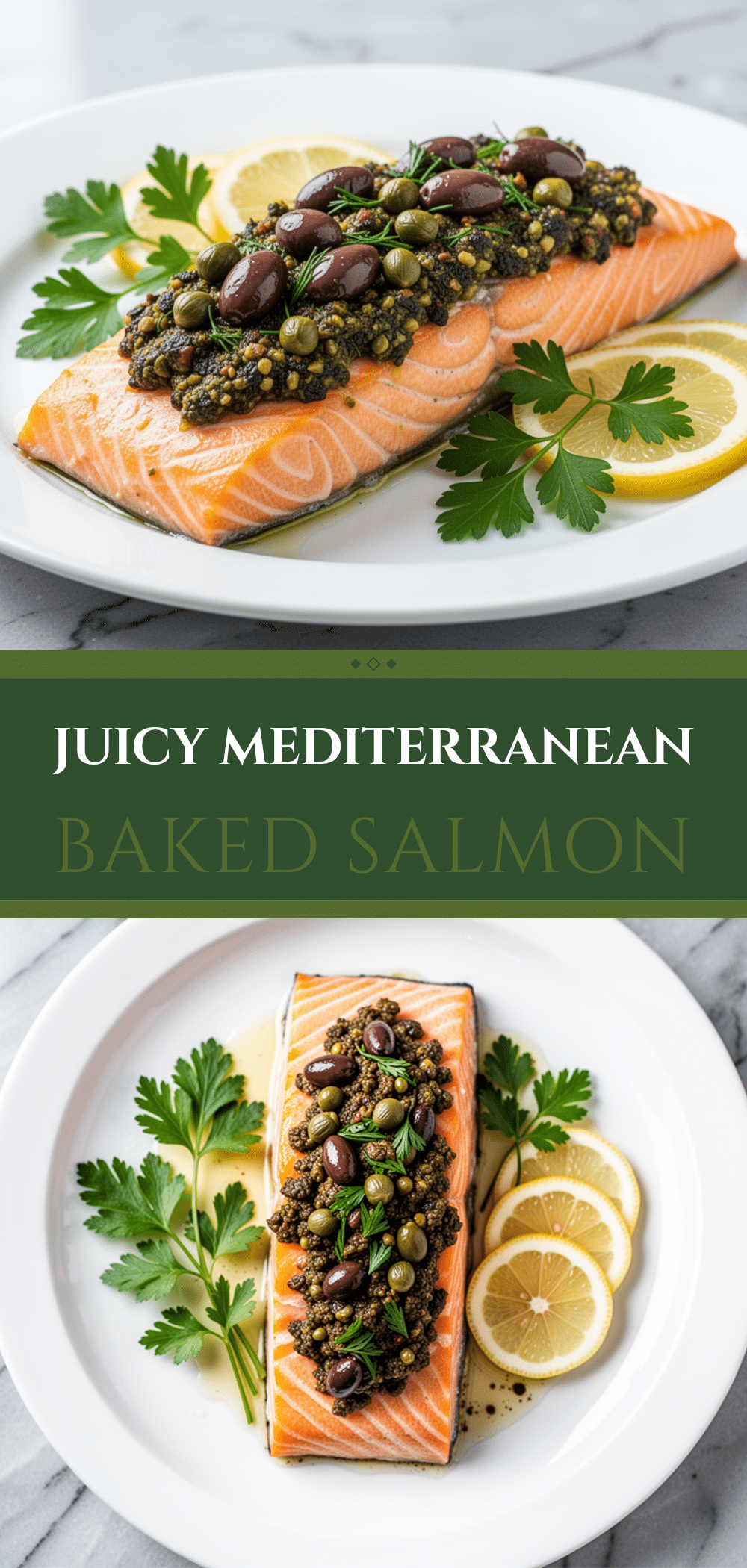
Mediterranean Baked Salmon with Olive Tapenade
- Total Time: 25 minutes
- Yield: 4 servings 1x
Description
A quick and easy weeknight dinner featuring salmon fillets topped with a savory olive, caper, and herb tapenade, baked on a single sheet pan for minimal cleanup.
Ingredients
- 1.5 lbs salmon fillets (center-cut, approx. 6 oz each)
- 2 tablespoons extra virgin olive oil (divided)
- 1 large lemon (zest and juice)
- 3 cloves garlic, minced
- 1 teaspoon dried oregano
- Salt and black pepper to taste
- 1 cup Kalamata olives, pitted and chopped
- 2 tablespoons capers, drained
- 1/4 cup red onion, finely diced
- 2 tablespoons fresh parsley, chopped
- 1 teaspoon anchovy paste (optional)
- Extra lemon wedges for serving
- Flaky sea salt for garnish
- Fresh lemon zest for garnish
Instructions
- Preheat oven to 400°F (200°C). Line a large baking sheet with parchment paper or foil.
- In a small mixing bowl, combine chopped Kalamata olives, capers, diced red onion, minced garlic, chopped parsley, and anchovy paste (if using).
- Add 1 tablespoon of olive oil and the juice of half the lemon to the olive mixture. Mix well until it forms a chunky paste. Taste and adjust seasoning if needed.
- Pat salmon fillets dry with paper towels and place them on the prepared baking sheet, skin-side down.
- Brush the tops of the salmon with the remaining 1 tablespoon of olive oil. Sprinkle with salt, pepper, and lemon zest.
- Spread a generous layer of the olive tapenade over the top of each salmon fillet.
- Bake for 12-15 minutes, or until the salmon flakes easily with a fork and reaches an internal temperature of 145°F (63°C).
- Remove from oven and let rest for 2 minutes before serving.
- Serve immediately with extra lemon wedges, a sprinkle of flaky sea salt, and fresh lemon zest.
Notes
Do not overcook the salmon as it continues to cook after removal from the oven. If using frozen salmon, ensure it is completely thawed and patted dry to prevent sogginess. The tapenade can be made up to 3 days in advance. For a spicy version, add red pepper flakes or harissa paste to the tapenade.
- Prep Time: 10 minutes
- Cook Time: 15 minutes
- Category: Main Course
- Cuisine: Mediterranean
Nutrition
- Serving Size: 1 fillet with tapena
- Calories: 380
- Sugar: 2
- Sodium: 580
- Fat: 24
- Saturated Fat: 4
- Carbohydrates: 6
- Fiber: 2
- Protein: 34
Keywords: salmon, baked salmon, olive tapenade, weeknight dinner, healthy dinner, one pan meal, Mediterranean diet, gluten-free, dairy-free, omega-3