It was 1998, and I was standing in my parents’ kitchen, watching my dad wrestle with a 12-pound piece of meat that looked more like a geological formation than dinner. He had read somewhere that prime rib needed to be cooked to a very specific internal temperature, checked every four minutes with a thermometer that had seen better days, and kept the oven door open so he could “inspect the crust.” Spoiler alert: It didn’t work. The roast came out gray, dry, and frankly, kind of sad. We ate it anyway, smiling through the tough bites, because it was Christmas and that’s what you do.
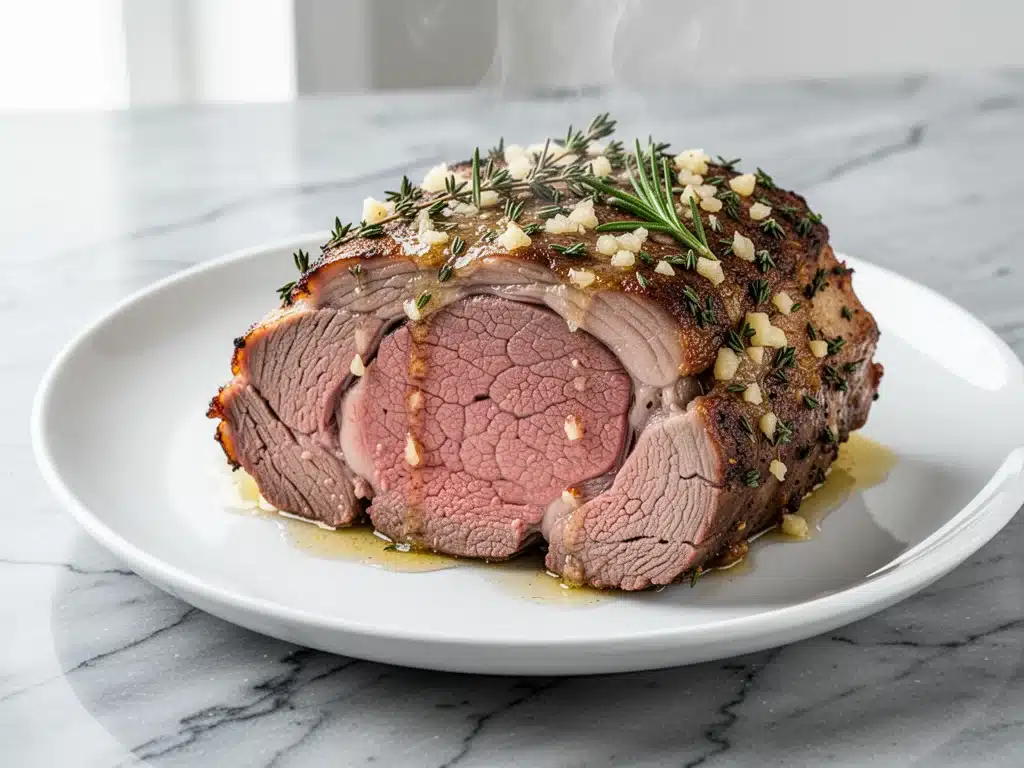
For twenty years, I avoided prime rib. I told myself I didn’t have the time, the patience, or the expensive cut of meat required to make it right. But last Thanksgiving, my partner asked for it. Just once. I panicked, then I decided to stop overthinking it. I grabbed the best rib roast I could find, mixed up a simple garlic-herb butter, and threw it in the oven with zero pretension. I didn’t check the door. I didn’t stress. And when I pulled it out, the kitchen smelled like a five-star steakhouse, and the meat was pink, juicy, and tender enough to cut with a fork.
That was the moment I realized I’d been making prime rib way harder than it needed to be. This garlic butter herb prime rib roast isn’t about fancy techniques or expensive gadgets. It’s about good meat, simple flavors, and trusting the process. It’s the kind of dish that makes your family lean back in their chairs and say, “Okay, you can cook.” And honestly? That’s the best compliment I could ask for.
Over the last year, I’ve tested this recipe at least a dozen times—sometimes for small dinners, sometimes for big holiday crowds. I’ve tweaked the herb blend, adjusted the sear time, and figured out exactly how to get that beautiful, crispy crust without drying out the center. The result is a roast that’s incredibly easy to pull off, even if you’re not a professional chef. It’s become my go-to for any occasion that calls for a little extra celebration.
Why You’ll Love This Garlic Butter Herb Prime Rib Roast
There are plenty of reasons to cook a prime rib roast, but this specific method has completely changed how I approach holiday cooking. It’s not just about the taste, though that’s definitely the biggest part. It’s about the whole experience. Here’s why this recipe has earned a permanent spot in my rotation:
- Zero Guesswork — Most prime rib recipes require you to juggle multiple temperatures and check the meat every few minutes. This method uses a simple sear-and-slow approach. You get a high heat start to lock in juices, then a low, steady cook. I use a meat thermometer (seriously, get one if you don’t have one), and I never have to second-guess if it’s done. It’s foolproof.
- Rich, Savory Flavor — The garlic butter herb rub is the star here. It’s not just salt and pepper; it’s a fragrant, garlicky crust that contrasts beautifully with the tender, juicy meat inside. I’ve tried it with just salt and pepper before, but nothing beats the depth of flavor this herb butter adds. It’s like a steakhouse experience at home.
- Make-Ahead Friendly — This is huge for holidays. You can season the roast the night before, let it sit in the fridge, and then just pop it in the oven when you’re ready. Or, you can let it rest for a full hour after cooking, which means you can prep all your sides without standing over a hot stove. I love being able to actually enjoy my own party.
- Impressive but Easy — It looks like you spent hours in the kitchen, but most of that time is just the oven doing the work. I’ve served this to picky eaters, food snobs, and everyone in between. Everyone loves it. It’s the kind of dish that makes you look like a culinary genius without the stress.
- Perfect Leftovers — Let’s be real: prime rib is expensive. But the leftovers? They’re legendary. Cold slices are amazing on sandwiches, and reheated slices are still juicy if you do it gently. I usually make a small roast just so I can have garlic butter prime rib sandwiches for lunch the next day. It’s a game-changer.
This is my answer to “what’s for dinner?” when I want to treat my family but don’t want to spend the entire day cooking. It’s reliable, delicious, and makes everyone happy.
Ingredients You’ll Need
Here’s the best part: you probably don’t need to go out of your way for most of this. It’s simple, high-quality ingredients that come together to make something magical. I’m particular about a few things here, and I’ll tell you exactly why.
For the Roast
Prime Rib Roast (Bone-In or Boneless) (3-7 lbs / 1.4-3.2 kg) — This is the star, so don’t cheap out. Look for “Choice” or “Prime” grade if you can find it. Bone-in adds more flavor and helps keep the meat moist, but boneless is easier to carve. I usually buy it from my local butcher and ask them to tie it for me. If you buy it pre-tied, make sure the twine is food-safe.
Salt (2 tablespoons / 30g) — Kosher salt is best because it’s less salty by volume than table salt. I use Diamond Crystal. If you use Morton’s, reduce the amount slightly. You want to season the outside generously; this creates that delicious crust.
Black Pepper (1 tablespoon / 7g) — Freshly cracked is non-negotiable. Pre-ground pepper loses its flavor too quickly. Grind it right before you season the meat. It adds a nice peppery bite that cuts through the richness of the butter.
For the Garlic Butter Herb Rub
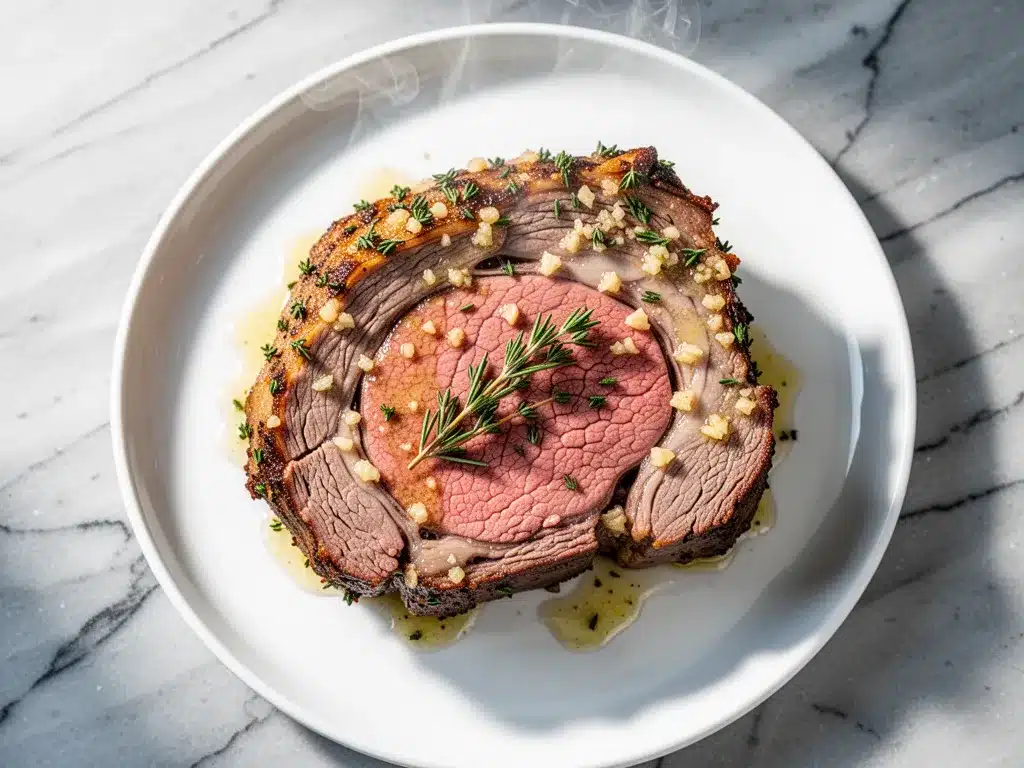
Unsalted Butter (½ cup / 113g) — Softened, not melted. This is crucial. If it’s melted, it won’t stick to the meat properly. I take it out of the fridge about an hour before I start. If you’re in a hurry, microwave it in 5-second bursts until it’s soft but still solid.
Garlic (6-8 cloves / 3-4 tablespoons) — Yes, that many. Don’t skimp. Fresh garlic is essential here. I mince it finely so it distributes evenly. If you’re using a garlic press, go for it, but make sure to push out all the garlic. No jarred garlic in this recipe—it has a weird metallic taste that really shows up in a simple rub like this.
Fresh Rosemary (2 tablespoons, chopped / 6g) — Rosemary is classic with beef, but don’t overdo it. It can be overpowering if you use too much. Chop it finely so you get little bursts of flavor in every bite. If you don’t like rosemary, thyme works too.
Fresh Thyme (1 tablespoon, chopped / 2g) — Thyme adds a subtle, earthy note that balances the rosemary. I use fresh thyme leaves, stripped from the stem. Dried thyme works in a pinch, but use half the amount.
Dijon Mustard (1 tablespoon / 15g) — This sounds weird, but it’s a secret weapon. It adds a tangy depth that cuts through the fat of the butter and beef. It also helps the rub stick to the meat. You won’t taste the mustard directly, but you’ll miss it if it’s not there.
Optional Add-ins
Red Pepper Flakes (½ teaspoon) — For a little kick. I add this if I want a bit of heat, but it’s optional. My kids prefer it without, so I usually make a separate small batch of butter for them.
Fresh Parsley (2 tablespoons, chopped) — For garnish. It adds a fresh, bright color that contrasts with the dark crust. I sprinkle it on right before serving.
Equipment Needed
You don’t need fancy equipment for this. Here’s what I actually use:
Roasting Pan — I use a 12-inch stainless steel roasting pan with a rack. The rack is important because it lifts the meat off the bottom, allowing heat to circulate evenly. If you don’t have a rack, you can make one out of aluminum foil or use a bed of chopped vegetables (onions, carrots, celery) to lift the meat. I’ve done both, and they work fine.
Meat Thermometer — This is non-negotiable. I use an instant-read digital thermometer. It’s accurate, fast, and saves you from guessing. I don’t trust “touch tests” or timing alone. A good thermometer costs about $15 and will save you hundreds of dollars in wasted meat.
Sharp Knife — For slicing the roast after it rests. A dull knife will mash the meat instead of cutting it cleanly. I use my chef’s knife for prep and a long slicing knife for the roast.
Small Bowl — For mixing the garlic butter. A ramekin or small mixing bowl works.
Aluminum Foil — For tenting the roast while it rests. Heavy-duty foil is best because it holds heat better.
How to Make It: Step-by-Step
Alright, let’s make this! I’m walking you through exactly how I do it, including the little tricks I’ve picked up over the years.
Step 1: Prep the Roast (10 minutes)
Take the prime rib out of the fridge and let it sit on the counter for 1-2 hours. This is called “bringing to room temperature,” and it’s important. If you put a cold roast in a hot oven, the outside will cook faster than the inside, leading to an overcooked edge and a raw center. While it warms up, preheat your oven to 450°F (230°C). I know it seems high, but we’re going to sear it first.
Step 2: Make the Garlic Butter Herb Rub (5 minutes)
In a small bowl, mix the softened butter, minced garlic, chopped rosemary, thyme, Dijon mustard, and red pepper flakes (if using). Mash it all together with a fork until it’s well combined. It should look like a fragrant, greenish paste. Taste it (if you want) and adjust the herbs if needed. I usually add a pinch more salt to the butter if the roast is very large.
Step 3: Season the Roast (5 minutes)
Pat the roast dry with paper towels. This sounds basic, but dry meat sears better. Rub the roast all over with the salt and pepper. Then, spread the garlic butter herb mixture all over the roast, getting it into every nook and cranny. I use my hands for this—it’s the most even way to distribute it. Make sure the top and sides are well-coated. The bottom doesn’t need as much butter, but it doesn’t hurt.
Step 4: Sear the Roast (15 minutes)
Place the roast on the rack in the roasting pan. Put it in the preheated 450°F oven and sear for 15 minutes. This high heat creates that beautiful, browned crust that locks in juices. You’ll smell the garlic and herbs filling the kitchen—this is the best part. After 15 minutes, reduce the oven temperature to 325°F (165°C) without opening the door too much.
Step 5: Slow Cook the Roast (1-1.5 hours)
Let the roast cook at 325°F. The general rule is 15 minutes per pound for medium-rare. So, a 5-pound roast will take about 75 minutes. But here’s the key: use your meat thermometer. Pull the roast when it reaches 120°F (49°C) for rare, 125°F (52°C) for medium-rare (my preference), or 130°F (54°C) for medium. The temperature will rise 5-10 degrees while it rests, so pull it a few degrees early. I usually pull mine at 120°F for medium-rare.
Step 6: Rest the Roast (30-45 minutes)
This is the hardest step, but also the most important. Remove the roast from the oven and tent it loosely with aluminum foil. Let it rest for at least 30 minutes, preferably 45. This allows the juices to redistribute throughout the meat. If you cut it too soon, all those juices will run out onto the cutting board, and your meat will be dry. I know it’s tempting to carve it up, but wait. Trust me.
Step 7: Slice and Serve
Remove the foil and let the roast sit for 5 more minutes. Slice it against the grain into ½-inch thick slices. Arrange them on a platter and drizzle any juices from the pan over the top. Garnish with fresh parsley if you like. Serve immediately with your favorite sides.
Total Time: About 2.5-3 hours (mostly hands-off)
Expert Tips & Tricks
Here’s everything I’ve learned from making this dozens of times. These tips will save you from my mistakes.
Don’t Skip the Rest — I cannot stress this enough. Resting is what makes prime rib juicy. If you rush this step, you’ll regret it. Set a timer and walk away. Do something else. Let the meat do its thing.
Use a Good Thermometer — Guessing is for amateurs. A digital thermometer is cheap and accurate. I’ve ruined roasts by guessing, and I’ve saved them by using a thermometer. Invest in one.
Save the Pan Drippings — After you remove the roast, pour the juices from the pan into a fat separator or a bowl. Let the fat rise to the top and skim it off. You can use the remaining juices to make a quick gravy by whisking in a little flour and beef broth. It’s liquid gold.
Leftover Magic — Prime rib leftovers are best when sliced cold and put on crusty bread with horseradish sauce. Or, chop it up and add it to a beef stew the next day. It’s versatile and delicious.
Don’t Open the Oven — Once the temperature is lowered, try not to open the oven door. Every time you do, you lose heat and extend the cooking time. Trust the thermometer.
Variations & Substitutions
Once you’ve nailed the basic version, here’s how you can mix it up. I’ve tried all of these.
Peppercorn Crust — Instead of the herb butter, crush 2 tablespoons of black peppercorns and mix them with salt. Press this onto the roast before searing. It’s a classic French bistro style.
Honey-Garlic Glaze — Mix 2 tablespoons of honey with the garlic butter. It adds a subtle sweetness that caramelizes beautifully in the oven. Great for holiday tables.
Herb-Free Version — If you’re not a fan of rosemary, just use garlic, butter, salt, and pepper. It’s still amazing. Simple is often better.
Dairy-Free — Replace the butter with olive oil. Mix the garlic and herbs with olive oil and rub it onto the roast. It’s lighter but still flavorful.
Serving & Storage
How to Serve — I usually serve this straight from the cutting board at the dinner table. It looks rustic and stays warm. Pair it with roasted potatoes, green beans, or a simple salad. A glass of red wine is a must.
Storage — Store leftovers in an airtight container in the fridge for up to 4 days. The meat will keep well, but it’s best eaten cold or reheated gently.
Reheating — To reheat, slice the meat and place it in a skillet with a splash of beef broth or water. Cover and heat gently over low heat. Don’t microwave it—it dries out the meat. If you must microwave, do it in short bursts and add a little liquid.
Freezing — Prime rib freezes well. Wrap slices tightly in plastic wrap and then in foil. Freeze for up to 3 months. Thaw in the fridge overnight before reheating.
Nutrition Information
I’m not a nutritionist, but here’s the breakdown if you’re tracking. This is per serving (based on 8 servings for a 5-pound roast):
- Calories: 450
- Protein: 35g
- Fat: 32g
- Saturated Fat: 14g
- Cholesterol: 110mg
- Sodium: 600mg
- Carbs: 1g
It’s rich in protein and iron, but also high in fat and calories. It’s a treat, not a daily meal. When I want to make it lighter, I trim some of the visible fat before cooking and skip the extra butter on top. But usually? I just enjoy it.
Final Thoughts
So that’s my garlic butter herb prime rib roast. I’ve probably talked your ear off at this point, but when you make a recipe this often, you have a lot to say about it. This has saved holiday dinners more times than I can count. It’s my answer to “what’s for dinner?” when I want to treat my family but don’t want to stress. My kids are happy, my partner’s happy, and I’m happy because I’m not stressed about cooking.
Make it yours! Try different herbs, adjust the garlic, or add a glaze. The best recipes are the ones you adapt to your family’s tastes. If you make this, drop a comment and let me know what you think! I love hearing how recipes turn out in your kitchen. And if something doesn’t work, tell me that too—I’m here to help troubleshoot.
Happy cooking! And I hope your kitchen smells half as good as mine does right now.
Frequently Asked Questions
Can I cook a frozen prime rib?
It’s not recommended. Cooking a frozen roast leads to uneven cooking and a higher risk of foodborne illness. Thaw it in the fridge for 2-3 days before cooking. If you’re in a hurry, you can thaw it in cold water, changing the water every 30 minutes, but the fridge is best.
Why is my prime rib gray instead of pink?
This usually means it was overcooked. Prime rib should be medium-rare (125°F internal temperature) for the best flavor and texture. If you cooked it to medium or well-done, it will be gray and dry. Next time, use a thermometer and pull it at 120°F for medium-rare.
Can I make this in a slow cooker?
You can, but you won’t get the same crispy crust. Slow cookers are great for tenderness, but they don’t brown meat well. If you use a slow cooker, sear the roast in a skillet first, then cook on low for 6-8 hours. It’s easier, but not as flavorful.
How do I make gravy from the drippings?
Pour the drippings from the roasting pan into a fat separator. Skim off the fat and reserve the juices. In a saucepan, whisk 2 tablespoons of flour into 2 tablespoons of the reserved fat. Cook for 1 minute, then slowly whisk in the juices and 1 cup of beef broth. Simmer until thickened. Season with salt and pepper.
Can I use boneless prime rib?
Yes, boneless is easier to carve and serves more people per pound. It cooks slightly faster than bone-in, so check the temperature 10-15 minutes earlier. The flavor is slightly less rich, but the convenience is worth it for many people.
What wine pairs best with prime rib?
A full-bodied red wine is perfect. Cabernet Sauvignon, Merlot, or a bold Syrah all work well. The tannins in the wine cut through the richness of the meat. If you don’t drink wine, a strong black coffee or a dark stout beer also pairs nicely.
Pin This Recipe!
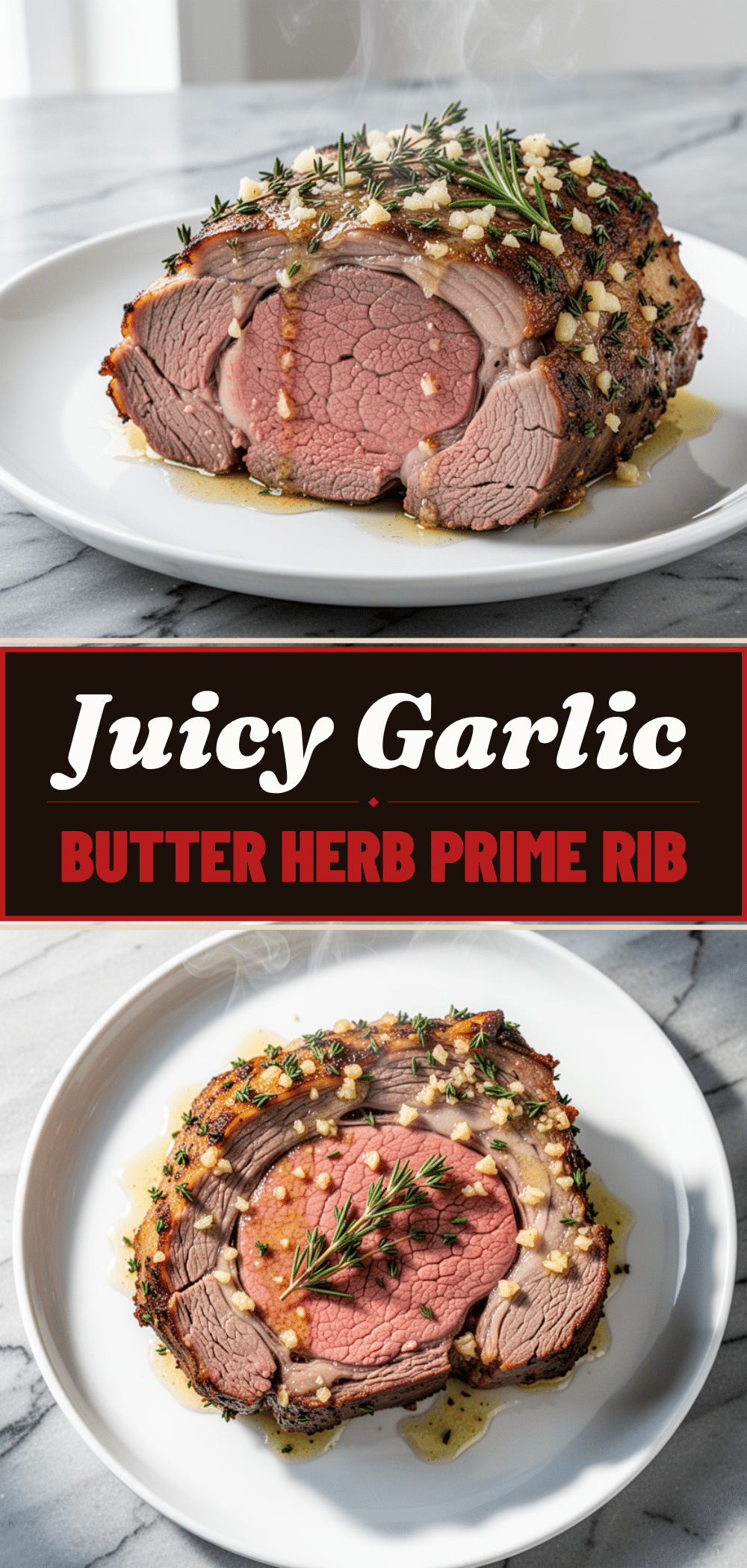
Garlic Butter Herb Prime Rib Roast: Easy Holiday Recipe
- Total Time: 2 hours 30 minutes
- Yield: 8 servings 1x
Description
A foolproof, juicy prime rib roast with a rich garlic-herb butter crust. This easy holiday recipe uses a simple sear-and-slow method for perfect results every time.
Ingredients
- 3–7 lbs Prime Rib Roast (Bone-In or Boneless)
- 2 tablespoons Kosher Salt
- 1 tablespoon Freshly Cracked Black Pepper
- ½ cup Unsalted Butter (Softened)
- 6–8 cloves Garlic (Minced)
- 2 tablespoons Fresh Rosemary (Chopped)
- 1 tablespoon Fresh Thyme (Chopped)
- 1 tablespoon Dijon Mustard
- ½ teaspoon Red Pepper Flakes (Optional)
- 2 tablespoons Fresh Parsley (Chopped, for garnish)
Instructions
- Take the prime rib out of the fridge and let it sit on the counter for 1-2 hours to bring to room temperature. Preheat oven to 450°F (230°C).
- In a small bowl, mix softened butter, minced garlic, chopped rosemary, thyme, Dijon mustard, and red pepper flakes (if using) until well combined.
- Pat the roast dry with paper towels. Rub the roast all over with salt and pepper, then spread the garlic butter herb mixture evenly over the top and sides.
- Place the roast on a rack in a roasting pan. Sear in the preheated 450°F oven for 15 minutes to create a crust.
- Reduce oven temperature to 325°F (165°C) without opening the door. Cook for approximately 15 minutes per pound.
- Use a meat thermometer to check internal temperature. Pull the roast when it reaches 120°F (49°C) for rare, 125°F (52°C) for medium-rare, or 130°F (54°C) for medium.
- Remove the roast from the oven and tent loosely with aluminum foil. Let it rest for at least 30-45 minutes to allow juices to redistribute.
- Remove foil, let sit for 5 more minutes, then slice against the grain into ½-inch thick slices. Serve with pan juices and garnish with parsley.
Notes
Do not skip the resting step; it is crucial for juicy meat. Use a good thermometer to avoid overcooking. Save pan drippings to make gravy. Leftovers are excellent cold on sandwiches or reheated gently in a skillet with broth.
- Prep Time: 20 minutes
- Cook Time: 1 hour 30 minutes
- Category: Main Course
- Cuisine: American
Nutrition
- Serving Size: Approximately 6-8 oz
- Calories: 450
- Sodium: 600
- Fat: 32
- Saturated Fat: 14
- Carbohydrates: 1
- Protein: 35
Keywords: prime rib, garlic butter, holiday recipe, roast beef, easy dinner, sear and slow, herb crust