I still remember the exact smell of my first apartment kitchen. It was a drafty, fourth-floor walk-up in Chicago with windows that rattled if you breathed too hard. It was November, and the wind was howling so loudly that I felt like I was living inside a dryer on high heat. I had just come home from a double shift at the hospital, my feet were throbbing, and my bank account was hovering around forty dollars. I wanted something warm. Something that felt like a hug in a bowl. But I didn’t have the money for takeout, and I certainly didn’t have the energy for complicated cooking.
So, I raided the fridge. I found three sad, brownish onions that had been hiding in the crisper drawer for a week, a half-empty bottle of cheap red wine, some stale baguette, and a wedge of Gruyere cheese that smelled slightly assertive. I decided to make what I thought would be a sad, watery onion soup. I threw everything into a pot, turned the heat to medium-low, and went to bed, assuming I’d deal with it in the morning.
I woke up to a smell that stopped me dead in the hallway. It wasn’t just onions; it was deep, caramelized, almost savory-sweet goodness. It smelled like a bistro in Paris, not a cramped apartment in Illinois. When I tasted it, I cried. Not because it was hot, but because it tasted like comfort. It tasted like someone had cared. That accidental bowl of restaurant-style French onion soup changed how I view cooking forever. It taught me that patience and cheap ingredients can create something luxurious.
Since then, I’ve made this soup hundreds of times. I’ve tested it with yellow onions, sweet onions, and even red onions. I’ve tried different broths, different wines, and different cheeses. But the version I’m sharing with you today? It’s the one. It’s the one that makes my husband stop scrolling on his phone. It’s the one that guests ask for the recipe for. It’s the one that turns a Tuesday night into a special occasion. If you’ve ever wondered why restaurant versions taste so much better than home versions, the secret is usually time and a specific technique for caramelization. I’ve cracked that code, and I’m taking you through every step.
Why You’ll Love This French Onion Soup
There are a lot of soup recipes out there. Some are healthy. Some are quick. This one is different. This is the soup you make when you want to feel like a gourmet chef without actually being one. Here’s why this French onion soup recipe has earned a permanent spot in my weekly rotation:
- It Turns Trash into Treasure — Seriously. The main ingredient is an onion. You know, the stuff you buy in bulk for pennies? This recipe transforms humble, pungent onions into a golden, sweet, complex broth. It’s culinary alchemy.
- It’s a Make-Ahead Dream — Unlike many soups that taste better fresh, this one actually improves overnight. The flavors meld and deepen in the fridge. I often make it on Sunday, and it’s even better on Wednesday. It’s the ultimate stress-free dinner.
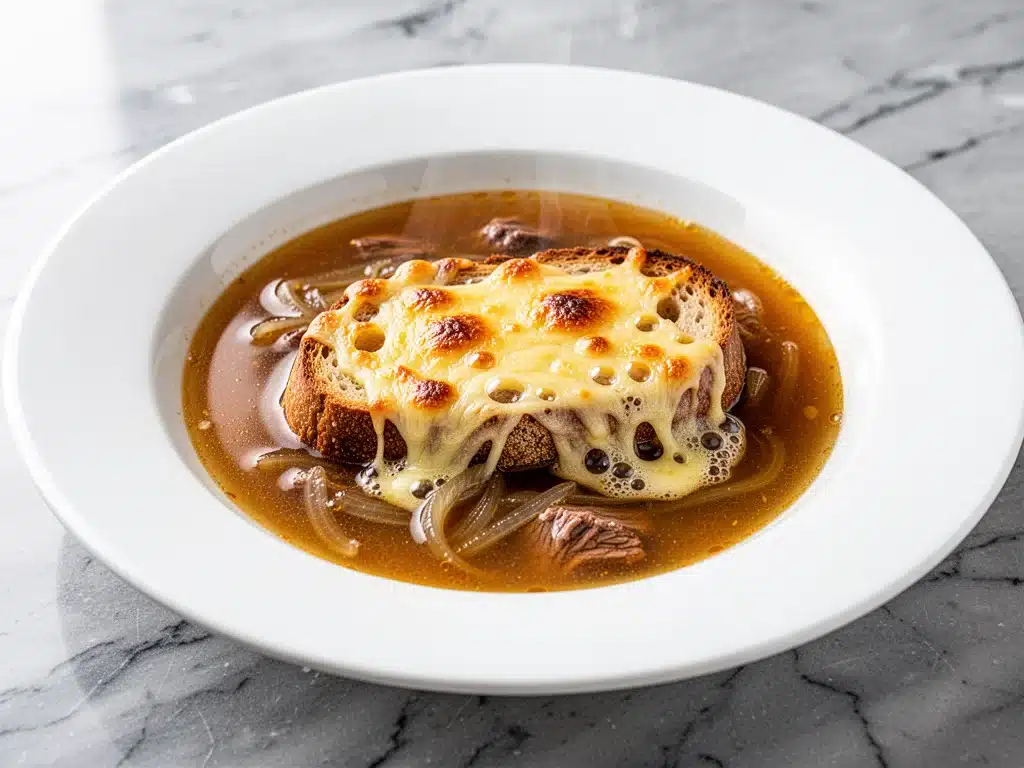
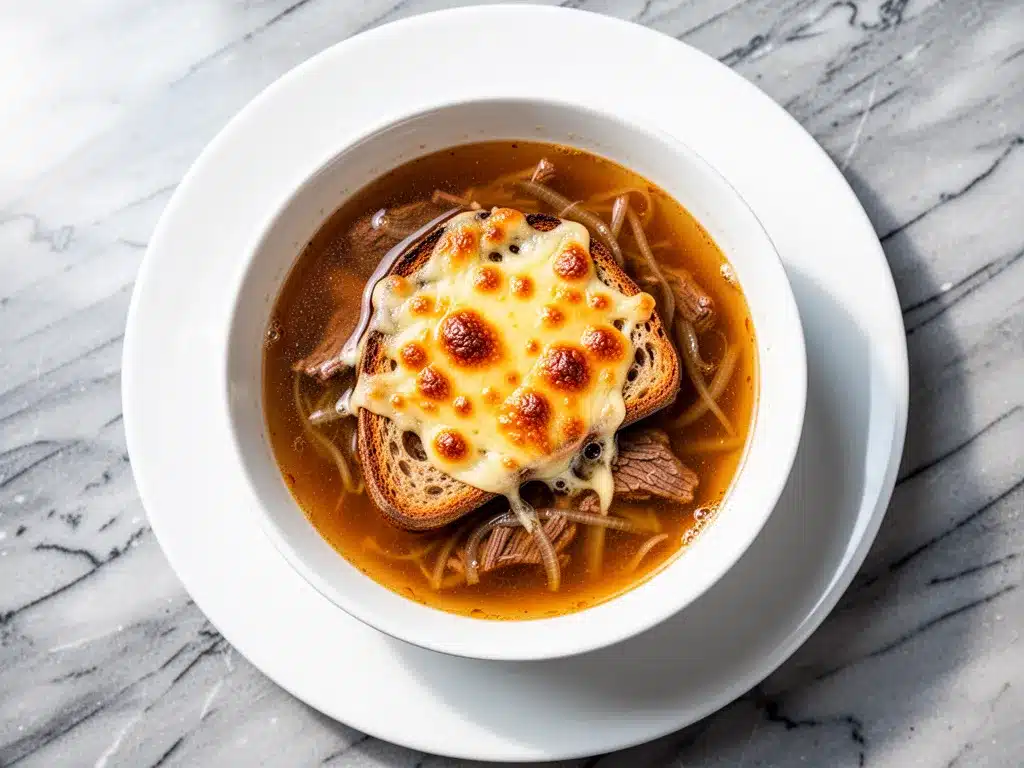
- The Cheese Pull is Real — There is nothing quite like lifting a spoon out of a bowl and watching the melted Gruyere and Parmesan stretch like golden taffy. It’s Instagram-worthy, yes, but more importantly, it’s incredibly satisfying to eat.
- It Feels Fancy but Isn’t — You don’t need expensive cuts of meat or exotic spices. You need onions, butter, wine, and broth. The technique does the heavy lifting. Your guests will think you spent hours at the stove (you will, but it’s mostly passive time).
- It Wakes Up a Cold Night — This isn’t a light snack. This is a hearty, soul-warming meal. The crusty bread dipped in the savory broth is the best part. I often skip a main course because the soup is so filling and delicious.
This soup is my go-to when I need to impress without trying too hard. It’s elegant, it’s rustic, and it tastes like it came from a high-end French bistro. Plus, it freezes beautifully (without the cheese topping, of course). I make big batches and freeze them in portions for those nights when I just don’t want to think about dinner.
Ingredients You’ll Need
Before we dive into the method, let’s talk about what goes into this pot. The ingredient list is short, which means quality matters more than ever. You don’t need a fancy pantry for this, but you do need to pick the right items. Here’s what I use and why.
For the Onion Base
Yellow Onions (4 large, about 3 lbs / 1.4 kg) — I stick to yellow onions for this. They have the perfect balance of sulfur and sugar that breaks down into that deep amber color. Sweet onions (like Vidalia) work too but can get too sweet. Red onions turn a weird purple color when cooked down. Stick to yellow. Peel them, halve them, and slice them into half-moons. Uniform slices help them cook evenly.
Unsalted Butter (4 tablespoons / 60g) — Butter is non-negotiable here. It adds the rich mouthfeel that oil just can’t match. I use high-quality European-style butter if I can find it, but standard unsalted works fine. Using unsalted lets you control the salt level in the broth later.
Granulated Sugar (1 tablespoon) — This is the secret weapon. While onions caramelize naturally, a little sugar jump-starts the process and ensures you get that deep, dark brown color without burning. Don’t skip it. It doesn’t make the soup sweet; it makes it complex.
Kosher Salt (to taste) — I use Kosher salt because it’s easier to control. Table salt is too fine and can make the soup overly salty if you’re not careful. Add it gradually as the onions cook.
For the Broth
All-Purpose Flour (2 tablespoons) — This creates a roux, which thickens the soup slightly and helps the flavors bind. It’s a classic technique that gives that velvety restaurant texture.
Dry White Wine (1 cup / 240ml) — I use a Sauvignon Blanc or Pinot Grigio. You want a dry wine, not a sweet one. The alcohol cooks off, leaving behind acidity that cuts through the richness of the butter and cheese. If you don’t drink alcohol, use extra broth and a splash of vinegar.
Beef Broth (6 cups / 1.5 liters) — This is the backbone of the soup. I recommend using a high-quality, low-sodium beef broth. The flavor of the broth is 50% of the final taste. If you can find bone broth, even better—it adds collagen and body. Vegetable broth works for a vegetarian version, but the flavor will be lighter.
Bay Leaf (1) — Just one. It adds a subtle herbal note that disappears into the background. Remove it before serving.
Fresh Thyme (2 sprigs) — Or 1 teaspoon dried thyme. Fresh is best, but dried works in a pinch. Thyme pairs beautifully with onions.
For the Croutons & Topping
French Baguette (1 loaf, sliced into ½-inch rounds) — You need crusty bread. Soft sandwich bread will disintegrate. A day-old baguette is perfect because it’s drier and absorbs the broth without getting mushy immediately.
Gruyere Cheese (2 cups, grated) — This is the star of the show. Gruyere has a nutty, salty flavor that melts beautifully. Don’t use pre-grated cheese—it has anti-caking agents that prevent smooth melting. Buy a block and grate it yourself. It takes two minutes and makes a huge difference.
Parmesan Cheese (½ cup, grated) — I mix a little Parmesan with the Gruyere for an extra salty, umami punch. It helps create that crispy, browned crust on top.
Black Pepper (freshly cracked) — A little kick at the end balances the sweetness.
Equipment Needed
You don’t need a fancy kitchen to make this. Here’s what I actually use, and what you can swap out.
Large Dutch Oven or Heavy-Bottomed Pot — I use a 6-quart Dutch oven. You need something with thick sides to distribute heat evenly. Thin pots burn the onions easily. If you don’t have a Dutch oven, a large stockpot or heavy skillet works, just keep an eye on the heat.
Wooden Spoon — For stirring the onions. You’ll be stirring a lot in the beginning, and a wooden spoon is gentle on the pot.
Sharp Chef’s Knife — Slicing 3 pounds of onions takes a while. A sharp knife saves your fingers and ensures even slices. If your knife is dull, buy a new one. It’s worth it.
Vegetable Peeler — For peeling the onions. Some people say peel under water to stop tears, but I just cry and move on. It’s part of the process.
Broiler-Safe Bowls — This is crucial. You need bowls that can go from the fridge (or counter) directly into the broiler. Ceramic or stoneware bowls work great. Avoid glass bowls that aren’t labeled “broiler-safe”—they can shatter. I use my favorite rustic ceramic soup bowls for this.
Box Grater — For grating the cheese. A microplane works too if you want super-fine shreds.
How to Make It: Step-by-Step
Alright, let’s get cooking. This recipe has two distinct phases: the long, slow caramelization of the onions, and the quick assembly and broiling. The first part takes patience. The second part takes flair.
Step 1: Slice the Onions (10 minutes)
Peel the onions. Cut them in half from root to stem. Then, lay each half flat and slice across into half-moon slices, about ¼ to ½ inch thick. Try to keep them uniform. If some are thin and some are thick, the thin ones will burn before the thick ones soften. Place the sliced onions in a large bowl. Don’t worry if they look like a mountain—it shrinks down significantly.
Step 2: Start the Caramelization (15 minutes)
Melt the butter in your Dutch oven over medium heat. Once the foam subsides, add all the onions. Stir them to coat with butter. Sprinkle the salt and sugar over the top. Stir again. Cover the pot with a lid. This traps the moisture and helps the onions sweat and soften. Cook for about 15 minutes, stirring every 5 minutes or so. You’ll see a lot of liquid release from the onions.
Step 3: The Long Wait (45-60 minutes)
Remove the lid. The onions should be soft and translucent. Now, turn the heat down to medium-low. This is the crucial step. You want to cook them slowly. Stir every 5-10 minutes. Scrape the bottom of the pot to prevent sticking. The onions will start to turn golden, then amber, then a deep, rich brown. This takes time. Do not rush it. If they start to burn, lower the heat. If they look dry, add a splash of water. You’re aiming for about 60 minutes total cooking time. The onions should be meltingly soft and deeply colored. This is where the flavor develops. If you stop too early, the soup will taste sweet but not complex.
Step 4: Make the Roux and Add Broth (5 minutes)
Once the onions are perfectly caramelized, sprinkle the flour over them. Stir constantly for 1-2 minutes to cook off the raw flour taste. The mixture will look pasty. Slowly pour in the white wine, stirring constantly to deglaze the pot and scrape up any browned bits from the bottom. Those bits are flavor gold. Let the wine simmer for 2 minutes to cook off the alcohol.
Pour in the beef broth and add the bay leaf and thyme. Stir well. Bring to a boil, then reduce heat to low. Simmer uncovered for 20-30 minutes. This allows the flavors to meld and the soup to thicken slightly. Taste and adjust salt and pepper. It should taste savory, slightly sweet, and deeply oniony.
Step 5: Prepare the Croutons (5 minutes)
While the soup simmers, preheat your broiler to high. Slice your baguette into rounds. If the bread is very fresh, you might want to toast it lightly in the oven first so it doesn’t get soggy. Arrange the bread slices on a baking sheet.
Step 6: Assemble and Broil (5 minutes)
Ladle the hot soup into your broiler-safe bowls. Place a slice of bread on top of each bowl. Sprinkle generously with the grated Gruyere and Parmesan cheese. Make sure the cheese covers the bread and goes slightly over the edges. Place the bowls on a baking sheet (for stability) and slide them under the broiler.
Watch them closely! Broilers vary wildly. You want the cheese to bubble and turn golden brown with some dark spots. This usually takes 2-5 minutes. Do not walk away. If the cheese starts to smoke, pull them out immediately. Once they’re bubbly and browned, remove them from the oven.
Step 7: Serve Immediately
Let the bowls cool for a minute or two—the cheese will set slightly, making it easier to spoon. Serve with a side of crusty bread or a simple green salad. The contrast of the hot, savory soup and the crispy, cheesy crouton is perfection.
Expert Tips & Tricks
After making this dozens of times, I’ve learned a few things that save me from disaster. Here’s how to get it right the first time.
Patience is the Main Ingredient — I cannot stress this enough. If you rush the onions, you get sweet onions, not caramelized onions. If you have time, let them cook for 75 minutes. The extra 15 minutes makes a world of difference in depth of flavor. If you’re short on time, you can speed it up by turning the heat up slightly, but you have to stir more often to prevent burning.
Scrape the Bottom — As the onions cook, they will stick to the bottom of the pot and brown. This is called fond, and it’s pure flavor. Make sure to scrape it up into the soup. If it sticks too much and starts to burn, add a splash of water or broth to deglaze. Burnt bits taste bitter.
Use Good Wine — You don’t need expensive wine, but don’t use the cooking wine from the grocery store aisle—it’s full of salt and preservatives. Use a bottle you’d actually drink. The wine balances the fat in the butter and cheese.
Grate Your Own Cheese — Pre-grated cheese is coated in cellulose to keep it from clumping. This prevents it from melting smoothly. Your soup will be grainy and stringy. Grating a block takes 3 minutes and ensures a silky, smooth topping.
Don’t Overfill the Bowls — Leave an inch of space at the top. The cheese will bubble up and overflow if the bowls are too full. It makes a mess and loses that perfect cheese pull.
Safety First with Broilers — Broiler-safe bowls get extremely hot. Use oven mitts when removing them from the oven. Place them on a trivet or cooling rack, not directly on the counter, to prevent cracking.
Variations & Substitutions
Once you’ve mastered the basic recipe, here are some ways to mix it up. I’ve tried all of these, and they all work in different ways.
Vegetarian Version — Swap beef broth for high-quality vegetable broth. I use mushroom broth for extra umami. The rest of the recipe stays the same. It’s still incredibly satisfying.
Chicken Version — Use chicken broth instead of beef. It’s lighter and milder. Some people add a poached chicken breast on top for extra protein.
Red Wine Version — Swap the white wine for red wine (like Cabernet or Merlot). It adds a deeper, richer flavor and a darker color. It’s more robust and pairs well with heavier meals.
Cognac Twist — Add a splash (2 tablespoons) of Cognac or brandy after deglazing with wine. It adds a sophisticated, boozy note. Flambé it if you’re feeling fancy (but be careful!).
Gluten-Free — Use gluten-free broth and gluten-free bread. There are many good gluten-free baguettes available now. The rest of the recipe is naturally gluten-free.
Dairy-Free — This is tricky because the cheese is key. Use a high-quality vegan Gruyere-style shreds (like Miyoko’s or Violife). Use olive oil instead of butter. It won’t be exactly the same, but it’s still delicious.
Serving & Storage
How to Serve — I usually serve this straight from the broiler. It’s dramatic and delicious. Pair it with a simple arugula salad with lemon vinaigrette to cut the richness. A glass of the same white wine you used in the soup is a perfect match.
Storing Leftovers — Store the soup (without the bread and cheese topping) in an airtight container in the fridge for up to 5 days. The flavors will continue to develop. It freezes well for up to 3 months. Thaw in the fridge overnight and reheat gently on the stove.
Reheating — Reheat the soup on the stove over low heat, stirring occasionally. If it’s too thick, add a splash of broth or water. Do not microwave it if you can help it—it heats unevenly and can splatter. If you must microwave, do it in 1-minute intervals, stirring in between.
Re-adding the Topping — Never reheat the cheese topping. It will separate and become oily. Reheat the soup, then add fresh bread and fresh cheese, and broil it again. It’s worth the extra 5 minutes.
Nutrition Information
I’m not a nutritionist, but here’s the breakdown if you’re tracking. This is a rich, hearty soup, so portion control is key.
Per Serving (based on 6 servings, without topping details):
- Calories: 380
- Protein: 12g
- Carbs: 35g
- Fiber: 3g
- Sugar: 12g (from onions)
- Fat: 18g
- Sodium: 650mg (varies by broth)
The cheese topping adds significant calories, fat, and sodium. If you’re watching your intake, use less cheese or skip the bread topping. But honestly? It’s a treat. Enjoy it as a special meal, not a daily staple.
Final Thoughts
This restaurant-style French onion soup is more than just a recipe. It’s a reminder that slow cooking is worth it. In a world of instant gratification, taking an hour to caramelize onions is a meditative act. It’s quiet. It’s peaceful. And the result is pure comfort.
I’ve served this to friends, family, and even a few picky eaters who swore they “hate onions.” They always come back for seconds. It’s versatile, it’s forgiving, and it’s deeply satisfying. Whether you’re cooking for one or feeding a crowd, this soup delivers.
So, grab your onions, put on some jazz music, and let them cook. Your future self will thank you when you’re spooning up that golden, cheesy goodness on a cold night. And if you make this, I’d love to hear how it turns out. Drop a comment below and let me know if you added any secret ingredients. Happy cooking!
Frequently Asked Questions
Can I make this soup ahead of time?
Yes! In fact, it tastes better the next day. Cook the soup through Step 4, let it cool, and store it in the fridge for up to 5 days or freeze for 3 months. When you’re ready to serve, reheat the soup, then add the bread and cheese and broil. This is my preferred method for dinner parties.
Why is my soup too sweet?
If your soup tastes too sweet, it probably needs more acid or salt. Add a splash of vinegar (balsamic or apple cider) or a squeeze of lemon juice. Also, taste for salt. The sweetness of the onions needs to be balanced by saltiness. Adjust gradually until it tastes balanced.
Can I use sweet onions like Vidalias?
You can, but they have less sulfur and more sugar. They will caramelize faster and can burn easily. If you use Vidalias, reduce the cooking time slightly and watch them closely. I prefer yellow onions for their robust flavor, but Vidalias work if you’re careful.
What cheese can I use instead of Gruyere?
Emmental is the closest relative and works well. Swiss cheese is also good. For a sharper flavor, add some Pecorino Romano. Avoid cheddar—it can be too oily and doesn’t melt as smoothly. The goal is a nutty, melty cheese, not a sharp, oily one.
How do I stop the onions from burning?
Low and slow is the key. Keep the heat at medium-low. If the onions start to stick and darken too quickly, add a splash of water or broth to deglaze the pot. Stir frequently. If you see black bits, scrape them out. Burnt onions taste bitter and can’t be fixed.
Can I make this in a slow cooker?
Yes, but the texture is different. Sauté the onions in butter on the stove first to get some color, then transfer to the slow cooker. Add the rest of the ingredients and cook on low for 6-8 hours. The onions will be softer and less caramelized, but still delicious. You’ll need to thicken the broth with a cornstarch slurry at the end.
Is this soup gluten-free?
The base soup is naturally gluten-free if you use gluten-free broth. The flour roux contains gluten, so for a strict GF version, omit the flour and thicken the soup with a cornstarch slurry (1 tablespoon cornstarch mixed with 2 tablespoons cold water) at the end. Use gluten-free bread for the croutons.
Pin This Recipe!
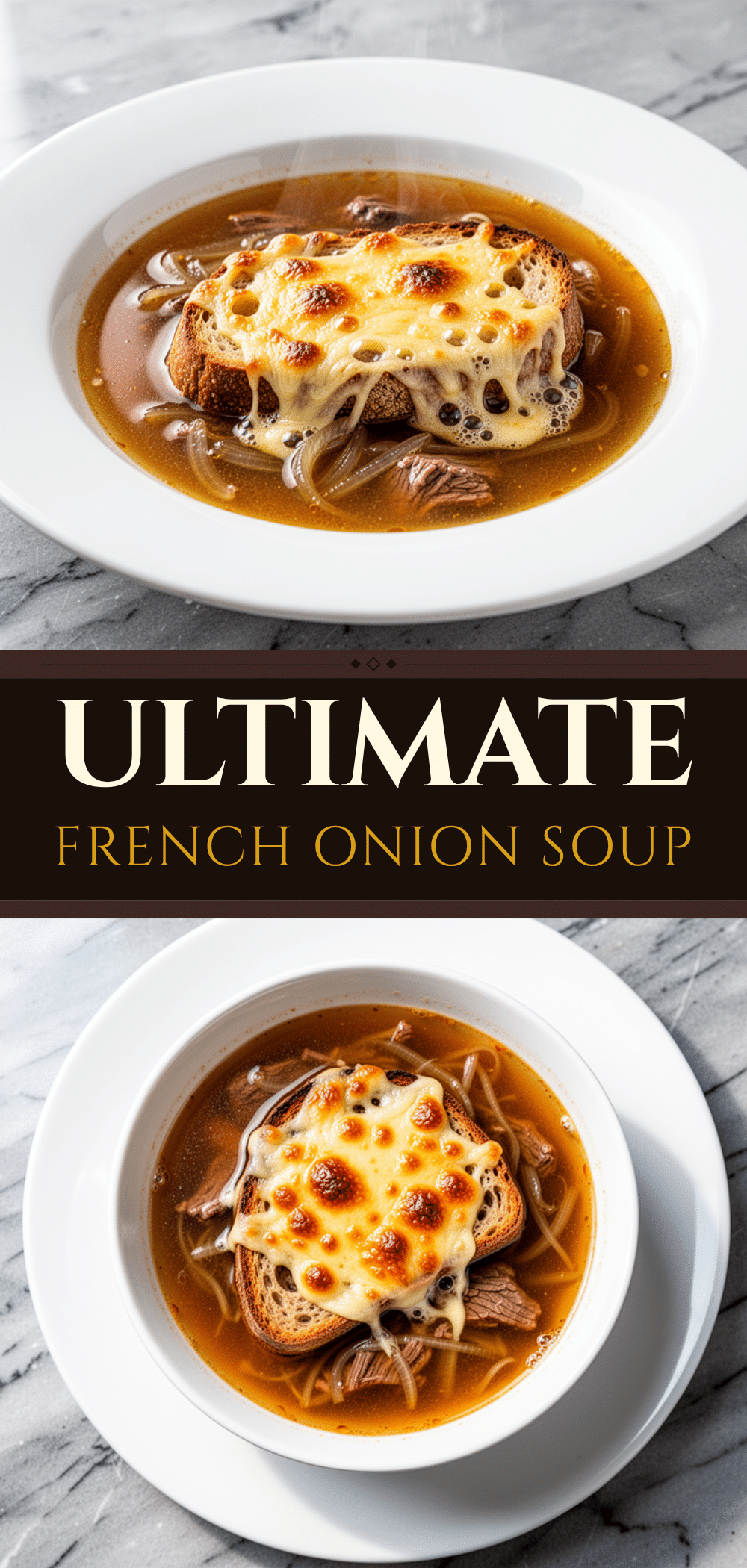

French Onion Soup: Best Easy Restaurant-Style Recipe
- Total Time: 1 hour 55 minutes
- Yield: 6 servings 1x
Description
A rich, caramelized French onion soup made with yellow onions, white wine, and beef broth, topped with crusty baguette and melted Gruyere and Parmesan cheese. This recipe delivers a gourmet, restaurant-quality experience at home.
Ingredients
- 4 large yellow onions (about 3 lbs / 1.4 kg), peeled and sliced into half-moons
- 4 tablespoons unsalted butter
- 1 tablespoon granulated sugar
- Kosher salt, to taste
- 2 tablespoons all-purpose flour
- 1 cup dry white wine (such as Sauvignon Blanc or Pinot Grigio)
- 6 cups beef broth (low-sodium recommended)
- 1 bay leaf
- 2 sprigs fresh thyme (or 1 teaspoon dried thyme)
- 1 French baguette, sliced into ½-inch rounds
- 2 cups Gruyere cheese, grated
- ½ cup Parmesan cheese, grated
- Freshly cracked black pepper
Instructions
- Slice the onions into uniform half-moon slices.
- Melt butter in a large Dutch oven over medium heat. Add onions, salt, and sugar. Cover and cook for 15 minutes, stirring every 5 minutes.
- Remove the lid, reduce heat to medium-low, and cook onions for 45-60 minutes, stirring occasionally, until deeply caramelized and dark brown.
- Sprinkle flour over the caramelized onions and stir for 1-2 minutes. Pour in white wine and simmer for 2 minutes to deglaze the pot.
- Add beef broth, bay leaf, and thyme. Bring to a boil, then reduce heat and simmer uncovered for 20-30 minutes. Remove bay leaf and season with salt and pepper.
- Preheat broiler to high. Slice baguette into rounds.
- Ladle hot soup into broiler-safe bowls. Top each with a bread slice and a generous amount of Gruyere and Parmesan cheese.
- Broil for 2-5 minutes until cheese is bubbly and golden brown. Serve immediately.
Notes
Patience is key for caramelizing onions; do not rush this step. Use fresh grated cheese for best melting results. The soup improves in flavor if made ahead and stored in the fridge for up to 5 days. Do not reheat the cheese topping; reheat the soup separately and add fresh bread and cheese before broiling.
- Prep Time: 10 minutes
- Cook Time: 1 hour 45 minutes
- Category: Soup
- Cuisine: French
Nutrition
- Serving Size: 1 bowl with crouton
- Calories: 380
- Sugar: 12
- Sodium: 650
- Fat: 18
- Saturated Fat: 10
- Carbohydrates: 35
- Fiber: 3
- Protein: 12
Keywords: French onion soup, restaurant style, caramelized onions, Gruyere cheese, comfort food, winter soup, easy dinner