Last November, I came home from work at 6:30 PM exhausted. My feet hurt, my brain was fried, and the last thing I wanted to do was stand over a stove stirring something for an hour. I opened the fridge, stared at a sad bag of carrots and a piece of chuck roast I’d forgotten to thaw, and sighed. Then I remembered I had a crockpot in the back of the cupboard. I threw everything in, set it to low, and went to take a nap.
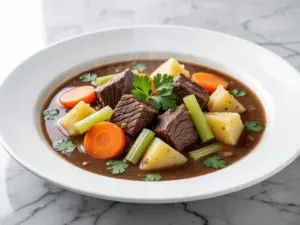
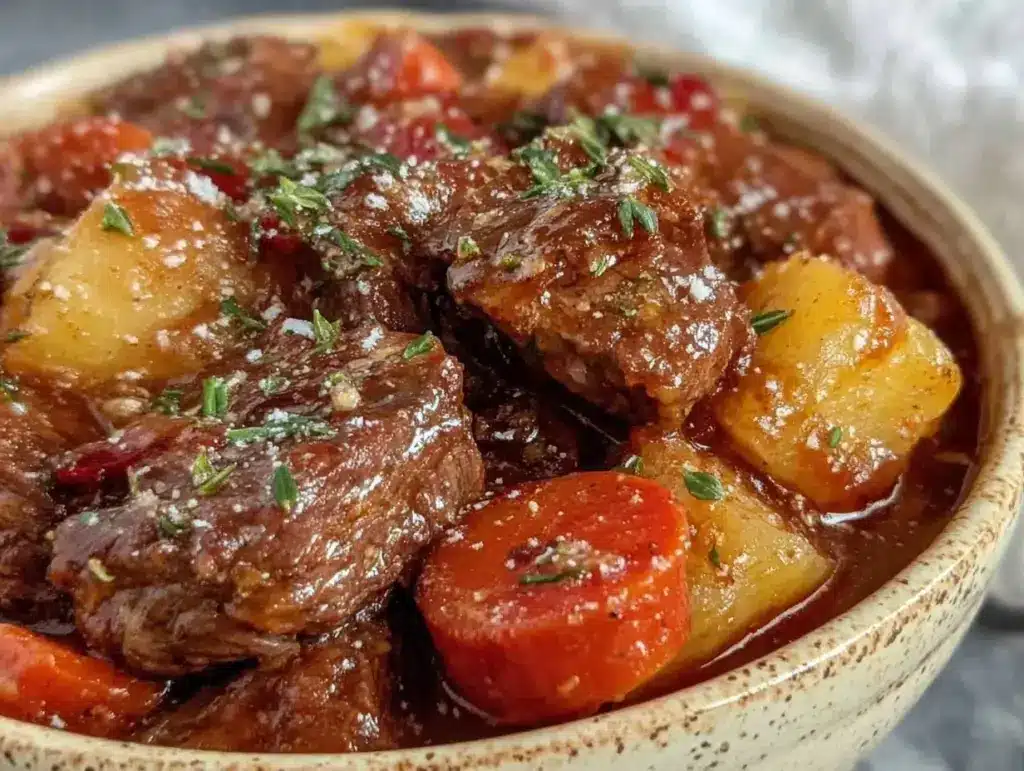
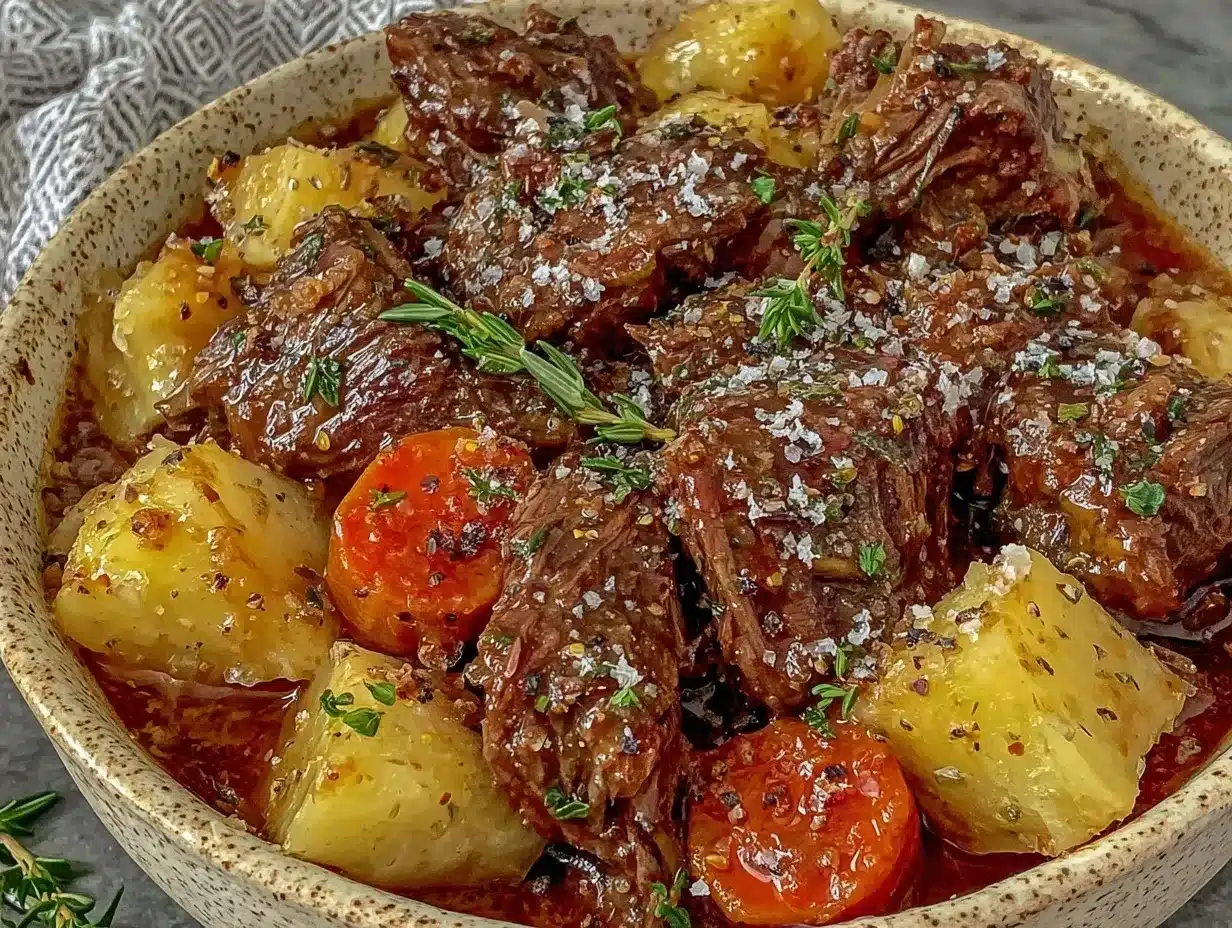
When I woke up, the smell hitting me wasn’t just dinner—it was a hug. The house smelled like warm comfort, thyme, and browned meat. I pulled up the lid and saw this rich, dark, glossy stew with potatoes that practically melted into the broth. I ate two bowls. Two. Before my husband even got home.
This crockpot beef stew is the ultimate “5pm and nothing planned” rescue. It’s the kind of meal that makes you feel like a culinary genius without actually requiring you to be one. I’ve made this recipe so many times that I can do it with one eye open (though I don’t recommend it). The potatoes turn tender, the carrots get sweet, and the beef falls apart with a fork. It’s hands-down the best way to use up those root vegetables piling up in your crisper drawer.
Unlike my Instant Pot beef and barley stew, which is a fantastic 30-minute weeknight miracle, this version is for when you have more time but less energy. It’s pure set-it-and-forget-it magic. Once you taste this, you’ll be making it on repeat, rain or shine.
Why You’ll Love This Recipe
There are about ten reasons I keep making this stew, but here are the big ones that keep it in my regular rotation:
- Zero Stress — Seriously, if you can chop a potato, you can make this. I’ve made this while watching TV, while on the phone, and once while helping my kid with a math problem. It does not require your attention.
- Minimal Cleanup — This is the real winner. You chop veggies, throw them in the pot, add liquid, and go. That’s it. One pot. Maybe a cutting board. Compare that to the mountain of dishes from labor day BBQ chicken skewers and you’ll see why this is my savior.
- Make-Ahead Friendly — Chop everything on Sunday, put it in a bag or container, and dump it in the crockpot on Tuesday. Dinner is literally already prepped.
- Freezer-Friendly — I often double this recipe. Half goes in the crockpot, half goes in the freezer. When I’m too tired to cook, I thaw a container and reheat it. It tastes just as good reheated as fresh.
- Comfort in a Bowl — It’s warm, hearty, and filling. It’s the kind of food that sticks to your ribs and makes you feel cared for, even if you’re eating alone on the couch.
This is my go-to when I need dinner to just work. No fancy techniques, no weird ingredients you have to hunt for, just reliable, delicious food that makes everyone happy.
Ingredients You’ll Need
Here’s the best part: you probably have most of this already. This is pantry-friendly cooking at its finest. I’m particular about three ingredients here, and I’ll tell you exactly why.
For the Meat and Base
Beef chuck roast (2-3 pounds / 900g-1.3kg) — This is non-negotiable. You need a cut with some fat and connective tissue. Lean round roast will turn out dry and tough. Chuck roast breaks down into tender, shreddable pieces. Ask your butcher to cut it into 1.5-inch cubes, or do it yourself.
Beef broth (32 oz / 4 cups) — I use low-sodium so I can control the saltiness. If you use regular broth, reduce the added salt in the recipe. Vegetable broth works if you want a lighter version, but beef is richer.
Red wine (½ cup / 120ml) — Dry red wine like Cabernet, Merlot, or Pinot Noir adds depth and acidity that cuts through the richness. You don’t need to buy expensive wine, but don’t use cooking wine from the vinegar aisle. If you don’t drink alcohol, substitute with extra beef broth and a splash of balsamic vinegar.
The Veggies
Yellow onions (2 medium, chopped / about 300g) — Sweet and savory base. Yellow onions are standard, but sweet onions work too. Avoid white onions here—they’re too sharp and sharp when cooked down.
Carrots (4 large, peeled and chopped / about 400g) — Cut them into 1-inch chunks. If they’re too thin, they’ll turn to mush. If they’re too thick, they’ll be crunchy. Aim for uniform chunks so they cook evenly.
Potatoes (1.5 pounds / 680g, peeled and cubed) — Yukon Golds are my favorite because they hold their shape well but get creamy. Russets work too but can disintegrate if cooked too long. Red potatoes are okay but a bit waxy for this style.
Celery (2 stalks, chopped / about 100g) — Adds that classic savory backbone. Don’t skip it; it balances the sweetness of the carrots.
The Flavor Builders
Garlic (4-5 cloves, minced / about 2 tablespoons) — Fresh only. Jarred garlic tastes metallic and flat in a slow-cooked stew. If you’re being lazy, buy pre-peeled cloves, but mince them yourself.
Tomato paste (2 tablespoons) — This adds umami and helps thicken the sauce. It’s not for tomato flavor; it’s for depth. If you don’t have it, you can skip it, but the stew will be less rich.
Dried thyme (1 teaspoon) — Thyme is the soul of beef stew. Fresh thyme works too, but use twice as much. Rosemary is okay, but it can overpower. Stick with thyme.
Bay leaves (2 leaves) — Essential for that slow-cooked aroma. Remove them before serving, or you’ll bite into a leafy surprise.
Worcestershire sauce (1 tablespoon) — A secret weapon. It adds saltiness and savory depth. A little goes a long way.
Flour (2 tablespoons) — Used to thicken the stew. I toss the beef in it before adding, or I make a slurry at the end. Both work.
Equipment Needed
You don’t need fancy equipment for this. Here’s what I actually use:
4-6 quart Crockpot or Slow Cooker — I use a standard oval slow cooker. It fits the roast and veggies comfortably. If you have a smaller one, you might need to cook in batches or use a larger cut of meat.
Large Bowl — For tossing the beef with flour.
Cutting Board and Knife — For chopping veggies. A sharp knife makes this way faster.
Measuring Spoons and Cups — Standard stuff.
Wooden Spoon or Spatula — For stirring. Silicone works too.
Optional: Ladle — For serving. Makes it easier to get that perfect ratio of meat, veggies, and broth.
How to Make It: Step-by-Step
Alright, let’s make this! I’m walking you through exactly how I do it, including the little tricks I’ve picked up over the years.
Step 1: Prep the Beef (5 minutes)
Pat the beef cubes dry with paper towels. This seems minor, but dry meat browns better and absorbs the flour coating more evenly. Toss the beef in a large bowl with the flour, salt, and pepper. Coat them well. The flour will help thicken the stew later.
Step 2: Add Everything to the Pot (5 minutes)
Add the coated beef to the bottom of the slow cooker. On top, layer the chopped onions, carrots, potatoes, and celery. Sprinkle the minced garlic, dried thyme, bay leaves, and Worcestershire sauce over the top. Pour in the beef broth and red wine. Stir gently to combine. Make sure the bay leaves are submerged.
Step 3: The Long Wait (6-8 hours)
Cover and cook on LOW for 6-8 hours. I know, it’s a long time. But this is the beauty of it. You don’t need to watch it. If you’re short on time, you can cook on HIGH for 3-4 hours, but the texture of the beef won’t be quite as tender. Low and slow is the way to go for that melt-in-your-mouth quality.
Step 4: Thicken the Stew (5 minutes)
About 30 minutes before serving, check the stew. The potatoes should be tender when pierced with a fork. If the stew looks too thin, mix 1 tablespoon of cornstarch with 1 tablespoon of cold water to make a slurry. Stir this into the pot. Cover and cook on HIGH for another 15-20 minutes until thickened. If you used the flour in Step 1, you might not need this step, but I usually do for a richer gravy.
Step 5: Finish and Serve
Remove the bay leaves. Taste and adjust salt and pepper. The broth should be rich and coating the back of a spoon. Serve hot with crusty bread or over mashed potatoes.
Expert Tips & Tricks
Here’s everything I’ve learned from making this dozens of times. These tips will save you from my mistakes.
Don’t Skip the Dry Beef
Patting the beef dry helps the flour stick. If the beef is wet, the flour turns into a gloopy paste instead of a coating. It’s a small step that makes a big difference in texture.
Cut Veggies Uniformly
Try to cut your carrots and potatoes into similar sizes. If some are huge and some are tiny, the tiny ones will turn to mush before the big ones are tender. Uniformity ensures even cooking.
Layering Flavor
Some people like to brown the beef first. I don’t always do it because I’m lazy, but if you have time, searing the beef in a pan before adding it to the pot adds a deeper, roasted flavor. It’s worth the extra dish if you’re feeling fancy.
The Cornstarch Slurry
Never pour cornstarch directly into hot liquid—it clumps. Always mix it with cold water first. And always add it near the end of cooking. If you add it too early, the prolonged heat can break down the thickening power.
Acidity Balance
If the stew tastes flat, add a splash of vinegar or lemon juice right before serving. It brightens the heavy flavors. I keep a small bottle of red wine vinegar in the pantry for this exact reason.
Variations & Substitutions
Once you’ve nailed the basic version, here’s how you can mix it up. I’ve tried all of these.
Potato Swap
Use sweet potatoes instead of regular potatoes for a slightly sweeter, orange-hued stew. It’s delicious and adds a different nutrient profile.
Add Peas
Stir in 1 cup of frozen peas in the last 15 minutes of cooking. They add color and a pop of sweetness. Classic combo with carrots.
Gluten-Free
Use gluten-free flour to coat the beef, or skip the flour entirely and use a cornstarch slurry at the end. The rest of the ingredients are naturally gluten-free.
Lighter Version
Use chicken broth instead of beef broth and reduce the red wine. It’s lighter but still flavorful. I make this when I want something less heavy.
Vegetarian
Swap beef for portobello mushrooms or hearty root vegetables like turnips and parsnips. Use vegetable broth. It’s not the same, but it’s still a cozy stew.
Serving & Storage
How to Serve
I usually serve this straight from the slow cooker into bowls, topped with fresh parsley if I have it. But here are other ways I’ve enjoyed it:
- Crusty Bread — Essential for dipping. Garlic bread is my go-to.
- Mashed Potatoes — Spoon the stew over creamy mashed potatoes for extra comfort.
- With a Salad — A simple green salad with a vinaigrette cuts through the richness.
Storage Instructions
Refrigerator: Store in an airtight container for up to 4 days. The flavors actually get better on day 2 and 3. It’s like a stew that improves with age.
Reheating: Reheat on the stovetop over medium-low heat, stirring occasionally. Add a splash of broth or water if it’s too thick—it thickens in the fridge. Microwave works too, but stir in between bursts to ensure even heating.
Freezing: Yes, this freezes well! Let it cool completely, then portion into freezer bags or containers. Freeze for up to 3 months. Thaw in the fridge overnight before reheating. Note: Potatoes can get a bit grainy after freezing, but they’re still good.
Nutrition Information
I’m not a nutritionist, but here’s the breakdown if you’re tracking. This is per serving based on 6 servings.
| Nutrient | Amount |
|---|---|
| Calories | 380 |
| Protein | 25g |
| Carbs | 30g |
| Fiber | 4g |
| Fat | 18g |
| Sodium | 650mg |
Look, this is comfort food with beef and potatoes. It’s not a diet recipe. But it’s way better than takeout, costs less, and I know exactly what’s in it. When I want to make it lighter, I add more veggies and less meat. But usually? I just eat a reasonable portion and enjoy it.
Final Thoughts
So that’s my go-to crockpot beef stew! I’ve probably talked your ear off at this point, but when you make a recipe this often, you have a lot to say about it. This has saved weeknight dinners more times than I can count. It’s my answer to “what’s for dinner” when I’m tired, don’t want takeout, and still want something that tastes really good. My kids are happy, my husband’s happy, and I’m happy because I’m not stressed about cooking.
Make it yours! Try different add-ins, swap in your favorite vegetables, adjust the herbs to your liking. The best recipes are the ones you adapt to your family’s tastes. If you make this, drop a comment and let me know what you think! I love hearing how recipes turn out in your kitchen. And if something doesn’t work, tell me that too—I’m here to help troubleshoot.
Happy cooking! And I hope your kitchen smells half as good as mine does right now.
Frequently Asked Questions
Can I use frozen veggies?
Yes, but add them in the last hour of cooking. Frozen carrots and potatoes will turn to mush if cooked for 8 hours. Fresh veggies are better for texture, but frozen peas work great at the end.
Why is my stew too thin?
Slow cookers don’t evaporate liquid like stovetop cooking. Use the cornstarch slurry method near the end to thicken it. Or, just leave it as a soupier stew and serve it with bread for dipping!
Can I cook this on high?
Yes, but it will take 3-4 hours. The beef won’t be as tender as the low-and-slow method, but it’s still delicious if you’re in a hurry.
Can I add wine if I don’t drink it?
Substitute with extra beef broth and 1 tablespoon of balsamic vinegar. The vinegar adds the acidity that the wine would provide.
How do I reheat leftovers?
Stovetop is best. Add a splash of broth to loosen it up, then heat gently. Microwave works too, but stir frequently to prevent hot spots.
Pin This Recipe!
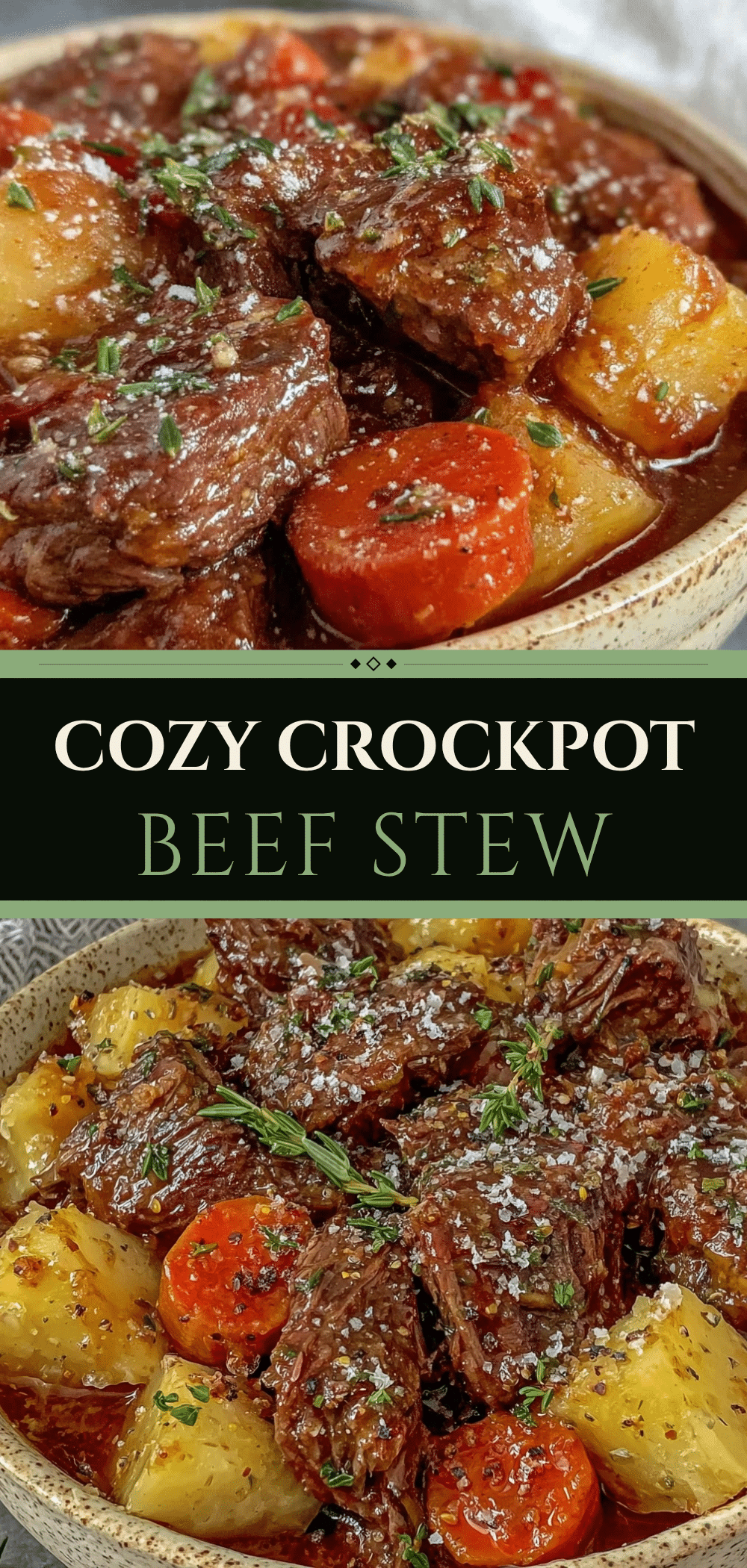
Crockpot Beef Stew: Easiest Weeknight Dinner
- Total Time: 6 hours 10 minutes
- Yield: 6 servings 1x
Description
A rich, hearty, and hands-off slow cooker beef stew that uses chuck roast and root vegetables. Perfect for busy weeknights, this recipe requires minimal prep and cleanup while delivering maximum comfort food flavor.
Ingredients
- 2–3 pounds beef chuck roast, cut into 1.5-inch cubes
- 2 tablespoons flour
- Salt and pepper to taste
- 2 medium yellow onions, chopped
- 4 large carrots, peeled and chopped into 1-inch chunks
- 1.5 pounds potatoes (Yukon Gold recommended), peeled and cubed
- 2 stalks celery, chopped
- 4–5 cloves garlic, minced
- 2 tablespoons tomato paste
- 1 teaspoon dried thyme
- 2 bay leaves
- 1 tablespoon Worcestershire sauce
- 32 oz (4 cups) beef broth (low-sodium recommended)
- ½ cup dry red wine (Cabernet, Merlot, or Pinot Noir)
Instructions
- Pat the beef cubes dry with paper towels and toss them in a large bowl with the flour, salt, and pepper until well coated.
- Place the coated beef at the bottom of a 4-6 quart slow cooker.
- Layer the chopped onions, carrots, potatoes, and celery on top of the beef.
- Sprinkle the minced garlic, dried thyme, bay leaves, and Worcestershire sauce over the vegetables.
- Pour in the beef broth and red wine. Stir gently to combine, ensuring bay leaves are submerged.
- Cover and cook on LOW for 6-8 hours (or HIGH for 3-4 hours if short on time).
- About 30 minutes before serving, check for tenderness. If the stew is too thin, mix 1 tablespoon cornstarch with 1 tablespoon cold water to create a slurry.
- Stir the slurry into the pot, cover, and cook on HIGH for another 15-20 minutes until thickened.
- Remove bay leaves, taste, and adjust salt and pepper as needed.
- Serve hot with crusty bread or over mashed potatoes.
Notes
For best results, use beef chuck roast as leaner cuts will be tough. If you don’t drink alcohol, substitute the red wine with extra beef broth and a splash of balsamic vinegar. To make it gluten-free, use gluten-free flour or skip the flour and rely on a cornstarch slurry at the end. Potatoes may become grainy after freezing, but the stew remains delicious.
- Prep Time: 10 minutes
- Cook Time: 6-8 hours
- Category: Main Course
- Cuisine: American
Nutrition
- Serving Size: 1 bowl
- Calories: 380
- Sodium: 650
- Fat: 18
- Carbohydrates: 30
- Fiber: 4
- Protein: 25
Keywords: crockpot beef stew, slow cooker dinner, weeknight dinner, comfort food, beef stew recipe, easy stew, root vegetable stew