There was a period in my life where I was convinced that cooking a restaurant-quality steak at home was a fool’s errand. I’d spend $45 on a ribeye, sit in a dimly lit dining room, and watch my meat arrive with a sad, gray ring of overcooked beef encircling a tiny, dry center. Meanwhile, I’d come home to my own kitchen, fire up the stove, and produce something that looked like it had been boiled. I was frustrated, broke, and frankly, a little embarrassed by my culinary limitations.
The turning point wasn’t some dramatic epiphany or a fancy cooking class. It was a Tuesday night in November. My partner had just gotten home from a brutal shift at work, hungry and exhausted. I wanted to do something special without ordering takeout, which meant I had to actually cook. I looked at the beautiful, marbled ribeye in our freezer—thawed, yes, but still intimidating—and my cast iron skillet that hadn’t seen heavy use since I moved into the apartment.
I decided to try that butter basting method I’d seen a hundred times on social media. You know the one: the one with the spoon, the garlic cloves, and the rosemary sprigs, where the chef keeps spooning hot, foaming butter over the meat. I was skeptical. It looked like theater. But I threw the steak in the screaming hot pan, waited for the crust to form, and then did it. I added the butter, the garlic, the herbs, and I started spooning. And spooning. And spooning.
When I finally cut into it, the knife slid through like butter itself. The crust was dark, crackly, and nutty. The inside was a perfect, rosy pink. And the flavor? It was infused with that toasted garlic and herb butter that you just cannot get from a grill or an oven. My partner didn’t even complain about the lack of wine pairing. He just ate three helpings and asked for seconds. That was the moment I realized: I didn’t need a chef’s knife or a $3,000 range to make something incredible. I just needed a cast iron skillet, some patience, and the courage to baste.
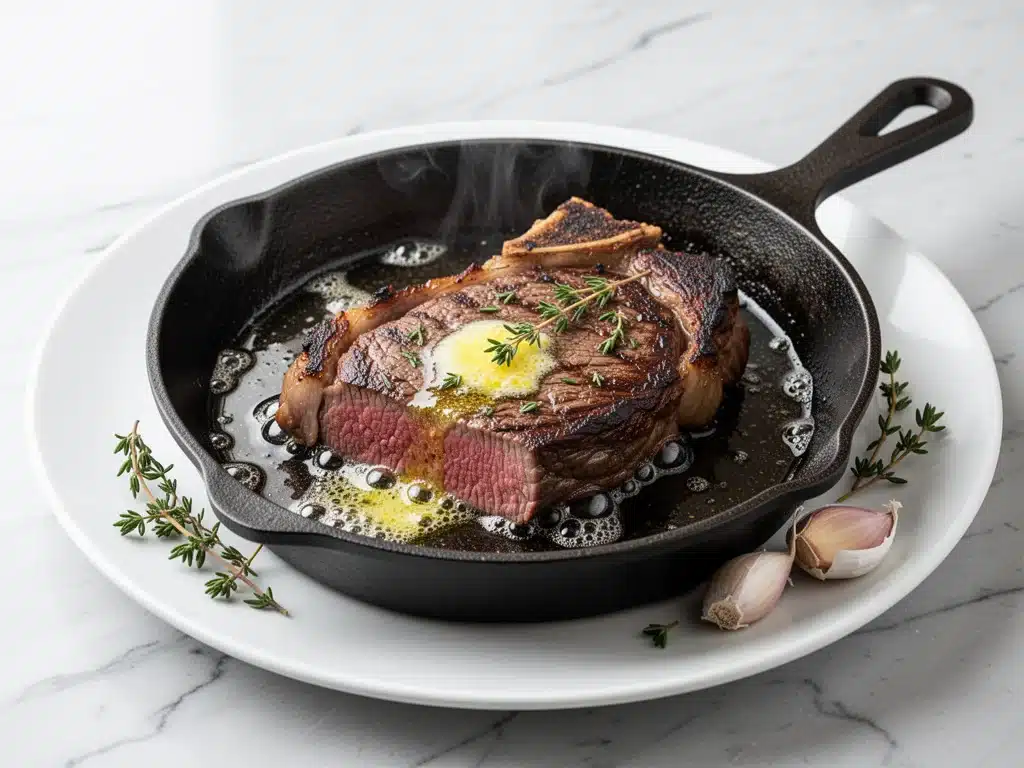
This cast iron skillet butter basted ribeye steak has become my go-to for impressing guests, celebrating anniversaries, or just treating myself on a random Wednesday. It’s not just about the meat; it’s about the ritual. It’s about standing over the stove, spooning hot butter, and watching the magic happen. Once you master this, you’ll never look at a steak the same way again.
Why You’ll Love This Recipe
I know what you’re thinking. “Butter basting sounds complicated” or “I don’t have a cast iron skillet.” But let me tell you why this method has completely changed how I cook protein. It’s not just about following a trend; it’s about the results. Here’s why this butter basted ribeye is the king of weeknight dinners (even the fancy ones).
Restaurant Quality Without the Price Tag — Seriously. A ribeye at a steakhouse will run you $40-$60. The same cut from the grocery store? Usually under $30, often less if you buy well. You’re saving money while eating better food. I’ve made this for dinner parties where guests thought I’d hired a caterer. They were shocked to learn I did it in 15 minutes.
Flavor Infusion Like No Other — Grilling gives you char. Boiling gives you… well, boiled steak. But butter basting? It’s a technique that actively pushes flavor into the meat. As you spoon that hot, foaming butter over the steak, it carries the garlic and herb notes into every crevice of the crust. It’s like marinating, but happening in real-time. The result is a steak that tastes deeply aromatic, not just salty.
Forgiving Technique — I’ve heard people say butter basting is hard. I disagree. It’s actually one of the easiest ways to ensure doneness. Because you’re constantly checking the steak, you can’t accidentally leave it in the oven too long. You’re looking at it, touching it, and tasting the butter. If it’s done, you pull it. If it’s not, you keep basting. It’s visual, tactile cooking.
Crispy, Nutty Crust — The Maillard reaction is real, and cast iron is its best friend. That dark, caramelized exterior isn’t just pretty; it adds a nutty, toasty flavor that contrasts perfectly with the rich, tender interior. No other method gives you that specific crunch and depth of flavor so quickly.
Impressive Presentation — Let’s be honest, we all want to feel like a good cook. This steak looks stunning on the plate. It’s glossy, dark, and glistening. When you bring it to the table, the aroma alone will have people asking what the secret is. It makes you look like a pro, even if you’re just a beginner.
This recipe has saved so many dinner emergencies. It’s quick, it’s delicious, and it makes you feel capable in the kitchen. I keep a cast iron skillet ready at all times, just for this purpose.
Ingredients You’ll Need
Here’s the thing about this recipe: it’s simple, which means the quality of your ingredients matters even more. You can’t hide behind complex sauces or spices. What you have is what you get. I’m not asking you to buy anything exotic, but I am asking you to pay attention to what you choose.
The Steak
Ribeye Steak (1.5 to 2 pounds / 700g-900g) — This is non-negotiable for the best texture. Ribeye has that beautiful marbling (intramuscular fat) that keeps it juicy. Look for a thick cut—at least 1.5 inches thick. Thin steaks will overcook before they get a good crust. Bone-in or boneless? I prefer boneless for easier flipping, but bone-in adds flavor. If you can’t find ribeye, strip steak or New York strip work well too, though they’ll be slightly leaner.
The Fat for Searing
High-Smoke Point Oil (2 tablespoons / 30ml) — I use avocado oil or grapeseed oil. Do NOT use extra virgin olive oil here. It will burn at the high heat needed for a good sear. Avocado oil is my favorite because it’s neutral and handles heat beautifully. Olive oil is for finishing, not searing.
The Butter Baste
Unsalted Butter (4 tablespoons / 60g) — Yes, a lot of butter. This is the heart of the technique. Use good quality butter—European style if you can find it, as it has a higher fat content and richer flavor. Unsalted is important so you can control the sodium.
Aromatic Ingredients
Garlic Cloves (4-5 cloves, lightly smashed) — Keep them in the skin or just smash them with the side of your knife. This releases the flavor without burning as fast as minced garlic. Minced garlic would burn and turn bitter in the hot butter. Smashed cloves are sweet and mellow.
Fresh Thyme or Rosemary (2-3 sprigs) — Fresh herbs are crucial. Dried herbs won’t release the same essential oils. Thyme is classic and subtle. Rosemary is stronger and piney. I usually use thyme for a ribeye, but rosemary is amazing if you like that bold flavor. Do not use both unless you want a very herbal steak.
Seasoning
Kosher Salt (1 tablespoon / 15g) — Kosher salt is better than table salt because the flakes are larger and easier to control. It draws out moisture and creates that crust. Coarse sea salt works too. Avoid table salt; it’s too fine and can make the steak overly salty.
Freshly Cracked Black Pepper (1 teaspoon) — Freshly cracked is key. Pre-ground pepper tastes dusty and flat. Grind it right before you cook. The heat will toast the pepper slightly, adding a nice aroma.
Optional Add-ins
Shallots (1 large, sliced) — If you want a bit of sweetness and oniony flavor, add a sliced shallot to the butter baste. It caramelizes beautifully.
Equipment Needed
You don’t need a fancy kitchen to make this. In fact, some of the best steaks I’ve ever had were cooked on basic equipment. Here’s what you actually need:
Cast Iron Skillet — This is the star of the show. Cast iron holds heat incredibly well and distributes it evenly. This creates the uniform crust you want. A 10-inch or 12-inch skillet is perfect. If you don’t have cast iron, a heavy stainless steel skillet works, but you’ll need to be more careful about hot spots. Non-stick? Avoid it. You need high heat, and non-stick coatings can degrade or just not get hot enough for a good sear.
Tongs — Metal tongs are essential. You need to flip the steak multiple times and move it around the pan. Forks will puncture the meat and let the juices out. Tongs give you a gentle but firm grip.
Spoon — A large metal spoon, preferably one with a long handle. This is for basting. You’ll be dipping it into the hot butter and pouring it over the steak repeatedly. A stainless steel spoon works best.
Instant-Read Thermometer — I know some chefs say they cook by touch, but I’m a home cook. I want accuracy. An instant-read thermometer takes the guesswork out. It’s the only way to guarantee you hit that perfect medium-rare every single time. I use a ThermoWorks or a cheap digital one from Amazon—both work fine.
Aluminum Foil — For resting the steak. You’ll tent it loosely after cooking to keep it warm while it reabsorbs its juices.
Plate or Cutting Board — For resting. Don’t skip this step!
How to Make It: Step-by-Step
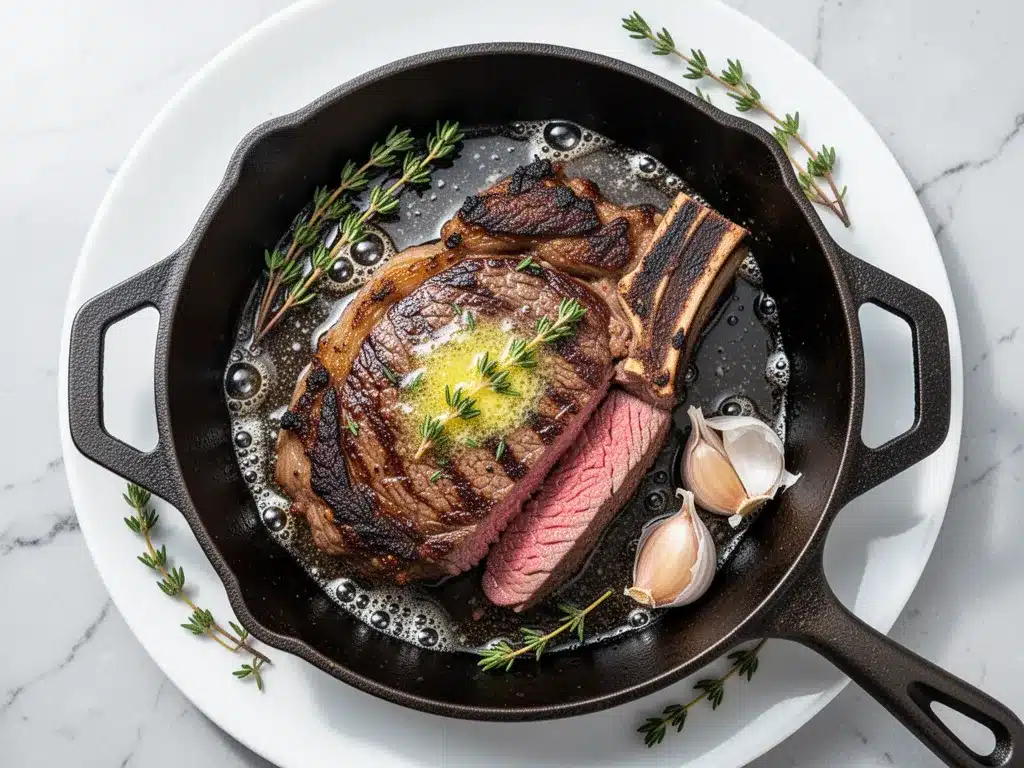
Alright, let’s get cooking. This process is straightforward, but timing is everything. I’m going to walk you through exactly how I do it, including the little tricks that make the difference between good and great.
Step 1: Prep the Steak (10 minutes)
Take your ribeye out of the fridge at least 30-45 minutes before cooking. This is called bringing it to room temperature. If you throw a cold steak into a hot pan, the center will stay cold while the outside burns. Pat the steak completely dry with paper towels. This sounds boring, but dry meat sears better. Moisture creates steam, and steam prevents browning. Season both sides generously with kosher salt and freshly cracked black pepper. Don’t be shy with the salt; you want a good crust.
Step 2: Heat the Pan (5 minutes)
Place your cast iron skillet over high heat. Let it get hot. I mean really hot. You want to see faint wisps of smoke rising from the pan. This can take 5-7 minutes. Don’t rush this. If the pan isn’t hot enough, the steak will stick and boil instead of sear. Once it’s smoking hot, add your avocado oil. Swirl it around to coat the bottom.
Step 3: The Sear (3-4 minutes per side)
Lay the steak into the pan away from you to avoid splashing. You should hear a loud, aggressive sizzle. If it’s quiet, your pan isn’t hot enough. Don’t touch it for 2-3 minutes. Let that crust form. You’ll see the edges turning brown. After 3 minutes, flip the steak. You should have a deep, dark brown crust. Sear the other side for another 3 minutes. If your steak is very thick, you might want to sear the edges too, holding it with tongs for 30 seconds per side.
Step 4: The Butter Baste (2-3 minutes)
Reduce the heat to medium-low. Add the butter, smashed garlic cloves, and herb sprigs to the pan. The butter will melt and start to foam. As soon as it foams, tilt the pan slightly so the butter pools at the lower edge. Using your spoon, start scooping the hot butter and pouring it over the top of the steak. Keep doing this! Spoon, pour, spoon, pour. The garlic and herbs will infuse the butter, and that flavored butter will penetrate the crust. This process takes about 2-3 minutes. The butter will turn a nice golden brown color, indicating it’s toasted and flavorful.
Step 5: Check the Temperature
Insert your instant-read thermometer into the thickest part of the steak. For medium-rare, you want 130°F (54°C). For medium, 140°F (60°C). Remember, the temperature will rise 5 degrees while it rests. So pull it when it’s 5 degrees below your target. If it’s not there yet, keep basting for another minute.
Step 6: Rest the Steak (10 minutes)
This is the hardest part, but the most important. Transfer the steak to a plate or cutting board. Tent it loosely with aluminum foil. Let it rest for at least 10 minutes. Do not skip this! Resting allows the juices to redistribute. If you cut it immediately, all those delicious juices will run out onto the board, leaving you with dry meat. The 10 minutes lets the fibers relax and hold onto the moisture.
Step 7: Serve
After resting, slice the steak against the grain. This means cut perpendicular to the direction of the muscle fibers. This makes each bite tender. Spoon any remaining butter from the plate over the sliced steak. Serve immediately.
Expert Tips & Tricks
I’ve made this steak dozens of times, and I’ve learned a few things the hard way. Here’s how to avoid my mistakes.
Don’t Crowd the Pan — If you’re cooking multiple steaks, do it in batches. Overcrowding the pan lowers the temperature and steams the meat. You want a sear, not a steam bath. Cook one or two steaks at a time max.
Patience with the Sear — It’s tempting to flip the steak every minute to “cook it evenly.” Don’t do that. Let the Maillard reaction happen. A good crust takes time. If you flip too often, you never get that deep brown color.
Garlic Management — If your garlic starts to burn during the baste, remove it with a slotted spoon. Burnt garlic tastes bitter and will ruin the butter. You can add fresh garlic later if you want, but usually, one round is enough.
Butter Color — Watch your butter closely. You want it to turn a nutty, golden brown. If it turns black, it’s burnt. If it stays pale, it’s not toasted enough. That golden color is where the flavor is.
Resting is Non-Negotiable — I know it’s hard to wait. But 10 minutes is worth it. If you’re really impatient, rest it for at least 5 minutes. But 10 is ideal.
Variations & Substitutions
Once you’ve mastered the basic ribeye, here are some ways to mix it up. I’ve tried all of these.
Garlic Herb Butter Rub — Instead of basting, mix softened butter with minced garlic and chopped herbs. Spread it on the steak before cooking. It won’t give you the same infused flavor as basting, but it’s easier.
Red Wine Reduction — After removing the steak, deglaze the pan with a cup of red wine. Scrape up the brown bits. Simmer until reduced by half. Add a knob of butter at the end. Pour this sauce over the steak. It’s rich and savory.
Peppercorn Crust — Press crushed black peppercorns onto the steak before searing. It adds a spicy kick and looks beautiful.
Gluten-Free — This recipe is naturally gluten-free, just make sure your butter and seasonings don’t have hidden gluten.
Serving & Storage
How to Serve — I serve this with roasted potatoes, asparagus, or a simple green salad. A glass of Cabernet Sauvignon or Malbec pairs perfectly. For a rustic presentation, serve the whole steak on a wooden board and let everyone slice their own portion.
Storage — Leftovers can be stored in an airtight container in the fridge for up to 3 days. Reheat gently in a skillet over low heat with a splash of broth or water to keep it moist. Do not microwave, as it will make the steak rubbery.
Freezing — I don’t recommend freezing cooked steak. The texture changes significantly. It’s best eaten fresh.
Nutrition Information
I’m not a nutritionist, but here’s the breakdown per serving (based on 2 servings):
- Calories: 650
- Protein: 45g
- Carbs: 1g
- Fat: 50g
- Saturated Fat: 20g
- Cholesterol: 160mg
- Sodium: 800mg
This is a high-protein, low-carb meal. The fat content is high due to the butter and marbling, which is great for satiety. If you’re watching sodium, reduce the salt in the seasoning.
Final Thoughts
That’s my cast iron skillet butter basted ribeye steak! It’s simple, it’s delicious, and it’s incredibly satisfying to make. I hope you give it a try. It’s not just about the steak; it’s about the experience of cooking something special in your own home. Once you master this, you’ll never go back to dry, overcooked restaurant steaks.
If you make this, let me know how it turns out! I love hearing from readers who try their hand at butter basting. Happy cooking!
Frequently Asked Questions
Can I use a different type of steak?
Yes, but ribeye is best because of its fat content. Strip steak or filet mignon work too, but filet is leaner and won’t get as juicy. Adjust cooking time accordingly.
Why is my steak sticking to the pan?
Your pan wasn’t hot enough, or the steak wasn’t dry enough. Make sure the pan is smoking hot and pat the steak dry before seasoning.
Can I use olive oil for searing?
Not recommended. Extra virgin olive oil has a low smoke point and will burn. Use avocado, grapeseed, or canola oil.
How do I know when the steak is done without a thermometer?
The touch test: compare the firmness of the steak to the fleshy part of your wrist for rare, the base of your thumb for medium-rare, and your chin for well-done. But a thermometer is much more accurate.
Can I baste with oil instead of butter?
You can, but you won’t get the same flavor. Butter adds nuttiness and richness that oil doesn’t have. If you’re dairy-free, try ghee or brown butter.
Pin This Recipe!
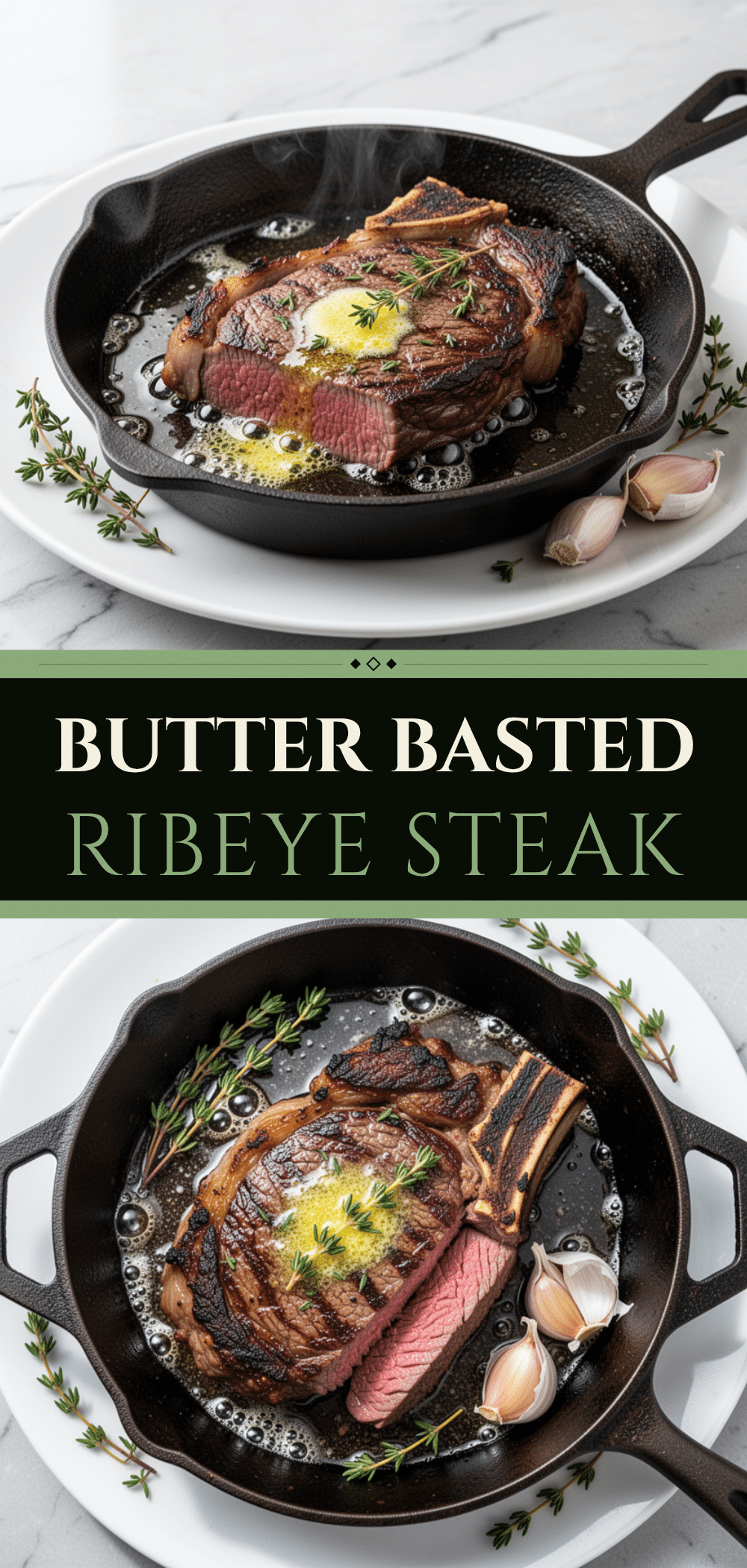
Cast Iron Ribeye Steak: Easy Butter Basted Perfection
- Total Time: 25 minutes
- Yield: 2 servings 1x
Description
A simple yet impressive method for cooking a restaurant-quality ribeye steak at home using a cast iron skillet and butter basting technique for a crispy crust and juicy interior.
Ingredients
- 1.5 to 2 pounds (700g-900g) Ribeye Steak (at least 1.5 inches thick)
- 2 tablespoons (30ml) High-Smoke Point Oil (e.g., avocado or grapeseed oil)
- 4 tablespoons (60g) Unsalted Butter
- 4–5 Garlic Cloves, lightly smashed
- 2–3 sprigs Fresh Thyme or Rosemary
- 1 tablespoon (15g) Kosher Salt
- 1 teaspoon Freshly Cracked Black Pepper
- 1 large Shallot, sliced (optional)
Instructions
- Take the steak out of the fridge 30-45 minutes before cooking to bring it to room temperature. Pat it completely dry with paper towels.
- Season both sides of the steak generously with kosher salt and freshly cracked black pepper.
- Place a cast iron skillet over high heat for 5-7 minutes until faint wisps of smoke rise from the pan.
- Add the high-smoke point oil to the hot pan and swirl to coat.
- Lay the steak into the pan away from you. Do not touch for 2-3 minutes to allow a crust to form.
- Flip the steak and sear the other side for another 3 minutes. Sear edges for 30 seconds per side if thick.
- Reduce heat to medium-low. Add butter, smashed garlic, and herb sprigs to the pan.
- Once butter foams, tilt the pan and spoon the hot butter over the steak repeatedly for 2-3 minutes until butter is golden brown.
- Check internal temperature with an instant-read thermometer: 130°F (54°C) for medium-rare or 140°F (60°C) for medium.
- Transfer steak to a plate or cutting board and tent loosely with aluminum foil. Rest for at least 10 minutes.
- Slice the steak against the grain and spoon remaining butter over the top before serving.
Notes
Ensure the pan is smoking hot before adding oil to prevent sticking. Do not crowd the pan; cook in batches if necessary. Resting the steak is crucial for juiciness. Avoid using extra virgin olive oil for searing as it burns easily.
- Prep Time: 10 minutes
- Cook Time: 15 minutes
- Category: Main Course
- Cuisine: American
Nutrition
- Serving Size: 1 steak (approx. 7-1
- Calories: 650
- Sodium: 800
- Fat: 50
- Saturated Fat: 20
- Carbohydrates: 1
- Protein: 45
Keywords: ribeye steak, cast iron skillet, butter basting, steak recipe, easy dinner, gluten-free, high protein