It was 11 PM on a Tuesday, and I was standing in my kitchen in the dead of winter, staring at a fridge that contained nothing but half a lemon, some sad spinach, and a jar of pickled carrots. Outside, the wind was howling so hard I could feel it rattling the windowpanes. I didn’t want takeout—I just wanted something warm, something that felt like a hug in a bowl. That’s when I decided to make Authentic Vietnamese Beef Pho for cozy weeknight dinners.
I know what you’re thinking. Pho? On a weeknight? Isn’t that a Saturday project involving 12 hours of simmering and a spice rack that takes up an entire cabinet? Here’s the thing: I used to think that too. For years, I assumed you needed to wake up at 4 AM to get that deep, dark, soul-warming broth. I bought those fancy spice toasts, charred the onions until they were charcoal, and spent hours skimming fat. It was delicious, sure, but it wasn’t sustainable for a Tuesday night when I just wanted to eat dinner and go to bed.
Then, a few years ago, I learned a shortcut that changed everything. It’s not a “hack” in the cheap sense—it’s a technique I picked up from a friend who grew up in Hanoi. She showed me how to build that authentic, complex flavor profile in about 30 minutes using a few smart swaps and a high-pressure cooker (or just a really good simmer). The result? A bowl of Authentic Vietnamese Beef Pho for cozy weeknight dinners that tastes like it came from a street stall in Saigon, but without the all-day commitment.
This isn’t just fast food. It’s comfort food. It’s the smell of star anise and cinnamon filling your house and making your family forget about their bad day. It’s the steam rising off the bowl fogging up your glasses. It’s the perfect balance of savory broth, tender beef, and fresh herbs. I’ve made this Authentic Vietnamese Beef Pho for cozy weeknight dinners at least once a week for the past two years, and it never gets old. If you’re tired of the same old pasta or roasted chicken routine, this is your new answer. Let’s get cooking.
Why You’ll Love This Recipe
There are a lot of reasons I keep coming back to this Authentic Vietnamese Beef Pho for cozy weeknight dinners, but let’s be real—it’s not just because it tastes good (though it does). It’s because it solves the biggest problem we all have: what to cook when we’re tired, broke, or both.
Stupid Simple Technique — Seriously, if you can sauté onions and boil water, you can master this broth. The key is in the prep, not the complexity. I’ve walked my teenage nephew through making this over video call, and he got it right on the first try. No fancy knife skills required.
Cozy Factor Off the Charts — There is nothing, and I mean nothing, that warms you up faster than a bowl of hot, aromatic broth. This is my go-to recipe when the weather turns bad. I make this when I need to feel safe and full. The spices are soothing, the steam is relaxing, and it just feels right.
Super Fast for “Authentic” Taste — Most people think authentic pho takes forever. This Authentic Vietnamese Beef Pho for cozy weeknight dinners takes about 30 minutes of active time. I use a trick with the spices—quick-toasting them in a dry pan—to get that deep flavor without waiting hours. It’s the best of both worlds.
Customizable for Everyone — My husband likes his rare beef slices, my mom likes her meatballs, and my kids like extra bean sprouts. This recipe is a blank canvas. You make it exactly how your family wants it. I love that I can throw a bunch of bowls on the table and let everyone build their own.
Budget-Friendly Comfort — Beef broth and flank steak are actually pretty cheap if you buy the right cuts. This feeds four people for less than the cost of two pizzas. It’s hearty, filling, and leaves you with leftovers that taste even better the next day (though I doubt there will be any left).
This is my answer to “I’m tired but I want to eat something real.” It’s reliable, it’s delicious, and it makes your kitchen smell like a five-star Vietnamese restaurant. That’s why I love it.
Ingredients You’ll Need
Here’s the best part: you probably have most of this already. I’m particular about a few things here, but for the most part, this is pantry-friendly stuff. Let’s break down what you need for this Authentic Vietnamese Beef Pho for cozy weeknight dinners.
For the Broth (The Soul of the Dish)
Beef bones (2 pounds / 900g) — I use a mix of marrow bones and knuckle bones for that rich, gelatinous body. You can find these at the butcher counter or Asian grocery store. If you can’t find them, good quality beef stock is a fine shortcut, but bones are better.
Beef chuck roast (1 pound / 450g) — This is the meat that simmers in the broth. Chuck is fatty and flavorful, so it stays tender. Flank steak is for the raw slices you add later; chuck is for the base.
Onion (1 large, halved) — We char this. It adds sweetness and depth. Don’t skip the charring; it’s what gives pho its signature roasted aroma.
Ginger (1 four-inch piece, halved) — Fresh ginger only. No powder. Char this right along with the onion. It cuts through the richness of the beef.
Star anise (2 whole) — The star of the show. Literally. These give pho its distinct licorice-like aroma. Buy whole spices, not ground, if you can.
Cinnamon stick (1 small stick) — Use the Vietnamese cassia stick if you can find it. It’s sweeter and more pungent than regular cinnamon. It adds warmth.
Coriander seeds (1 teaspoon) — Adds a citrusy, nutty background note. Toasting these brings out the flavor.
Fish sauce (3 tablespoons) — This is the salt and umami bomb. Use a good quality brand like Red Boat or Squid Brand. It’s essential for that authentic savory depth.
Sugar (1 teaspoon) — Just a pinch to balance the saltiness of the fish sauce. Rock sugar is traditional, but white sugar works fine.
Water (6 cups / 1.5 liters) — Good old H2O. Use filtered water if your tap water tastes weird.
For the Noodles and Assembly
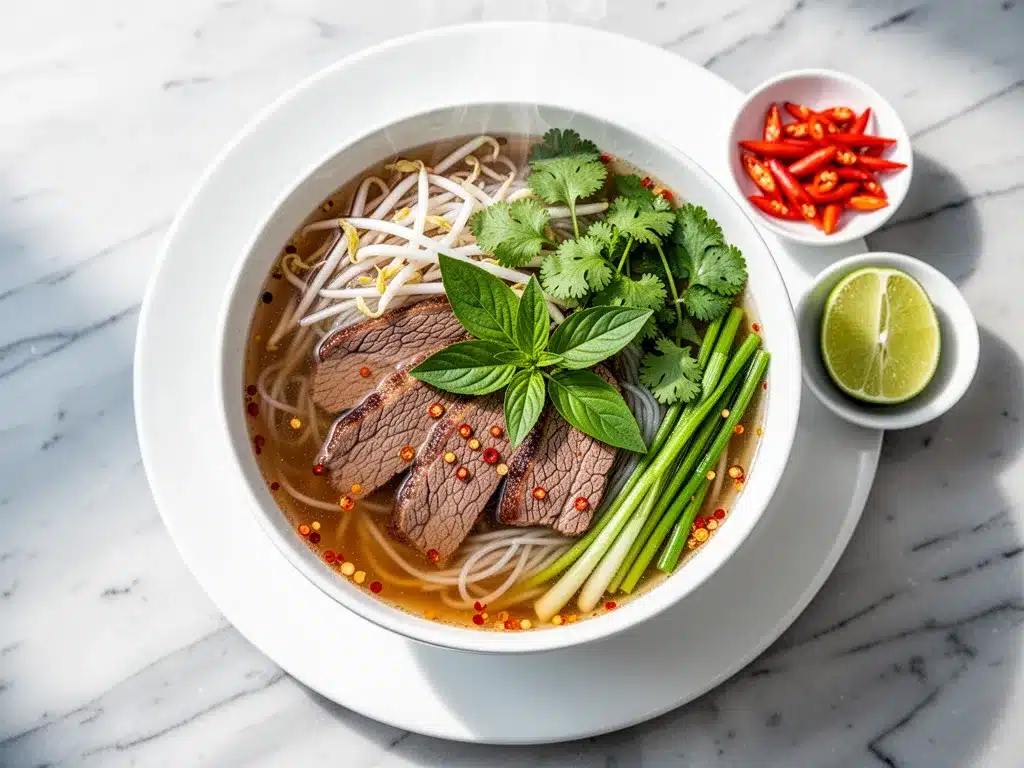
Rice noodles (8 ounces / 225g) — Look for flat, wide rice noodles (bánh phở). They’re the traditional choice. Fresh noodles are best, but dried works great too.
Flank steak (½ pound / 225g) — Thinly sliced against the grain. This is what you add to the hot broth to cook it to rare perfection. Freeze it for 30 minutes first to make slicing easier.
Bean sprouts (1 cup) — Fresh, crisp, and crunchy. They add texture and freshness.
Fresh herbs — Thai basil, cilantro, and mint. I love having a little of each. Thai basil has a licorice kick that pairs perfectly with the broth.
Lime wedges — A squeeze of lime brightens everything up. Essential.
Hoisin sauce and Sriracha — For dipping or stirring in. I like a mix of both for a sweet-spicy kick.
Soybean sprouts (optional) — Some people add these for extra crunch. I usually skip them, but they’re great if you like it crunchy.
Green onions (2 stalks, thinly sliced) — For garnish. Adds a nice oniony bite.
Serrano chilies (1-2, sliced) — For heat. Adjust to your spice tolerance.
Equipment Needed
You don’t need fancy equipment for this. Here’s what I actually use to make this Authentic Vietnamese Beef Pho for cozy weeknight dinners.
Large pot or Dutch oven — I use a 6-quart pot. It needs to hold all the water, bones, and meat comfortably. A heavy-bottomed pot helps distribute heat evenly.
Skillet — For charring the onion and ginger. Any skillet works. I use cast iron because it gets hot fast.
Strainer — You’ll need a fine-mesh strainer to skim the scum off the top of the broth. This is crucial for a clear, clean-tasting soup.
Sharp knife — For slicing the flank steak thinly. A dull knife will tear the meat; a sharp one will slice it like butter.
Colander — For rinsing the rice noodles.
Measuring spoons — Standard stuff. I keep a basic set in my drawer.
Small bowl — For mixing the hoisin and sriracha dipping sauce.
Optional: Pressure Cooker — If you have an Instant Pot, you can use it to speed up the broth cooking. But a regular pot works fine if you have time to simmer.
How to Make It: Step-by-Step
Alright, let’s make this! I’m walking you through exactly how I do it, including the little tricks I’ve picked up over the years. This process is straightforward, but timing is everything.
Step 1: Prep the Aromatics (5 minutes)
Turn your oven broiler on high. Place the halved onion and ginger on a baking sheet or directly on the oven rack. Broil for 3-4 minutes until they are charred and blackened on the cut sides. This charring is non-negotiable—it adds that smoky sweetness that defines good pho. Once charred, rinse them under cold water to remove any soot, then set aside.
Step 2: Toast the Spices (2 minutes)
In a dry skillet over medium heat, toast the star anise, cinnamon stick, and coriander seeds for about 1-2 minutes until fragrant. Be careful not to burn them, or they’ll taste bitter. Transfer them to a small piece of cheesecloth or a spice bag. This keeps the spices in the broth without leaving little bits floating around.
Step 3: Make the Broth (15-20 minutes active, then simmer)
In your large pot, add the beef bones and 6 cups of water. Bring to a boil. Once boiling, reduce heat to a gentle simmer. You’ll see scum (gray foam) rise to the top. Skim this off with a ladle or strainer. This step is important for a clear broth. Add the charred onion, ginger, and spice bag to the pot. Simmer for 30-45 minutes. If you’re using a pressure cooker, cook on high for 20 minutes.
Step 4: Cook the Beef Chuck (10 minutes)
Add the beef chuck roast to the broth. Simmer for another 15-20 minutes until tender. Remove the chuck, let it cool slightly, then slice it against the grain. Return the sliced chuck to the pot. This keeps the meat warm and flavorful.
Step 5: Season the Broth (5 minutes)
This is where you taste and adjust. Add the fish sauce, sugar, and salt to taste. Start with 3 tablespoons of fish sauce and adjust from there. The broth should be savory, slightly sweet, and aromatic. Taste it—it should taste good on its own. If it’s too bland, add more fish sauce. If it’s too salty, add a splash of water.
Step 6: Cook the Noodles (5 minutes)
While the broth is finishing, cook the rice noodles according to package directions. Usually, this means soaking them in hot water for 10 minutes or boiling for 2-3 minutes. Drain and rinse with cold water to stop the cooking. Divide the noodles among four bowls.
Step 7: Assemble the Bowls
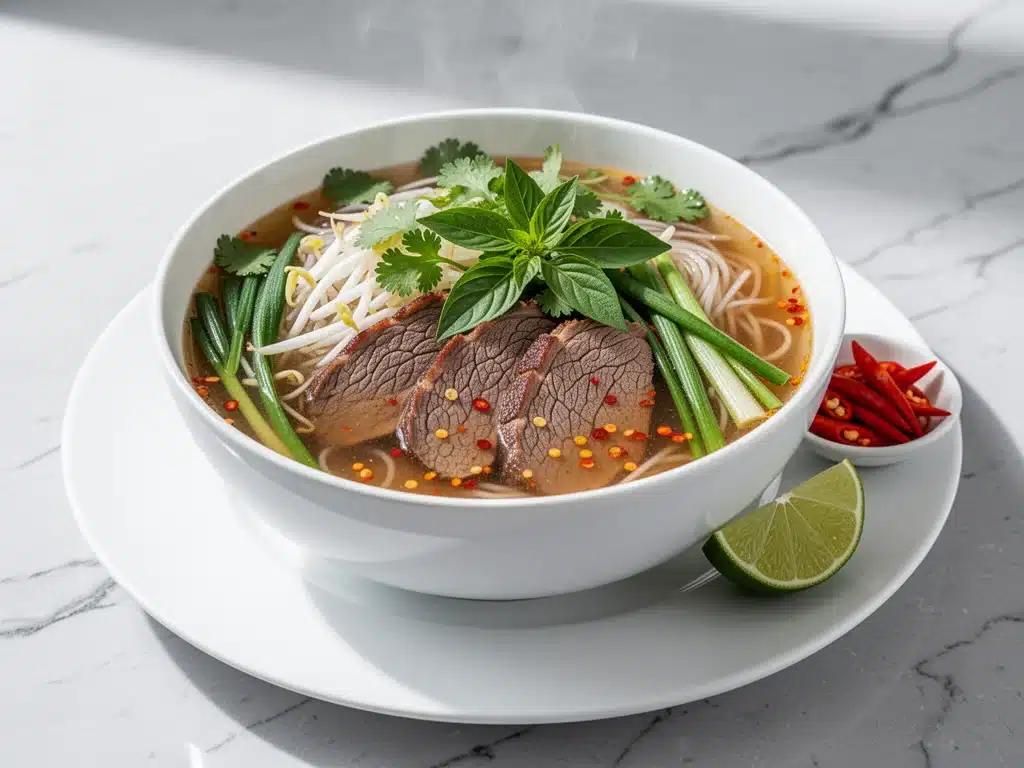
Place the thinly sliced raw flank steak on top of the noodles. Ladle the boiling hot broth over the steak. The heat of the broth will cook the beef to a perfect rare. Add the cooked beef chuck, bean sprouts, green onions, and fresh herbs. Serve immediately with lime wedges, hoisin, and sriracha on the side.
Expert Tips & Tricks
Here’s everything I’ve learned from making this dozens of times. These tips will save you from my mistakes.
Char Your Aromatics — I cannot stress this enough. The charred onion and ginger are what give pho its depth. If you skip this, the broth will taste flat. Don’t be lazy here.
Skim the Scum — When you first boil the bones, foam rises to the top. Skim it off. It’s gross, but it makes your broth clear and clean-tasting. It’s a small step that makes a big difference.
Don’t Overcook the Noodles — Rice noodles turn to mush quickly. Cook them just until tender, then rinse with cold water. They’ll continue to cook in the hot broth, so undercook them slightly.
Thinly Slice the Beef — Freeze the flank steak for 30 minutes before slicing. It makes it much easier to get those paper-thin slices that cook instantly in the broth.
Taste as You Go — Fish sauce brands vary in saltiness. Taste your broth before serving and adjust. It’s better to add a little too much fish sauce than too little.
Keep the Broth Hot — The broth needs to be boiling when you pour it over the raw beef. If it’s not hot enough, the beef won’t cook properly. Keep it on high heat until you’re ready to serve.
Variations & Substitutions
Once you’ve nailed the basic version, here’s how you can mix it up. I’ve tried all of these.
Chicken Pho — Swap the beef bones and chuck for chicken wings and a whole chicken. Simmer for 1 hour. The broth will be lighter and sweeter. This is my go-to when I want something lighter.
Vegetarian Pho — Skip the bones and meat. Use vegetable broth and add mushrooms, tofu, and extra vegetables. Use soy sauce instead of fish sauce. It’s surprisingly satisfying.
Spicy Pho — Add sliced serrano chilies or a dash of chili oil to the bowl. I like to mix sriracha into my broth for a spicy kick.
Beef Balls — Add meatballs to the bowl. I buy pre-made beef balls from the Asian store, but you can make your own with ground beef, fish sauce, and sugar.
Gluten-Free — Rice noodles are naturally gluten-free. Just make sure your fish sauce and hoisin sauce are gluten-free (some hoisin contains wheat).
Serving & Storage
I usually serve this straight from the pot at the dinner table—it looks rustic and stays warm. But here are other ways I’ve enjoyed it:
Side Dishes: I serve this with a side of pickled carrots and daikon (do chua) to cut through the richness. A simple cucumber salad is also great.
Toppings Bar: When I have guests, I put out: extra bean sprouts, Thai basil, cilantro, lime wedges, sliced chilies, hoisin, and sriracha. Everyone customizes their bowl.
Storage: Store the broth and beef separately in airtight containers for up to 4 days. The noodles don’t store well—they get soggy. Cook fresh noodles each time.
Reheating: Reheat the broth gently on the stove. Add fresh noodles and raw beef when serving. Don’t reheat the noodles in the broth, or they’ll turn to mush.
Freezing: The broth freezes well for up to 3 months. Freeze in portions for quick weeknight meals. Thaw in the fridge overnight and reheat.
Nutrition Information
I’m not a nutritionist, but here’s the breakdown if you’re tracking. This is per serving (based on 4 servings).
– Calories: 450
– Protein: 30g
– Carbs: 40g
– Fiber: 3g
– Sugar: 5g
– Fat: 18g
– Sodium: 800mg
It’s a decent source of protein and calcium from the bones. The sodium is moderate, but you can control it by adjusting the fish sauce. It’s comfort food, so enjoy it guilt-free.
Final Thoughts
So that’s my go-to Authentic Vietnamese Beef Pho for cozy weeknight dinners! I’ve probably talked your ear off at this point, but when you make a recipe this often, you have a lot to say about it.
This has saved weeknight dinners more times than I can count. It’s my answer to “what’s for dinner” when I’m tired, don’t want takeout, and still want something that tastes really good. My family is happy, I’m happy, and my kitchen smells amazing.
Make it yours! Try different add-ins, swap in your favorite vegetables, adjust the spice level. The best recipes are the ones you adapt to your family’s tastes.
If you make this, drop a comment and let me know what you think! I love hearing how recipes turn out in your kitchen. And if something doesn’t work, tell me that too—I’m here to help troubleshoot.
Happy cooking! And I hope your kitchen smells half as good as mine does right now.
Frequently Asked Questions
Can I use store-bought broth?
You can, but homemade is so much better. If you must use store-bought, choose a high-quality beef broth and add extra spices (star anise, cinnamon) and fish sauce to boost the flavor. It won’t be as rich, but it’ll work in a pinch.
Why is my broth cloudy?
Cloudy broth usually means you boiled it too vigorously. Keep it at a gentle simmer. Also, make sure you skim the scum off the top when you first start cooking. If you’re using a pressure cooker, let it release naturally to avoid agitation.
Can I make this ahead of time?
Yes! The broth actually tastes better the next day. Make it ahead, store it in the fridge, and reheat it when you’re ready. Just cook the noodles and assemble the bowls fresh.
What kind of beef should I use?
For the broth, use beef bones and chuck roast. For the raw slices, use flank steak or eye of round. Slice it thinly against the grain for the best texture.
Can I freeze this?
The broth freezes well. Freeze it in portions for quick meals. Do not freeze the noodles or assembled bowls, as the texture will suffer.
Is pho healthy?
It can be! It’s packed with protein and vegetables. The broth is rich, so just be mindful of the sodium from the fish sauce. Use low-sodium broth if you’re watching your salt intake.
Pin This Recipe!
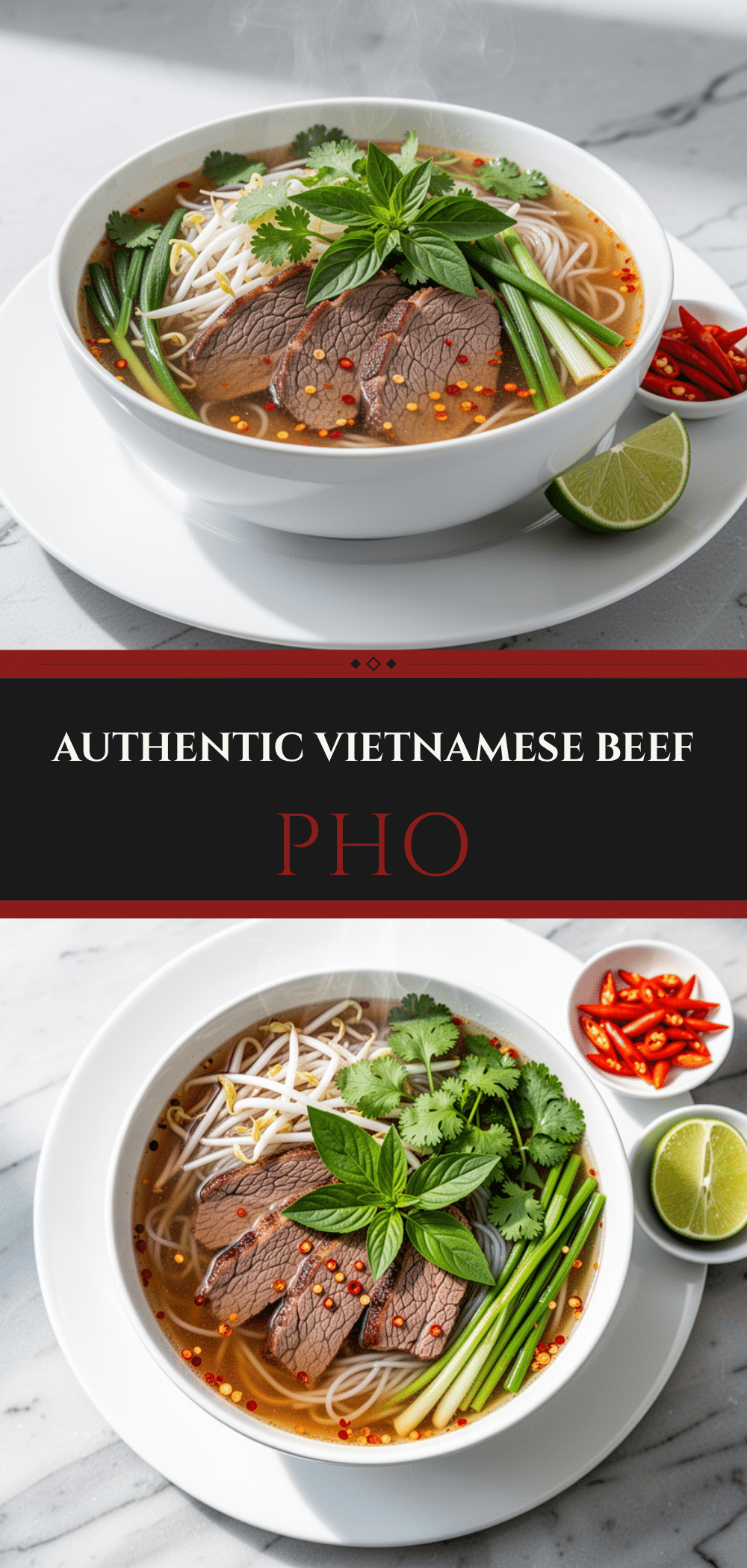
Authentic Vietnamese Beef Pho: Easy 30-Min Cozy Dinner
- Total Time: 45 minutes
- Yield: 4 servings 1x
Description
A quick and authentic Vietnamese Beef Pho recipe that delivers deep, soul-warming flavor in just 30 minutes using a high-pressure cooker or simple simmering technique. Perfect for cozy weeknight dinners.
Ingredients
- 2 pounds beef bones (marrow and knuckle)
- 1 pound beef chuck roast
- 1 large onion, halved
- 1 four-inch piece ginger, halved
- 2 whole star anise
- 1 small cinnamon stick (Vietnamese cassia preferred)
- 1 teaspoon coriander seeds
- 3 tablespoons fish sauce
- 1 teaspoon sugar
- 6 cups water
- 8 ounces flat rice noodles (bánh phở)
- ½ pound flank steak, thinly sliced
- 1 cup bean sprouts
- Fresh herbs: Thai basil, cilantro, and mint
- Lime wedges
- Hoisin sauce
- Sriracha
- 2 stalks green onions, thinly sliced
- 1–2 serrano chilies, sliced
Instructions
- Broil halved onion and ginger for 3-4 minutes until charred, then rinse under cold water to remove soot.
- Toast star anise, cinnamon stick, and coriander seeds in a dry skillet for 1-2 minutes until fragrant. Place in a spice bag or cheesecloth.
- In a large pot, bring beef bones and water to a boil. Reduce to a gentle simmer and skim off any gray foam/scum that rises to the top.
- Add charred onion, ginger, and spice bag to the pot. Simmer for 30-45 minutes (or 20 minutes in a pressure cooker).
- Add beef chuck roast to the broth and simmer for 15-20 minutes until tender. Remove, slice against the grain, and return to pot.
- Season broth with fish sauce and sugar to taste. Adjust saltiness and sweetness as needed.
- Cook rice noodles according to package directions (soak in hot water or boil briefly), then drain and rinse with cold water.
- Divide noodles among four bowls. Place thinly sliced raw flank steak on top.
- Ladle boiling hot broth over the steak to cook it to rare. Add cooked chuck, bean sprouts, green onions, and fresh herbs.
- Serve immediately with lime wedges, hoisin, and sriracha on the side.
Notes
Charred onion and ginger are essential for authentic flavor. Skim scum from the broth for clarity. Freeze flank steak for 30 minutes before slicing for easier thin cuts. Store broth and beef separately; cook noodles fresh each time. Broth freezes well for up to 3 months.
- Prep Time: 15 minutes
- Cook Time: 30 minutes
- Category: Main Course
- Cuisine: Vietnamese
Nutrition
- Serving Size: 1 bowl
- Calories: 450
- Sugar: 5
- Sodium: 800
- Fat: 18
- Carbohydrates: 40
- Fiber: 3
- Protein: 30
Keywords: Vietnamese Beef Pho, weeknight dinner, cozy dinner, quick pho recipe, authentic pho, comfort food, beef soup, rice noodles