It was 4:45 PM on a Tuesday. The kind of Tuesday where I’ve been staring at a spreadsheet for six hours and my brain feels like scrambled eggs. I opened the fridge, saw a lone salmon fillet, a bag of asparagus that was starting to look a little sad, and a jar of lemon juice. I didn’t want to order takeout (again). I didn’t want to chop vegetables for twenty minutes. I just wanted food on the table by 5:30 that wouldn’t make me feel guilty about eating it.
So I threw everything on one sheet pan, popped it in the oven, and went to change into comfortable clothes. Twenty-five minutes later, the house smelled like a fancy restaurant, and I had exactly one pan to wash.
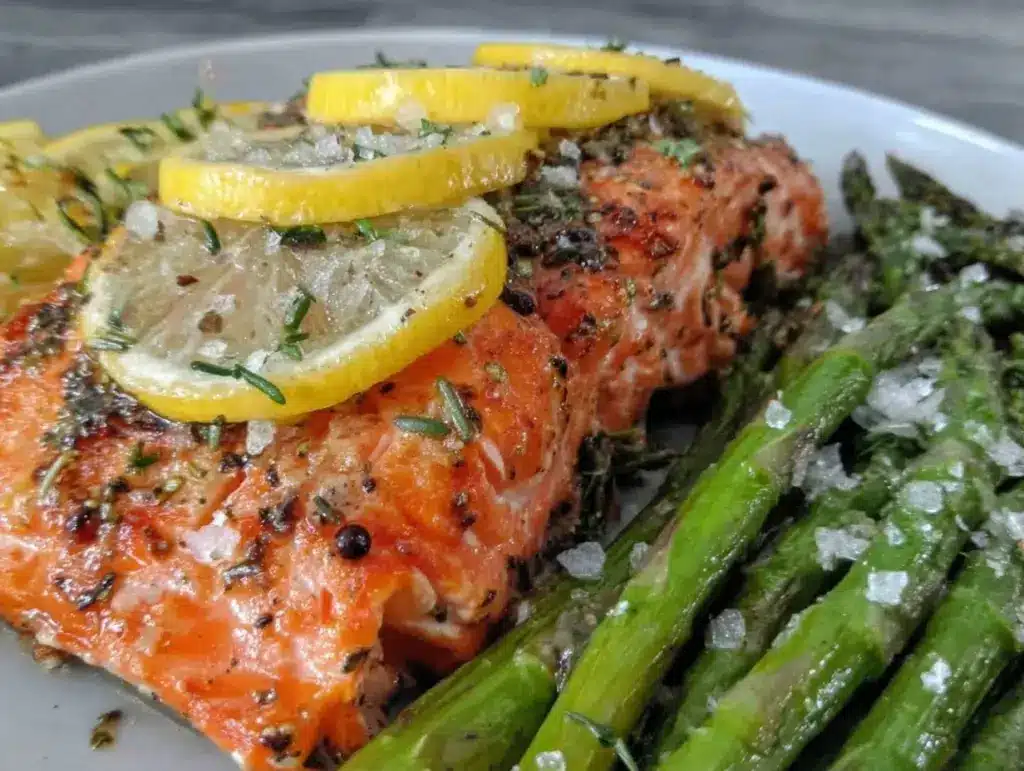
This healthy baked salmon with roasted asparagus is my secret weapon for those “I have no idea what to make” nights. It’s light, it’s packed with protein, and it takes almost zero effort. I’ve made this at least a dozen times since I discovered it, and honestly? It’s become the standard. If you’re looking for a quick, nutritious dinner that actually tastes good, stop scrolling. This is it.
Why You’ll Love This Recipe
Look, I’m not trying to convert you to a lifestyle of kale salads and boiled chicken. But sometimes you need something that feels healthy but doesn’t taste like diet food. This healthy baked salmon with roasted asparagus hits that sweet spot every single time.
Here’s why it’s in my regular rotation:
- One Pan, Zero Stress — Seriously. Salmon on one side, asparagus on the other. Same baking time. Same temperature. You literally just toss them on a sheet pan, season, and bake. Cleanup takes about thirty seconds.
- Under 30 Minutes — I’m talking 5 minutes of prep and 20-25 minutes in the oven. It’s faster than waiting for a delivery driver. It’s perfect for when you get home late and are starving.
- Actually Healthy (But Not Boring) — Salmon is loaded with omega-3s, and asparagus is a fiber powerhouse. But because we’re roasting them with olive oil, garlic, and lemon, it doesn’t taste “diet-y.” It tastes rich and savory.
- Flexible Portion Sizes — I make this for two, but I can easily scale it up for four or six. The cooking method stays exactly the same. No adjusting times or temperatures.
- Leftovers Are Great — I know what you’re thinking: “Salmon leftovers?” Yes! Flake it over salad the next day, or eat it cold on toast with avocado. It stays moist for days.
This is my go-to when I need dinner to just work. No complicated techniques, no weird ingredients, just reliable, delicious food that makes everyone happy. It’s the kind of meal that makes you feel like you’re taking care of yourself without any of the fuss.
Ingredients You’ll Need
Here’s the best part: you probably have most of this already. This healthy baked salmon with roasted asparagus relies on simple, fresh ingredients. No obscure spices from a specialty store. No fancy oils.
For the Salmon
Salmon fillets (4 pieces, about 6 oz each) — I prefer wild-caught if my budget allows, but farmed works fine too. Look for fillets that are uniform in thickness so they cook evenly. If they’re super thick, ask the fishmonger to trim them. I buy these at the supermarket, but local fish markets are always fresher if you have access.
Extra virgin olive oil (2 tablespoons) — Use a good quality one here. It’s one of the few fats in the dish, so it should taste good. Don’t skimp on the cheap stuff.
Lemon (1 medium) — We’re using the juice and the zest. Fresh lemon juice is non-negotiable; bottled juice tastes metallic and flat. If you’re in a pinch, you can use lime, but lemon is classic with salmon.
Garlic (3 cloves, minced) — Fresh garlic is best. I use a microplane to mince it so it disperses evenly. Jarred garlic? I’d skip it. It just doesn’t have that punch.
Dried dill (1 teaspoon) — Dill and salmon are best friends. If you don’t like dill, thyme or parsley works too. Fresh herbs are great, but dried is more convenient for weeknights.
Salt and black pepper — Kosher salt is my go-to. Use about 1/2 teaspoon for the salmon.
For the Asparagus
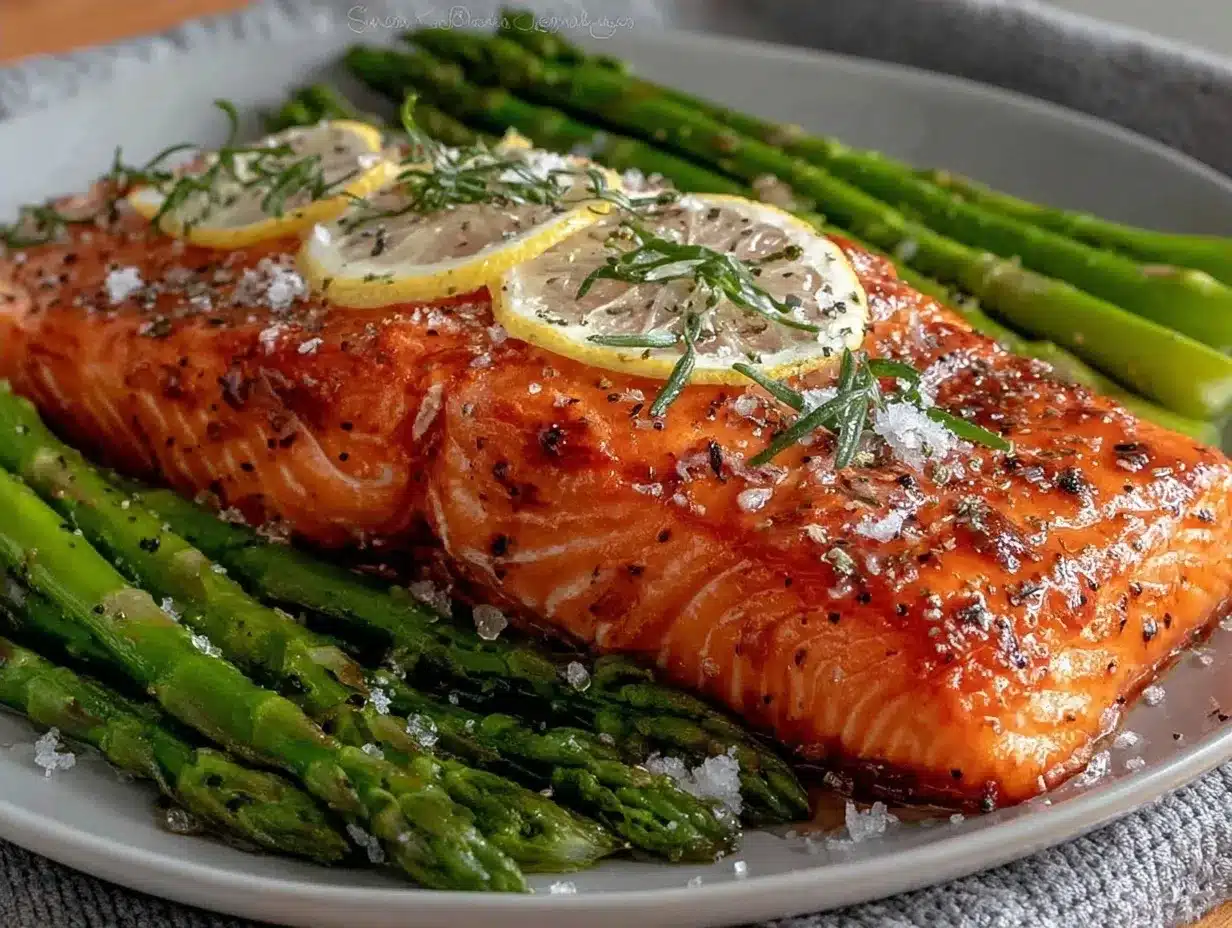
Asparagus spears (1 bunch, about 1 pound) — Look for spears that are bright green and firm. Avoid ones that are wilted or have purple tips (that means they’re old). Thick spears are meatier; thin ones are more tender. Both work.
Extra virgin olive oil (1 tablespoon) — Just a light coat to help them roast and crisp up.
Garlic powder (1/2 teaspoon) — Since we’re using fresh garlic on the salmon, garlic powder on the asparagus adds a nice subtle flavor without burning.
Red pepper flakes (optional, 1/4 teaspoon) — A little kick goes a long way. I always add a pinch.
Parmesan cheese (optional, 2 tablespoons, grated) — Sprinkle this on the asparagus in the last 5 minutes. It adds a salty, savory crunch. Totally optional but highly recommended.
Equipment Needed
You don’t need fancy equipment for this. Here’s what I actually use.
Large sheet pan — I use a standard 18×13 inch baking sheet. It needs to fit all the salmon and asparagus in a single layer. If your pan is too crowded, the veggies steam instead of roast. I line mine with parchment paper for zero cleanup, but foil works too.
Small bowl — For mixing the lemon juice, oil, and garlic for the salmon.
Sharp knife — For trimming the woody ends of the asparagus. Dull knives make you struggle with tough stalks.
Peeler — Optional, but helpful if you want to shave some asparagus tips for garnish.
Oven — Obviously. Preheat to 400°F (200°C).
How to Make It: Step-by-Step
Alright, let’s make this! I’m walking you through exactly how I do it, including the little tricks I’ve picked up over time.
Step 1: Prep Your Oven and Pan (2 minutes)
Preheat your oven to 400°F (200°C). Line a large baking sheet with parchment paper or aluminum foil. I use parchment because cleanup is literally just tossing the paper away. Set the pan aside.
Step 2: Trim the Asparagus (3 minutes)
Take your bunch of asparagus. You need to remove the tough, woody ends. Here’s the easiest way: grab one spear and bend it. It will naturally snap where the tough part meets the tender part. Use that as a guide and trim the rest. Or, just chop off the bottom inch. Either way works. Toss the trimmed spears onto one side of the baking sheet.
Step 3: Season the Asparagus (2 minutes)
Drizzle the asparagus with 1 tablespoon of olive oil, sprinkle with garlic powder, salt, pepper, and red pepper flakes. Toss them with your hands to coat evenly. Push them to one side of the pan. They’ll roast for the full 20 minutes.
Step 4: Prep the Salmon (3 minutes)
Pat the salmon fillets dry with paper towels. This step is crucial for good texture—wet salmon steams instead of baking. In a small bowl, whisk together 2 tablespoons olive oil, the juice of half a lemon, the zest of that same lemon, minced fresh garlic, dried dill, salt, and pepper.
Place the salmon fillets on the other side of the baking sheet. Brush or spoon the mixture generously over the top of each fillet. Don’t forget to get it on the sides a little too.
Step 5: Bake (20-25 minutes)
Slide the sheet pan into the preheated oven. Bake for 20-25 minutes. The salmon is done when it flakes easily with a fork and is opaque throughout. The asparagus should be tender-crisp and slightly charred at the edges. If your salmon is very thick, it might need the full 25 minutes. If it’s thin, check at 18.
Pro Tip: If you want that Parmesan crunch on the asparagus, sprinkle it on during the last 5 minutes of baking. It’ll melt and crisp up beautifully.
Step 6: Serve
Remove from the oven. Squeeze a little extra fresh lemon juice over everything if you like it tangy. Serve immediately. I usually eat it straight off the pan because, well, less dishes.
Expert Tips & Tricks
Here’s everything I’ve learned from making this dozens of times. These tips will save you from my mistakes.
Don’t Overcook the Salmon — This is the most common mistake. Salmon continues to cook slightly after you take it out of the oven. Pull it when it’s *almost* opaque in the center. It’ll finish cooking on the plate. Overcooked salmon is dry and rubbery. Undercooked is moist and flaky. Aim for flaky.
Uniform Fillets — If your salmon fillets are wildly different sizes, the small ones will dry out before the big ones cook. Try to buy fillets of similar thickness. If you can’t, place the thicker pieces in the center of the pan where the heat is most even.
Asparagus Thickness Matters — Thin asparagus cooks faster. If you’re using very thin spears, check them at 15 minutes. Thick spears need the full 20-25. If they’re burning before the salmon is done, cover them loosely with foil for the last few minutes.
Room Temperature Salmon — Let the salmon sit on the counter for 10-15 minutes before baking. Cold salmon hitting a hot oven can cook unevenly. It’s a small step that makes a big difference.
Garlic Protection — Fresh garlic can burn at 400°F. By mixing it with oil and lemon juice, you create a barrier. But keep an eye on the edges of the pan. If the garlic looks like it’s browning too fast, lower the oven temp to 375°F for the last 5 minutes.
Variations & Substitutions
Once you’ve nailed the basic version, here’s how you can mix it up. I’ve tried all of these.
Honey Garlic Version — Swap the lemon juice for 1 tablespoon honey and 1 tablespoon soy sauce. Add a teaspoon of ginger. It’s sweet, salty, and Asian-inspired. My kids love this version.
Mediterranean Style — Use dried oregano instead of dill. Add cherry tomatoes to the pan with the asparagus. Top with feta cheese after baking. It’s like a Greek salad on a sheet pan.
Cajun Kick — Swap the lemon and dill for Cajun seasoning. Use paprika, garlic powder, onion powder, cayenne, and thyme. Serve with a side of tartar sauce.
Vegetarian Swap — Replace the salmon with thick slices of firm tofu or portobello mushrooms. Toss with the same seasoning. Bake for 15-20 minutes. It’s surprisingly satisfying.
Gluten-Free — This recipe is naturally gluten-free. Just check your soy sauce if you use the honey-garlic variation.
Dairy-Free — Skip the Parmesan. The rest is dairy-free by default.
Serving & Storage
How to Serve: I usually serve this with steamed rice, quinoa, or roasted potatoes. A simple green salad with vinaigrette is perfect too. It’s light but filling. I also love it with crusty bread to soak up the lemony juices.
Wine Pairing: Not a wine expert, but a crisp Pinot Grigio or Sauvignon Blanc works great. The acidity cuts through the richness of the salmon.
Storage: Store leftovers in an airtight container in the fridge for up to 3 days. The salmon will keep well, and the asparagus stays crisp-tender.
Reheating: Reheat gently in the microwave or in a 350°F oven. Don’t overheat, or the salmon will get dry. I prefer eating it cold or room temp the next day—it’s actually really good flaked over salad.
Freezing: I don’t recommend freezing this. The asparagus gets mushy when thawed, and the salmon texture changes. Make it fresh whenever you can.
Nutrition Information
I’m not a nutritionist, but here’s the breakdown if you’re tracking.
Per Serving (based on 4 servings):
- Calories: 320
- Protein: 34g
- Carbs: 8g
- Fiber: 3g
- Sugar: 2g
- Fat: 18g
- Saturated Fat: 3g
- Cholesterol: 85mg
- Sodium: 380mg
What’s Good: High protein, low carb, rich in omega-3s and vitamins A and C. It’s nutrient-dense without being heavy.
What to Know: The calories come mostly from the healthy fats in the salmon and olive oil. If you’re watching sodium, use low-sodium soy sauce in variations and be mindful of added salt.
My Take: This isn’t a diet recipe. It’s real food. Healthy fats, lean protein, and veggies. It’s way better than takeout, costs less, and I know exactly what’s in it. When I want to make it lighter, I reduce the oil slightly and load up on veggies. But usually? I just eat a reasonable portion and enjoy it.
Final Thoughts
So that’s my healthy baked salmon with roasted asparagus! I’ve probably talked your ear off at this point, but when you make a recipe this often, you have a lot to say about it.
This has saved weeknight dinners more times than I can count. It’s my answer to “what’s for dinner” when I’m tired, don’t want takeout, and still want something that tastes really good. My kids are happy, my husband’s happy, and I’m happy because I’m not stressed about cooking.
Make it yours! Try different herbs, swap the veggies, adjust the spice. The best recipes are the ones you adapt to your family’s tastes. If you make this, drop a comment and let me know what you think! I love hearing how recipes turn out in your kitchen.
Happy cooking! And I hope your kitchen smells half as good as mine does right now.
Frequently Asked Questions
Can I use frozen salmon?
You can, but it needs to be completely thawed and patted very dry first. Frozen salmon releases more water, which can make the texture mushy. If you’re in a hurry, fresh is always better. But if you must use frozen, thaw it in the fridge overnight and pat it dry thoroughly.
How do I know when the salmon is done?
The easiest way is the fork test. Gently press a fork into the thickest part of the fillet and twist slightly. If it flakes apart easily and looks opaque (not translucent), it’s done. The internal temperature should be 145°F (63°C), but I pull it at 140°F because it’ll carryover cook.
Can I cook this in the air fryer?
Yes! This is a great air fryer meal. Cook the asparagus first for 5 minutes, then add the salmon and cook for another 8-10 minutes at 400°F. Keep an eye on it—air fryers vary in power. It’s a fantastic option if you don’t want to use the oven.
Why did my asparagus turn out soggy?
Usually, this means the pan was too crowded. If the veggies are touching each other, they steam. Make sure there’s space between the spears. Also, don’t skip the olive oil—it helps them crisp up. And yes, preheating the oven is key.
Can I add other vegetables?
Absolutely. Zucchini, bell peppers, and cherry tomatoes all work well. Just chop them into similar sizes to the asparagus so they cook evenly. Root vegetables like carrots might need par-boiling first since they take longer to roast.
Is this recipe good for meal prep?
It’s decent for meal prep, but I find the asparagus loses its crunch after a day or two. The salmon holds up well. If I’m prepping, I’ll store the salmon and asparagus separately, or just accept that the asparagus will be softer. It’s still delicious!
What if I don’t like dill?
No problem. Try parsley, thyme, or even a simple mix of garlic and lemon without herbs. The lemon-garlic base is strong enough to stand on its own. Don’t let one herb stop you from making this!
Pin This Recipe!
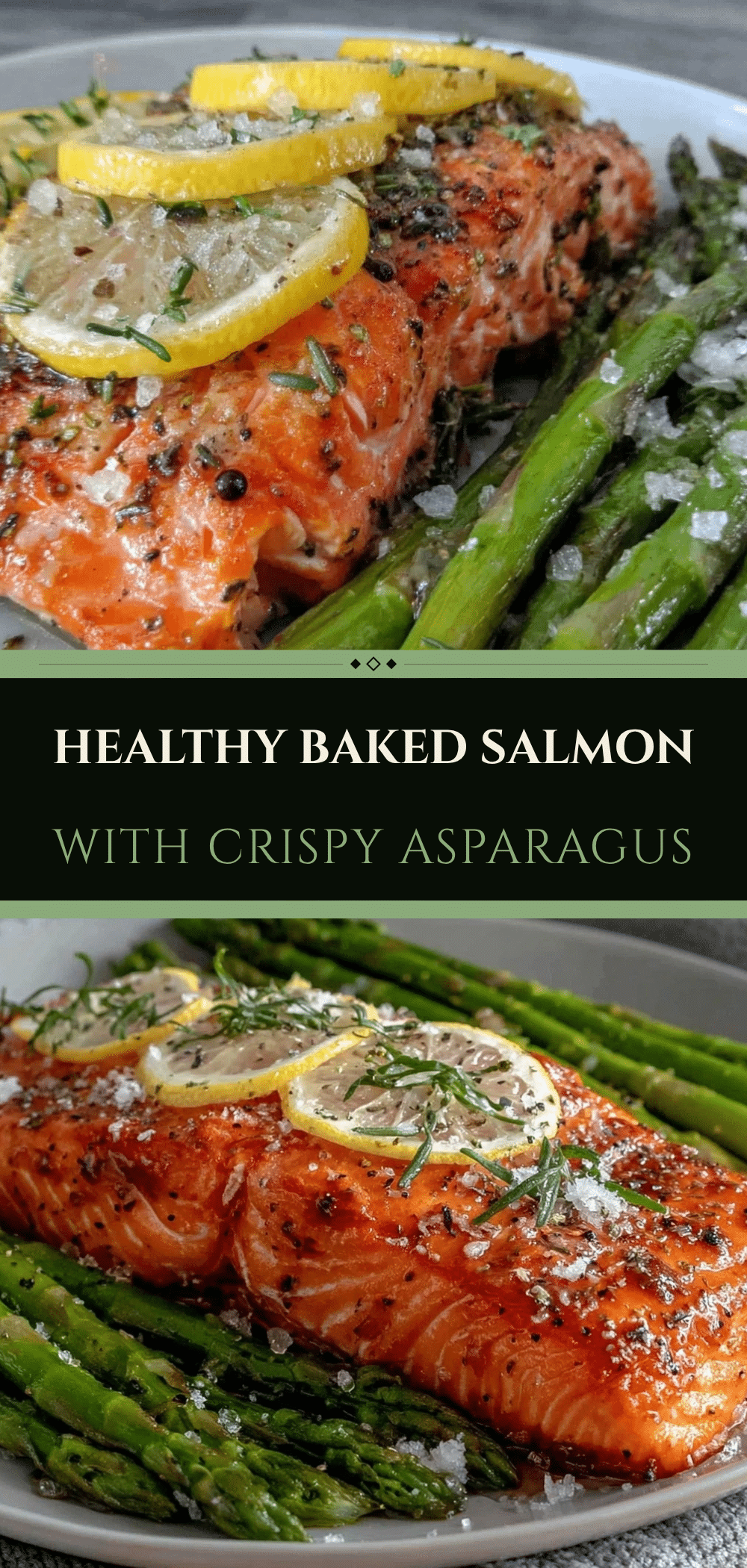
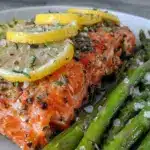
Healthy Baked Salmon with Roasted Asparagus
- Total Time: 35 minutes
- Yield: 4 servings 1x
Description
A quick, one-pan weeknight dinner featuring baked salmon fillets and roasted asparagus seasoned with lemon, garlic, and herbs. Ready in under 30 minutes with minimal cleanup.
Ingredients
- 4 salmon fillets (about 6 oz each)
- 3 tablespoons extra virgin olive oil (divided)
- 1 medium lemon (juice and zest)
- 3 cloves garlic, minced
- 1 teaspoon dried dill
- 1 bunch asparagus spears (about 1 pound)
- 1/2 teaspoon garlic powder
- Salt and black pepper to taste
- 1/4 teaspoon red pepper flakes (optional)
- 2 tablespoons grated Parmesan cheese (optional)
Instructions
- Preheat oven to 400°F (200°C). Line a large baking sheet with parchment paper or foil.
- Trim the woody ends from the asparagus spears and toss them onto one side of the baking sheet.
- Drizzle asparagus with 1 tablespoon olive oil, garlic powder, salt, pepper, and red pepper flakes. Toss to coat and push to one side of the pan.
- Pat salmon fillets dry with paper towels. In a small bowl, whisk together 2 tablespoons olive oil, lemon juice, lemon zest, minced garlic, dried dill, salt, and pepper.
- Place salmon fillets on the other side of the baking sheet. Brush or spoon the lemon-herb mixture generously over the salmon.
- Bake for 20-25 minutes, or until salmon flakes easily with a fork and is opaque throughout. Asparagus should be tender-crisp.
- If using Parmesan cheese, sprinkle it over the asparagus during the last 5 minutes of baking.
- Serve immediately, optionally with extra fresh lemon juice.
Notes
Do not overcook the salmon; it continues to cook slightly after removal from the oven. Ensure salmon fillets are uniform in thickness for even cooking. Let salmon sit at room temperature for 10-15 minutes before baking for best results. If using frozen salmon, ensure it is completely thawed and patted very dry.
- Prep Time: 10 minutes
- Cook Time: 25 minutes
- Category: Main Course
- Cuisine: American
Nutrition
- Serving Size: 1 salmon fillet and
- Calories: 320
- Sugar: 2
- Sodium: 380
- Fat: 18
- Saturated Fat: 3
- Carbohydrates: 8
- Fiber: 3
- Protein: 34
Keywords: healthy salmon, baked salmon, roasted asparagus, one pan dinner, quick weeknight meals, gluten-free, high protein, omega-3