There is a specific kind of heartbreak that comes from watching your hollandaise break. You’ve whisked for twenty minutes. Your arm is tired. The butter is warm. You add the final drop, and suddenly, instead of a glossy, golden emulsion, you have a separated pool of oily, curdled disappointment sitting in your bowl. I’ve been there. More than once. Probably three times in the last month alone.
Last Sunday morning, I decided I was done with takeout eggs benedict. I wanted the real thing. The kind where the poached egg is so soft it oozes over the toasted English muffin, where the hollandaise isn’t just a garnish but a rich, buttery sauce that coats every bite. I wanted to recreate that brunch experience at my own kitchen table, without the $28 price tag or the thirty-minute wait.
But here’s the thing about eggs benedict: it has a reputation. It’s intimidating. People talk about tempering eggs, double boilers, and the precise temperature of melted butter like it’s rocket science. I tried a classic recipe first, and it split. I tried a blender method, and it turned into scrambled eggs. I was ready to give up and just eat high-protein peanut butter banana shakes for brunch until the end of time.
Then I found a technique that actually works. It’s not complicated. It doesn’t require fancy equipment. It just requires a little patience and knowing exactly when to pull the pan off the heat. I’ve made this restaurant-style eggs benedict with foolproof hollandaise at least ten times since then. It’s become my weekend ritual. And honestly? It’s better than the restaurant version because I can control the salt, I can use fresh herbs, and I can eat it while it’s still hot.
If you’ve been intimidated by hollandaise, put that fear down. This method is forgiving. It’s consistent. And once you nail this sauce, you’ll realize it’s the key to unlocking a whole world of easy, fancy-feeling breakfasts. Let’s get into it.
Why You’ll Love This Foolproof Hollandaise and Eggs Benedict
There are about ten reasons I keep making this recipe, but let’s be real—you’re here because you want that creamy, tangy sauce without the stress. Here’s why this version sticks around in my rotation.
Actually Foolproof — I’ve tested this hollandaise method so many times that I can make it while half-watching TV. It uses a simple whisk-and-pour technique that prevents curdling. No double boiler drama, no scrambling eggs. It just works.
Restaurant Quality at Home — The sauce is rich, velvety, and perfectly balanced with lemon and cayenne. It tastes like something you’d order at a high-end brunch spot, but it costs a fraction of the price. Plus, no waiting for a table.
Weekend Brunch Made Easy — Yes, there are a few steps, but they’re simple. You can prep the poached eggs and toast the muffins while the sauce comes together. It feels fancy, but it’s not stressful. I can actually talk to my guests while I plate this.
Customizable Toppings — While classic bacon and spinach are my go-to, this sauce works with everything. Try it with smoked salmon, grilled asparagus, or even leftover roasted veggies. It’s versatile enough to turn Tuesday’s dinner into Sunday’s brunch.
Feels Like a Treat — There’s something deeply satisfying about making something that looks difficult but is actually simple. It makes you feel like a pro. My kids think I’m a genius when I serve this on weekends. (They don’t know about the split sauce disasters from last month.)
This is my go-to when I want to impress my family or treat myself to something special without leaving the house. It’s reliable, delicious, and totally worth the fifteen minutes of effort.
Ingredients You’ll Need
Here’s the best part: you probably have most of this already. Eggs benedict relies on simple, high-quality ingredients. The sauce is the star, so don’t skimp on the butter or the lemons.
For the Hollandaise Sauce
Egg yolks (3 large, room temperature) — This is crucial. Cold yolks don’t emulsify as well. I take them out of the fridge about 30 minutes before I start. If you’re short on time, place the yolks in a bowl of warm water for 5 minutes.
Lemon juice (2 tablespoons, fresh) — Bottled lemon juice has a weird metallic taste that ruins the delicate sauce. Squeeze your own. If you’re using a lemon that’s been sitting for a week, buy a new one. It makes a difference.
Unsalted butter (½ cup / 113g) — Use good quality butter. Salted butter can make the sauce too salty and harder to control. I use European-style butter if I have it because it’s richer, but regular unsalted works fine.
Water (1 tablespoon) — This helps stabilize the emulsion. It sounds odd, but it prevents the sauce from breaking. Trust me.
Cayenne pepper (¼ teaspoon) — Just a pinch. It adds warmth without making it spicy. If you’re sensitive to heat, skip it or use less. White pepper is a traditional alternative, but cayenne is easier to find.
White vinegar (1 teaspoon) — Added to the poaching water, not the sauce. Helps the egg whites coagulate faster.
Salt (to taste) — Since we’re using unsalted butter, you’ll need to salt the sauce generously. Taste as you go.
For the Assembly
English muffins (4 halves) — Look for whole wheat or plain. Toast them well—they need to hold up to the sauce and egg. I like them slightly charred for texture.
Eggs (4 large, fresh) — Fresh eggs hold their shape better when poached. Older eggs spread out more in the water. This is the one place where freshness matters.
Canadian bacon or ham (8 slices) — Canadian bacon is leaner and less salty, which pairs better with the rich sauce. If you prefer crispy bacon, chop it up and use it as a topping instead. Or try some honey mustard chicken thighs for a savory twist if you’re feeling adventurous.
Spinach (2 cups, fresh) — I like a bed of wilted spinach under the eggs. It adds color and nutrition. You can also use arugula or kale if you’re feeling fancy.
Butter (for greasing the pan) — Just a small pat to prevent sticking.
Optional Garnishes — Chopped chives, paprika, or extra lemon zest. I always have chives in the fridge; they make the dish look finished.
Equipment Needed
You don’t need fancy equipment for this. Here’s what I actually use.
Small saucepan or bowl — For the hollandaise. I use a stainless steel bowl that fits over a saucepan of simmering water (a makeshift double boiler). It gives me better control than a standalone blender method.
Whisk — A small balloon whisk is perfect. It incorporates air and helps emulsify the butter. Don’t use a fork; you need the wire loops.
Medium saucepan — For poaching the eggs. It needs to be wide enough to hold the eggs without them touching each other. A 3-quart pan works for 2-4 eggs.
Slotted spoon — To lift the poached eggs out of the water. A spider strainer works too if you have one.
Measuring spoons — For the lemon juice and cayenne. Accuracy matters here.
Toaster or toaster oven — For the English muffins. I prefer a toaster oven because it toasts evenly without burning the edges.
Spatula — For spreading the spinach and assembling the plates.
Optional but nice — An immersion blender can make the hollandaise ultra-smooth in seconds, but I prefer the hand-whisk method for better texture control.
How to Make It: Step-by-Step
Alright, let’s make this! I’m walking you through exactly how I do it, including the little tricks I’ve picked up over a decade of brunch-making.
Step 1: Prep Your Hollandaise Base (5 minutes)
Start by whisking the egg yolks, lemon juice, and water together in a heatproof bowl. The mixture should be pale and slightly frothy. This takes about a minute of vigorous whisking. If you’re using a double boiler, place the bowl over simmering water (make sure the bottom doesn’t touch the water). If you’re using the stovetop method directly, keep the heat very low. The goal is to warm the yolks gently, not cook them.
Why this matters: Warming the yolks slightly helps them emulsify with the butter more easily. If they’re too cold, the sauce will be thick and lumpy.
Step 2: Melt the Butter (3 minutes)
In a small saucepan, melt the unsalted butter over medium heat. Let it simmer for a minute until it’s hot but not brown. Then, remove it from the heat and let it cool slightly for 30 seconds. You want it hot enough to melt the yolks, but not so hot that it scrambles them. If you’re unsure, touch the bottom of the butter pan—it should be warm, but not burning hot.
Pro tip: Keep the melted butter in a small pitcher or measuring cup with a spout. It makes the pouring process much easier and more controlled.
Step 3: Emulsify the Sauce (5-7 minutes)
Return the yolk mixture to the heat (if using a double boiler) or keep it over very low direct heat. Begin whisking constantly. Start pouring the melted butter in a very thin, steady stream. I mean *thin*. Like a thread. If you pour too fast, the sauce will break. Whisk like your life depends on it.
As you add the butter, the sauce will start to thicken and turn a beautiful, glossy yellow. This is the magic moment. Once all the butter is incorporated, remove the bowl from the heat immediately. The residual heat will finish cooking the yolks.
Visual cue: The sauce should coat the back of a spoon and leave a clear path when you run your finger through it. If it’s too thick, add a teaspoon of warm water. If it’s too thin, it probably broke—see troubleshooting below.
Step 4: Season and Hold
Stir in the cayenne pepper and salt to taste. The sauce should be tangy, rich, and perfectly balanced. If it’s too thick, whisk in a little more warm water, a teaspoon at a time. Cover the bowl with plastic wrap (touching the surface of the sauce to prevent a skin from forming) and keep it warm while you poach the eggs. You can place the bowl over a pot of very warm water (off heat) to keep it at serving temperature.
Step 5: Poach the Eggs (8-10 minutes)
Bring a wide saucepan of water to a gentle simmer. Add the white vinegar. The water should have small bubbles rising from the bottom, but not a rolling boil. Crack each egg into a small ramekin or cup. This makes it easier to slide them into the water.
Create a gentle whirlpool in the water with a spoon. Slide the egg into the center of the swirl. The water movement will wrap the white around the yolk. Repeat for the remaining eggs, working in batches of 2 if your pan isn’t large enough. Cook for 3-4 minutes for a runny yolk, or 4-5 minutes for a firmer yolk.
Why this matters: The vinegar helps the whites coagulate faster, keeping the egg neat. The whirlpool helps the whites wrap around the yolk instead of floating away.
Step 6: Toast and Assemble
Toast the English muffin halves until golden and crisp. Lay a slice of Canadian bacon on each half. If using spinach, wilt it quickly in a pan with a little butter or microwave it for 30 seconds. Place the spinach on the bacon, then top with the poached egg.
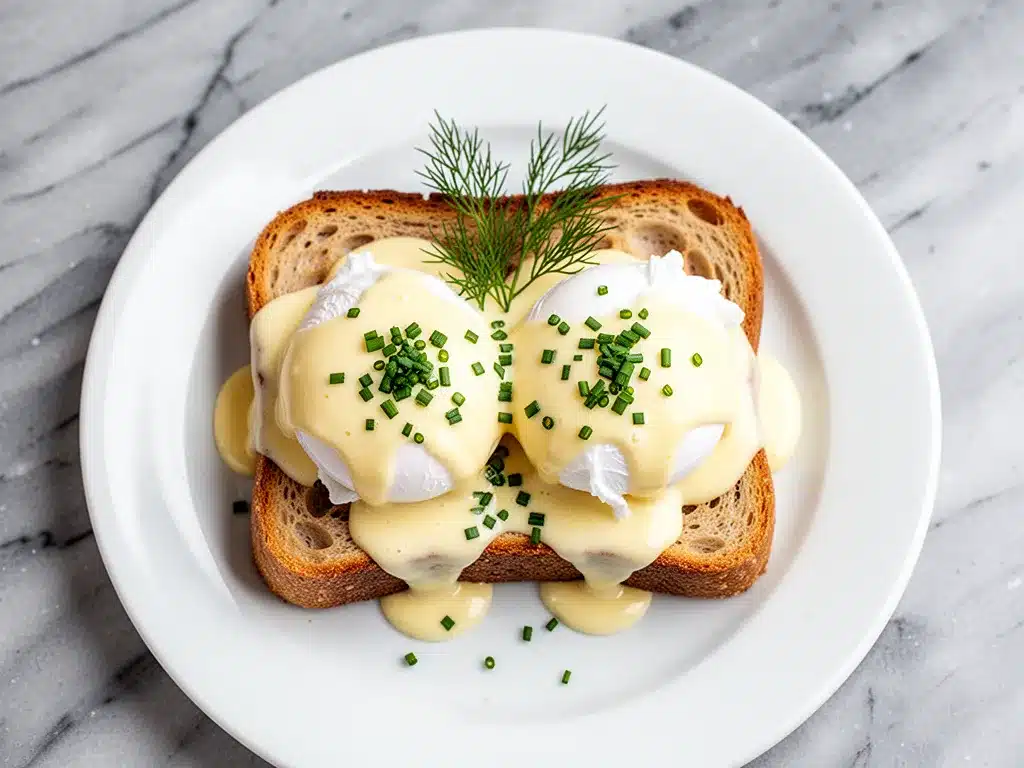
Immediately spoon the warm hollandaise over the egg. The heat from the egg and muffin will keep the sauce fluid. Garnish with chopped chives or a sprinkle of paprika.
Visual cue: The final dish should look glossy and inviting. The yolk should be visible and slightly jiggly under the sauce.
Expert Tips & Tricks
Here’s everything I’ve learned from making this dozens of times. These tips will save you from my mistakes.
Butter Temperature is Key
This is the #1 reason hollandaise breaks. If the butter is boiling hot, it cooks the yolks instantly, creating scrambled egg bits. If it’s too cold, it won’t emulsify. Aim for melted butter that is hot to the touch but not smoking. Let it sit for 30 seconds after melting before you start pouring.
Whisk Constantly
Do not multitask. Do not check your phone. Whisk constantly while adding the butter. This incorporates air and ensures the fat and water mix evenly. If you stop whisking, the sauce will separate.
Rescue Your Broken Sauce
If your sauce breaks and looks oily or curdled, don’t panic. Put a fresh egg yolk in a clean bowl and whisk it. Slowly drizzle the broken sauce into the new yolk while whisking vigorously. The new yolk will act as a binder and re-emulsify the sauce. It works 90% of the time.
Keep Eggs Fresh
For poaching, use the freshest eggs you can find. Older eggs have thinner whites that spread out in the water, making ragged-looking eggs. If your eggs aren’t super fresh, add a little extra vinegar to the poaching water to help the whites set faster.
Don’t Overcook the Yolks
For eggs benedict, you want a runny yolk. It acts as an extra sauce. Aim for 3-4 minutes in the water. If you like firmer yolks, go up to 5 minutes, but remember they will continue to cook slightly from the residual heat after you remove them.
Keep the Sauce Warm
Hollandaise cools quickly and thickens. Keep it over a pot of warm (not simmering) water until serving time. If it gets too thick, whisk in a little warm water to loosen it up.
Variations & Substitutions
Once you’ve nailed the basic version, here’s how you can mix it up. I’ve tried all of these.
Eggs Royale (Smoked Salmon)
Skip the ham and use smoked salmon instead. It’s a classic variation that feels extra luxurious. I love this with a little caper butter added to the sauce.
Veggie Benedict
Skip the meat entirely. Use roasted mushrooms, grilled zucchini, or sautéed garlic butter roasted asparagus as the base. It’s lighter and still incredibly satisfying.
Spicy Hollandaise
Add a dash of hot sauce or a pinch more cayenne to the sauce. If you like heat, try stirring in some chopped jalapeños or a spoonful of salsa verde.
Herb Hollandaise
Stir in 2 tablespoons of chopped fresh herbs like chives, tarragon, or parsley at the end. It adds a fresh, bright flavor that cuts through the richness.
Dairy-Free Option
Use olive oil or coconut oil instead of butter. The texture will be slightly different, but it still works. Or try a vegan egg replacer for the yolks, though the flavor will be less rich.
Gluten-Free
Use gluten-free English muffins or toasted sourdough bread. Everything else is naturally gluten-free.
Serving & Storage
How to Serve:
I usually serve this straight from the kitchen to the table while it’s steaming hot. It’s best eaten immediately. The eggs benedict looks beautiful on a white plate with a side of fresh fruit or crispy creamy spinach ricotta stuffed shells for a hearty brunch spread.
Side Dishes:
– Crispy hash browns or home fries
– Fresh berry salad with honey vinaigrette
– Bacon or sausage links
– Toasted bagels with cream cheese
Storage Instructions:
Refrigerator: Hollandaise does not store well. It separates and becomes grainy when refrigerated. It’s best made fresh. If you must store it, keep it in an airtight container for up to 2 hours at room temperature, or 1 day in the fridge (though quality will drop). Reheat gently over low heat, whisking in a little water.
Freezing: Do not freeze hollandaise. The emulsion will break completely, and it won’t recover. Make it fresh.
Meal Prep: You can prep the components ahead. Toast the muffins, cook the bacon, and poach the eggs up to 2 hours ahead. Keep the poached eggs in cold water, then reheat in warm water for 1 minute before plating. Make the hollandaise fresh.
Nutrition Information
I’m not a nutritionist, but here’s the breakdown if you’re tracking. This is a richer dish, so portion control matters.
Per Serving (based on 1 Eggs Benedict with ½ English muffin, 1 slice bacon, 1 egg, and 3 tbsp hollandaise):
| Nutrient | Amount |
|---|---|
| Calories | 450 |
| Protein | 22g |
| Carbs | 28g |
| Fiber | 2g |
| Sugar | 3g |
| Fat | 30g |
| Saturated Fat | 14g |
| Cholesterol | 285mg |
| Sodium | 680mg |
What’s Good: High in protein from the eggs and bacon. The spinach adds fiber and vitamins. It’s a balanced meal if you load up on the veggies.
What to Know: Higher in calories and saturated fat due to the butter and egg yolks. The sodium can be high depending on the bacon. Use low-sodium bacon and control the salt in the sauce to reduce sodium.
My Take: Look, this is a treat. It’s not everyday diet food. But it’s way better than the restaurant version, and you know exactly what’s in it. When I want to make it lighter, I skip the bacon, use whole wheat muffins, and reduce the hollandaise to 2 tablespoons. But usually? I just enjoy a reasonable portion and savor every bite.
Final Thoughts
So that’s my go-to restaurant-style eggs benedict with foolproof hollandaise! I’ve probably talked your ear off at this point, but when you make a recipe this often, you have a lot to say about it.
This has saved my weekends more times than I can count. It’s my answer to “what’s for brunch” when I want to feel fancy but don’t want to deal with crowds or crazy prices. My family is happy, my husband is happy, and I’m happy because I’m not stressed about cooking. Plus, the leftovers (if any!) are amazing cold the next day, though the sauce is best warm.
Make it yours! Try different toppings, swap in your favorite greens, adjust the spice level. The best recipes are the ones you adapt to your family’s tastes. If you make this, drop a comment and let me know what you think! I love hearing how recipes turn out in your kitchen. And if something doesn’t work, tell me that too—I’m here to help troubleshoot.
Happy cooking! And I hope your kitchen smells half as good as mine does right now.
Frequently Asked Questions
Can I make the hollandaise ahead of time?
Not really. Hollandaise is best made fresh because it separates and thickens as it cools. However, you can make it up to 2 hours ahead and keep it warm over a pot of warm water (off heat). If it thickens too much, whisk in a teaspoon of warm water to loosen it. Do not refrigerate it, as it will break when reheated.
Why did my hollandaise break?
Usually, this happens because the butter was too hot or added too quickly. It can also happen if the heat was too high, cooking the yolks instead of emulsifying them. To fix it, try whisking a fresh egg yolk in a clean bowl and slowly drizzling the broken sauce into it while whisking vigorously. This often rescues the sauce.
Can I use a blender for the hollandaise?
Yes! The blender method is actually easier for beginners. Add the yolks, lemon juice, and cayenne to the blender. Blend on low, then slowly drizzle in the melted butter through the feed tube. It takes about 30 seconds and rarely breaks. Just be careful not to over-blend, which can incorporate too much air and make it fluffy instead of creamy.
How do I poach eggs without them spreading?
Use the freshest eggs you can find. Older eggs have thin whites that spread out. Add a splash of vinegar to the poaching water to help the whites coagulate faster. Create a gentle whirlpool in the water before dropping the egg in. This helps the whites wrap around the yolk. Cook for 3-4 minutes for a runny yolk.
Can I substitute the Canadian bacon?
Absolutely. You can use regular ham, bacon, sausage, or even smoked salmon. For a vegetarian version, skip the meat entirely and use roasted vegetables like mushrooms, asparagus, or spinach. The hollandaise works with almost anything savory.
What if I don’t have English muffins?
You can use toasted sourdough, bagels, or even croissants for a richer option. The key is to use something sturdy that can hold up to the sauce and egg without getting soggy too quickly. Toast it well!
How long do poached eggs last?
Poached eggs are best eaten immediately. If you need to prep ahead, you can poach them up to 2 hours in advance and store them in a bowl of cold water in the fridge. To reheat, drop them in hot (not boiling) water for 30-60 seconds before plating.
Pin This Recipe!
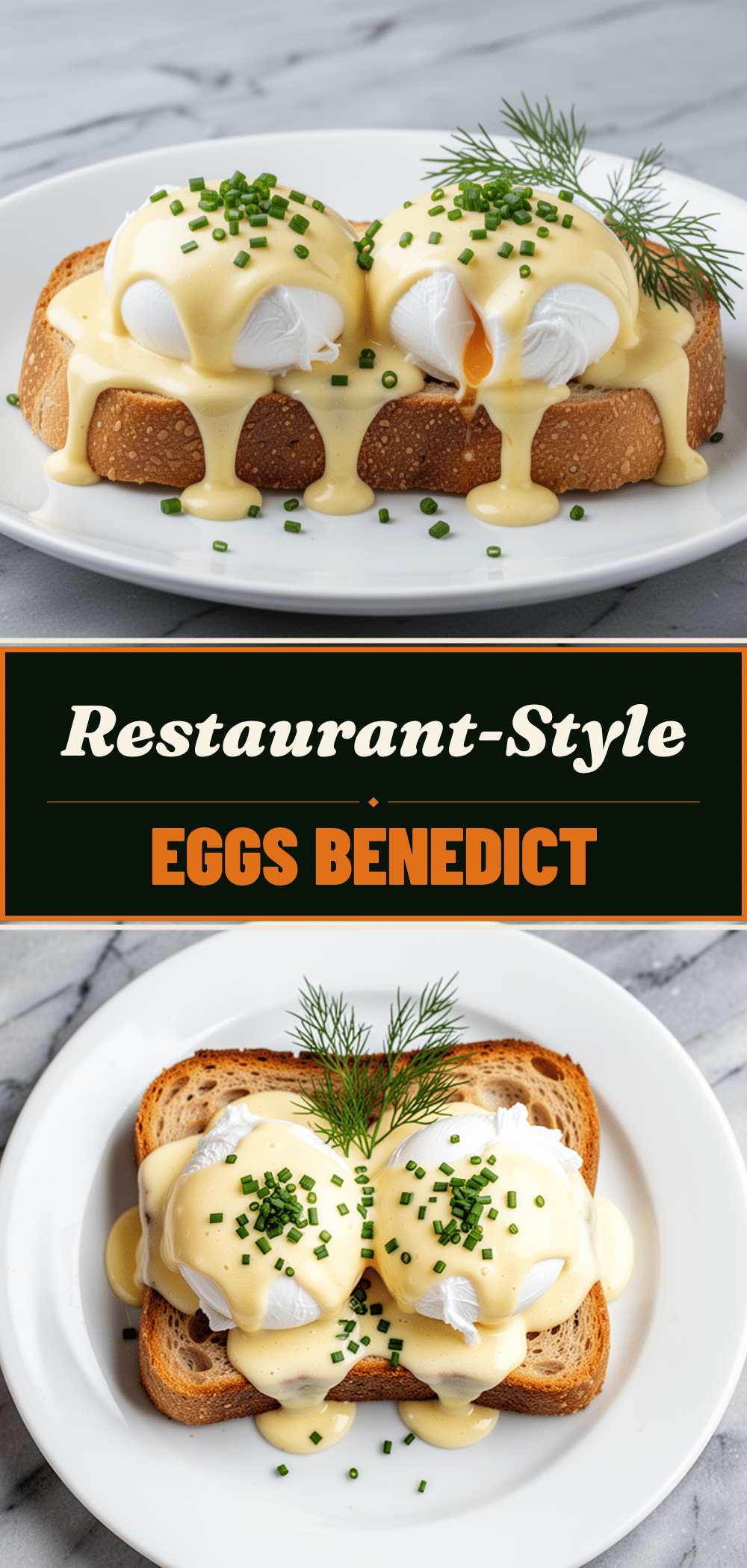

Restaurant-Style Eggs Benedict: Easy Hollandaise Recipe
- Total Time: 30 minutes
- Yield: 4 servings 1x
Description
A foolproof method for making rich, velvety hollandaise sauce and assembling classic Eggs Benedict at home. This recipe avoids the stress of broken sauces and delivers restaurant-quality brunch results with simple techniques.
Ingredients
- 3 large egg yolks, room temperature
- 2 tablespoons fresh lemon juice
- 1 tablespoon water
- 1/2 cup (113g) unsalted butter
- 1/4 teaspoon cayenne pepper
- Salt to taste
- 1 teaspoon white vinegar (for poaching water)
- 4 English muffin halves
- 4 large fresh eggs
- 8 slices Canadian bacon or ham
- 2 cups fresh spinach
- Butter for greasing pan
- Chopped chives or paprika for garnish (optional)
Instructions
- Whisk egg yolks, lemon juice, and water in a heatproof bowl until pale and frothy. Place over a double boiler or very low heat to warm gently.
- Melt unsalted butter in a small saucepan over medium heat. Remove from heat and let cool for 30 seconds until hot but not smoking.
- Return yolk mixture to heat and whisk constantly. Slowly drizzle melted butter in a thin, steady stream to emulsify. Remove from heat once thick and glossy.
- Stir in cayenne pepper and salt. Cover with plastic wrap touching the surface to keep warm.
- Bring a wide saucepan of water to a gentle simmer with white vinegar. Create a whirlpool and slide in eggs one by one.
- Poach eggs for 3-4 minutes for runny yolks. Remove with a slotted spoon.
- Toast English muffin halves. Lay Canadian bacon on each half, top with wilted spinach, then the poached egg.
- Spoon warm hollandaise over the eggs and garnish with chives or paprika. Serve immediately.
Notes
Ensure egg yolks are at room temperature for better emulsification. Use fresh eggs for poaching to prevent spreading. If the hollandaise breaks, whisk a fresh egg yolk in a clean bowl and slowly drizzle the broken sauce into it to rescue. Do not freeze hollandaise as it will separate.
- Prep Time: 15 minutes
- Cook Time: 15 minutes
- Category: Breakfast
- Cuisine: American
Nutrition
- Serving Size: 1 Eggs Benedict with
- Calories: 450
- Sugar: 3
- Sodium: 680
- Fat: 30
- Saturated Fat: 14
- Carbohydrates: 28
- Fiber: 2
- Protein: 22
Keywords: eggs benedict, hollandaise sauce, brunch recipe, poached eggs, breakfast ideas, restaurant style eggs benedict, foolproof hollandaise