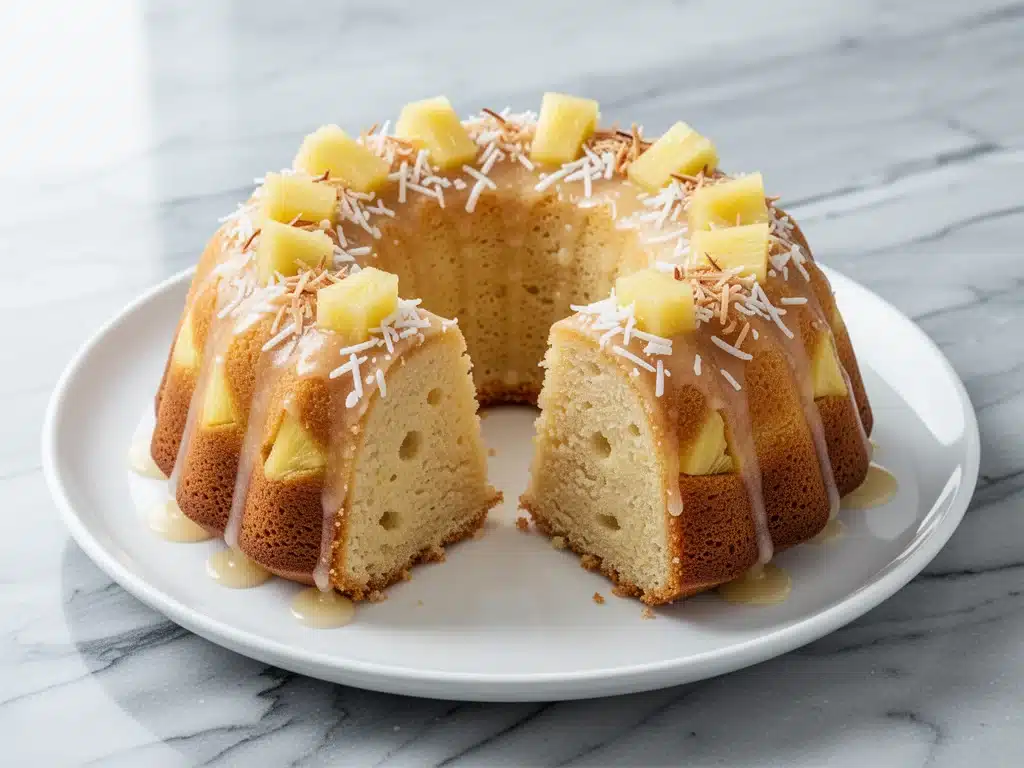
Last July, I made the mistake of bringing a store-bought sheet cake to a backyard barbecue. It was fine. It was sweet. It was forgettable. Meanwhile, my neighbor Dave brought a dense, slightly lopsided bundt cake that smelled like a vacation. It was soaked in pineapple juice, studded with coconut, and somehow stayed moist even after sitting out in the humid afternoon heat for three hours. People actually lined up for it. I ate three slices (don’t judge me) and went home determined to recreate that magic.
I’ve made this Ultra-Moist Pineapple Coconut Bundt Cake at least twelve times since then. I’ve tweaked the ratios, swapped brands of coconut milk, and even tried using fresh pineapple vs. canned (spoiler: canned is better here). The result? A cake that isn’t just good—it’s legendary in our family circle. It’s the kind of dessert that disappears before the plates are even cleared. And the best part? It’s surprisingly easy to make. You don’t need fancy techniques or expensive equipment. You just need a bundt pan and a willingness to embrace tropical flavors.
This cake has become my go-to for summer gatherings, potlucks, and even just Tuesday night desserts when I want something that feels special without the stress. It’s bright, it’s tangy, it’s sweet, and it has that perfect crumb that holds together but melts in your mouth. If you’ve ever struggled with dry bundt cakes or bland coconut desserts, this recipe will change your life. Seriously. I’m not exaggerating.
Why You’ll Love This Ultra-Moist Pineapple Coconut Bundt Cake
There are about ten reasons I keep coming back to this recipe, but here are the big ones that make it worth the effort:
- Incredibly Moist Texture — This isn’t a dry, crumbly cake. The combination of crushed pineapple, coconut milk, and a simple syrup soak keeps it moist for days. I’ve kept leftovers in the fridge for five days, and it still tasted fresh on day four. That’s rare for bundt cakes.
- Simple Ingredients — You probably have most of these in your pantry. Canned pineapple, coconut milk, flour, sugar, eggs, butter. No weird specialty items. No hard-to-find spices. Just straightforward, tasty ingredients that work together beautifully.
- Make-Ahead Friendly — This cake actually tastes better the next day. The flavors meld and deepen overnight. I often make it the morning of the party, let it cool, and then refrigerate it. It’s ready to go when guests arrive, and it holds up perfectly.
- Stunning Presentation — Bundt pans have those beautiful ridges and grooves that make any cake look impressive. This one looks like it came from a fancy bakery, even though it’s basically a dump-and-mix recipe. Guests always assume you spent hours on it.
- Perfect Balance of Sweet and Tangy — The pineapple adds brightness that cuts through the richness of the coconut and cream cheese glaze. It’s not cloyingly sweet. It’s balanced. Refreshing. Exactly what you want in summer.
- Feeds a Crowd — One bundt cake feeds 12-15 people easily. It’s cost-effective, impressive, and requires minimal last-minute prep. Perfect for barbecues, picnics, or holiday dinners.
This is my answer to “what dessert should I bring?” when I’m invited to someone’s house. It’s reliable, it’s delicious, and it always gets compliments. I’ve made it for beach parties, church potlucks, birthday celebrations, and even date nights. It works everywhere.
Ingredients You’ll Need for the Best Pineapple Coconut Bundt Cake
Here’s the best part: you probably have most of this already. I’m particular about a few things, and I’ll tell you exactly why. This looks like a standard cake recipe, but the pineapple and coconut make all the difference.
For the Cake Base
Unsalted butter (1 cup / 226g) — Softened to room temperature. This is crucial. Cold butter won’t cream properly with the sugar, and your cake won’t be tender. I take mine out of the fridge at least an hour before baking. If I forget, I microwave it for 10 seconds at a time until it yields to gentle pressure.
Granulated sugar (2 cups / 400g) — Don’t skimp. This recipe needs enough sugar to balance the tartness of the pineapple. Brown sugar won’t give you the same texture. White sugar only, please.
Eggs (4 large) — Room temperature eggs incorporate better into the batter. Cold eggs can cause the mixture to curdle. I set them in a bowl of warm water for 10 minutes if I’m rushing.
Vanilla extract (2 teaspoons) — Use real vanilla, not imitation. It makes a noticeable difference in a cake this simple. I use Nielsen-Massey because it’s consistent and pure.
All-purpose flour (3 cups / 375g) — Spoon and level, don’t scoop. Scooping packs in too much flour and makes a dense cake. I use Gold Medal AP flour because it has the right protein content for this recipe.
Baking powder (2 teaspoons) — Fresh baking powder is essential. If yours is older than 6 months, replace it. Old baking powder won’t give you the lift you need.
Baking soda (½ teaspoon) — This reacts with the acidic pineapple to help the cake rise. Don’t skip it.
Salt (1 teaspoon) — Enhances all the flavors. Don’t omit it, even if you’re watching sodium.
For the Moisture and Flavor
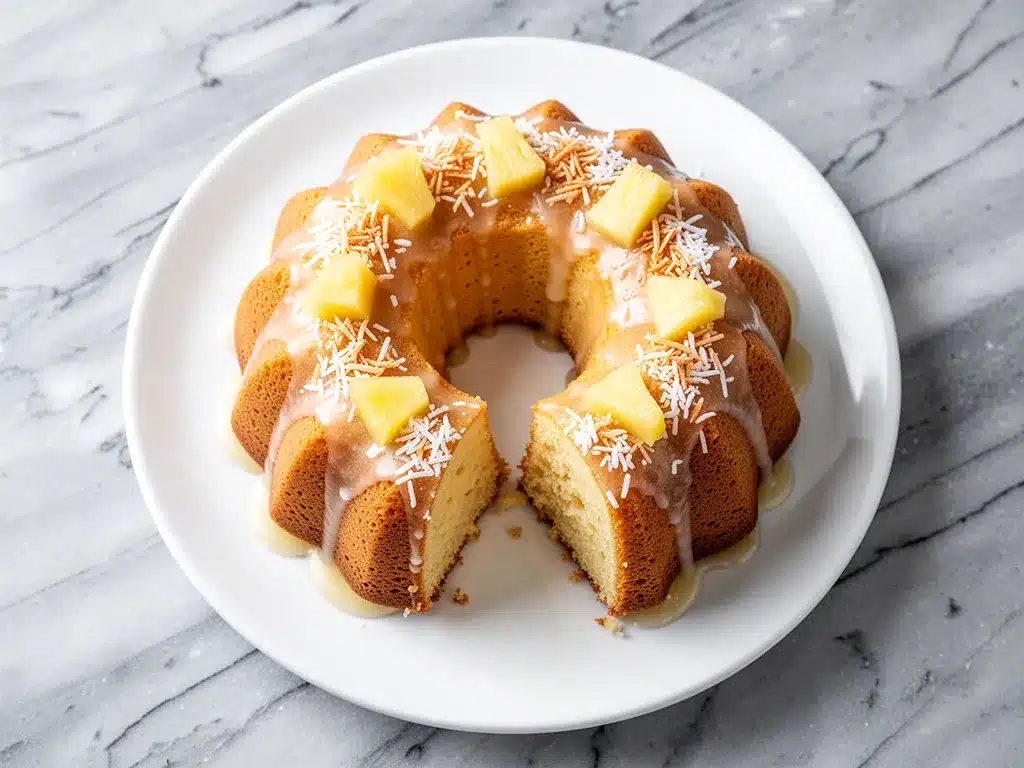
Canned crushed pineapple (20 oz / 565g) — Do not drain this. The juice is essential for moisture. I use Dole brand because it’s consistently sweet and tender. Fresh pineapple won’t work here—it’s too watery and doesn’t have the same texture.
Shredded sweetened coconut (1 cup / 100g) — This adds chewiness and tropical flavor. Unsweetened coconut works too, but you’ll need to add an extra tablespoon of sugar. I prefer sweetened because it stays softer in the cake.
Coconut milk (1 can, 13.5 oz / 385ml) — Use full-fat canned coconut milk, not the carton kind. Shake the can well before opening. The thick cream at the top is what gives the cake its richness. If you can’t find coconut milk, you can substitute heavy cream, but the flavor won’t be as coconutty.
For the Glaze (Optional but Recommended)
Cream cheese (4 oz / 113g) — Softened. This makes a tangy, rich glaze that pairs perfectly with the sweet cake.
Confectioners’ sugar (1 cup / 100g) — Sifted to remove lumps. Nobody wants gritty glaze.
Coconut extract (1 teaspoon) — Intensifies the coconut flavor. Almond extract also works if you don’t have coconut extract.
Heavy cream (2-3 tablespoons) — Adjust for consistency. You want it pourable but not runny.
Flaked coconut (¼ cup) — For garnish on top. Toast it lightly in a dry pan for 2 minutes before sprinkling for extra flavor.
For the Pineapple Syrup Soak
Pineapple juice (from the canned pineapple can) — About ½ cup. This is what you’ll brush on the warm cake to keep it moist. Don’t throw it away!
Powdered sugar (2 tablespoons) — Optional, but adds a little extra sweetness to the soak.
Equipment Needed
You don’t need fancy equipment for this. Here’s what I actually use:
12-cup Bundt pan — This is non-negotiable. The shape is what makes this cake special. I use a Nordic Ware classic Bundt pan because it has good coverage and releases cakes reliably. Make sure it’s a 12-cup size. Smaller pans will overflow.
Stand mixer or hand mixer — Creaming the butter and sugar takes effort. A stand mixer is easiest, but a hand mixer works fine. You could do it by hand, but your arms will thank you if you use a machine.
Large mixing bowls — One for wet ingredients, one for dry. Two bowls keep things organized.
Rubber spatula — For folding in the pineapple and coconut. Silicone spatulas are great because they scrape the bowl clean.
Wire cooling rack — Essential for cooling the cake evenly. Don’t skip this step.
Pastry brush — For applying the pineapple syrup soak. A silicone brush works well. Or just use a spoon if you’re being lazy.
Small saucepan — For warming the pineapple juice if you want to thin the glaze. Not strictly necessary, but helpful.
Measuring cups and spoons — Standard stuff. I use a set from OXO that has clear markings.
Microplane or box grater — Not needed for this recipe, but handy if you want to add lime zest to the glaze for extra brightness.
Optional but nice:
- Parchment paper — Some people line the bottom of the Bundt pan. I don’t bother if I grease it well, but if you’re worried about sticking, do it.
- Instant-read thermometer — Not needed for cakes, but I like having one around.
How to Make It: Step-by-Step
Alright, let’s make this! I’m walking you through exactly how I do it, including the little tricks I’ve picked up over the years. This recipe is straightforward, but there are a few key steps that make the difference between good and amazing.
Step 1: Prep Your Pan and Oven (5 minutes)
Preheat your oven to 350°F (175°C). This is standard for most bundt cakes. While it heats, focus on the pan. This is the most critical step for getting your cake out intact. Generously grease every crevice of your Bundt pan with butter or non-stick baking spray. I use a pastry brush to get into all the nooks and crannies. Then, dust with flour, tapping out the excess. Or, for extra insurance, use a baking spray that contains flour. Trust me on this. A sticky Bundt cake is a nightmare.
Step 2: Cream the Butter and Sugar (3-4 minutes)
In a large bowl, beat the softened butter and granulated sugar together on medium-high speed until light and fluffy. This takes about 3-4 minutes. The mixture should look pale and airy. Don’t rush this step. Proper creaming incorporates air, which helps the cake rise and stay tender. If your butter is too cold, it won’t cream properly. If it’s too warm, it’ll be greasy. Room temperature is the sweet spot.
Step 3: Add Eggs and Vanilla (2 minutes)
Add the eggs one at a time, beating well after each addition. Scrape down the sides of the bowl with a spatula to ensure everything is incorporated. Add the vanilla extract and mix briefly. The mixture might look slightly curdled at this point—that’s normal. It’ll come together once you add the dry ingredients.
Step 4: Combine Dry Ingredients (1 minute)
In a separate bowl, whisk together the flour, baking powder, baking soda, and salt. Whisking ensures even distribution, which prevents bitter spots of baking soda in your finished cake.
Step 5: Mix Wet and Dry (2-3 minutes)
With the mixer on low speed, gradually add the dry ingredients to the wet ingredients. Alternate with the coconut milk, beginning and ending with the dry ingredients. Mix until just combined. Do not overmix. Overmixing develops gluten, which makes the cake tough. You want a smooth, thick batter. It’ll look heavy and dense at this point—that’s expected.
Step 6: Fold in Pineapple and Coconut (2 minutes)
Using a rubber spatula, gently fold in the crushed pineapple (with its juice) and the shredded coconut. Be gentle here. You want to distribute them evenly without deflating the batter. The batter will be very thick and chunky. This is normal. It should look like a heavy, tropical sludge. That’s a good thing.
Step 7: Bake the Cake (55-65 minutes)
Pour the batter into the prepared Bundt pan and smooth the top with a spatula. Bake at 350°F (175°C) for 55-65 minutes. The cake is done when a toothpick inserted into the thickest part comes out clean or with just a few moist crumbs. Don’t open the oven door before 45 minutes—this can cause the cake to collapse. Every oven is different, so start checking at 55 minutes. If the top is browning too quickly, tent it loosely with aluminum foil.
Step 8: Cool and Soak (30 minutes)
Let the cake cool in the pan for 10 minutes. Then, carefully invert it onto a wire cooling rack. While the cake is still warm, brush the top generously with the reserved pineapple juice. This soak keeps the cake moist and adds intense pineapple flavor. I brush it all over, letting it soak into the cracks. The cake will absorb most of it. If there’s excess, don’t worry—it’ll evaporate as the cake cools.
Step 9: Make the Glaze (5 minutes)
Once the cake is completely cool, make the glaze. Beat the softened cream cheese until smooth. Gradually add the confectioners’ sugar, coconut extract, and heavy cream. Whisk until smooth and pourable. If it’s too thick, add another tablespoon of cream. If it’s too thin, add a little more sugar. The glaze should coat the back of a spoon but still drip off slowly.
Step 10: Glaze and Garnish (5 minutes)
Pour the glaze over the cooled cake, letting it drip down the sides. Sprinkle toasted flaked coconut on top. Let the glaze set for 15-20 minutes before slicing. This helps it adhere to the cake instead of sliding off.
Total Time: About 2 hours (15 minutes active, 1 hour 45 minutes mostly hands-off including cooling)
Expert Tips & Tricks
Here’s everything I’ve learned from making this dozens of times. These tips will save you from my mistakes.
Don’t Drain the Pineapple — This is the #1 mistake people make. The juice is what keeps the cake moist. If you drain it, your cake will be dry. I’ve made this mistake once, and the cake was fine but not amazing. Now I never drain it.
Room Temperature Ingredients — Cold butter, cold eggs, cold milk—they all cause the batter to separate. Take your time getting everything to room temperature. It makes a huge difference in texture.
Grease the Bundt Pan Thoroughly — I can’t stress this enough. Use butter or baking spray with flour. Get into every groove. If you skip this, your cake will stick, and you’ll lose half of it when you try to remove it. I learned this the hard way with a beautiful cake that shattered upon inversion.
Don’t Overmix — Once you add the flour, mix until just combined. Overmixing makes the cake dense and tough. It should look slightly lumpy. That’s fine.
Test for Doneness Early — Start checking at 55 minutes. Ovens vary. If the toothpick comes out clean, it’s done. If it comes out wet, bake for 5 more minutes and check again.
Cool Completely Before Glazing — If you glaze a warm cake, the glaze will melt and slide off. Patience pays off here. Let it cool completely on a wire rack.
Toast the Coconut — Toasting flaked coconut in a dry pan for 2-3 minutes brings out its nutty flavor. It’s a small step that makes a big difference. Just watch it closely—it burns quickly.
Variations & Substitutions
Once you’ve nailed the basic version, here’s how you can mix it up. I’ve tried all of these.
Lime-Pineapple Version — Add the zest of 1 lime to the batter and 1 tablespoon of lime juice to the glaze. Brightens everything up. Great for summer.
White Chocolate Chip — Fold in ½ cup white chocolate chips along with the coconut. Makes it sweeter and more indulgent. My kids love this version.
Macadamia Nut — Replace ½ cup of the shredded coconut with chopped macadamia nuts. Adds crunch and luxury. Worth the extra cost.
Gluten-Free — Use a 1:1 gluten-free flour blend. Everything else stays the same. I’ve used Bob’s Red Mill 1:1 and it works great.
Dairy-Free — Replace butter with coconut oil (solid state), use dairy-free cream cheese, and substitute coconut milk with oat milk. The texture will be slightly different but still delicious. My lactose-intolerant friend requests this version.
Vegan — Replace butter with vegan butter, eggs with flax eggs (4 tablespoons ground flax + 12 tablespoons water), and cream cheese with vegan cream cheese. It’s not identical, but it’s close. I’ve made it for vegan friends, and they loved it.
Serving & Storage
How to Serve:
I usually serve this cake at room temperature. It’s softer and more flavorful than when it’s chilled. But here are other ways I’ve enjoyed it:
- With whipped cream — A dollop of lightly sweetened whipped cream on top is amazing.
- With toasted coconut — Extra toasted flakes on each slice for texture.
- With fresh fruit — Sliced strawberries or mango on the side add freshness.
Storage Instructions:
Room Temperature: Store covered at room temperature for up to 3 days. The glaze will soften but the cake stays moist.
Refrigerator: Store in an airtight container for up to 5 days. The cake actually tastes better after a day or two as the flavors meld. Let it come to room temperature before serving for best flavor.
Freezing: This cake freezes well. Wrap the unglazed cake tightly in plastic wrap, then in aluminum foil. Freeze for up to 3 months. Thaw overnight in the fridge, then glaze before serving. The texture holds up surprisingly well.
Pro tip: If the cake seems dry after a few days, brush it with a little more pineapple juice. It’ll revive it instantly.
Nutrition Information
I’m not a nutritionist, but here’s the breakdown if you’re tracking. This is a rich, indulgent cake, so portion control is key.
Per Serving (based on 12 servings):
- Calories: 480
- Protein: 6g
- Carbs: 62g
- Fiber: 1g
- Sugar: 48g
- Fat: 24g
- Saturated Fat: 16g
- Cholesterol: 75mg
- Sodium: 320mg
What’s Good: It’s filling. One slice is a generous portion. The coconut provides some healthy fats.
What to Know: It’s high in sugar and saturated fat. This is a treat, not a health food. Enjoy it in moderation.
My Take: Look, this is a dessert. It’s sweet, rich, and delicious. It’s not a diet recipe. But it’s way better than store-bought, costs less, and I know exactly what’s in it. When I want to make it lighter, I skip the glaze and reduce the sugar by ¼ cup. But usually? I just eat a reasonable portion and enjoy it guilt-free.
Final Thoughts
So that’s my Ultra-Moist Pineapple Coconut Bundt Cake! I’ve probably talked your ear off at this point, but when you make a recipe this often, you have a lot to say about it.
This cake has saved me more times than I can count. It’s my answer to “what dessert should I bring?” when I’m invited to a summer gathering. It’s reliable, it’s delicious, and it always gets compliments. My family loves it, my friends request it, and I love making it because it’s so straightforward yet so impressive.
Make it yours! Try different add-ins, swap in your favorite nuts, adjust the sweetness to your taste. The best recipes are the ones you adapt to your family’s preferences.
If you make this, drop a comment and let me know what you think! I love hearing how recipes turn out in your kitchen. And if something doesn’t work, tell me that too—I’m here to help troubleshoot.
Happy baking! And I hope your kitchen smells half as good as mine does right now.
Frequently Asked Questions
Q: Can I use fresh pineapple instead of canned?
A: You can, but I don’t recommend it. Fresh pineapple is too watery and doesn’t have the same tender texture. Canned crushed pineapple is softer and releases more juice into the batter, which is what keeps the cake moist. If you must use fresh, blend it until very smooth and drain off excess liquid, but the result won’t be as good.
Q: Why did my cake stick to the pan?
A: This almost always happens because the pan wasn’t greased thoroughly enough. Bundt pans have lots of crevices, and butter alone isn’t enough. Use a baking spray with flour, or grease with butter and dust with flour. Make sure you get into every groove. If it still sticks, let it cool for 15 minutes instead of 10—the cake contracts slightly as it cools, making release easier.
Q: Can I make this ahead of time?
A: Absolutely. This cake actually tastes better the next day. I make it the morning of the party, let it cool completely, glaze it, and then refrigerate it. Bring it to room temperature 30 minutes before serving. It holds up perfectly for up to 5 days in the fridge.
Q: Can I freeze this cake?
A: Yes! Freeze the unglazed cake wrapped tightly in plastic wrap and aluminum foil for up to 3 months. Thaw overnight in the fridge, then glaze before serving. The texture holds up surprisingly well. Don’t freeze the glazed cake—the glaze can become sticky and messy upon thawing.
Q: Can I double this recipe?
A: No, this recipe is designed for a single 12-cup Bundt pan. If you double it, you’ll need two pans, and the baking time will be different. I don’t recommend doubling unless you’re making two cakes. Stick to one batch for best results.
Q: Why is my cake dense and heavy?
A: This usually happens from overmixing the batter. Once you add the flour, mix until just combined. Overmixing develops gluten, which makes the cake tough. Also, make sure your baking powder and baking soda are fresh. Old leavening agents won’t give you the lift you need.
Q: Can I use coconut cream instead of coconut milk?
A: Yes, but it’s thicker. You may need to thin it with a little water or milk. Coconut milk is easier to incorporate into the batter. If you use coconut cream, the cake will be richer and denser, which some people prefer. Just adjust the consistency so it’s pourable.
Pin This Recipe!
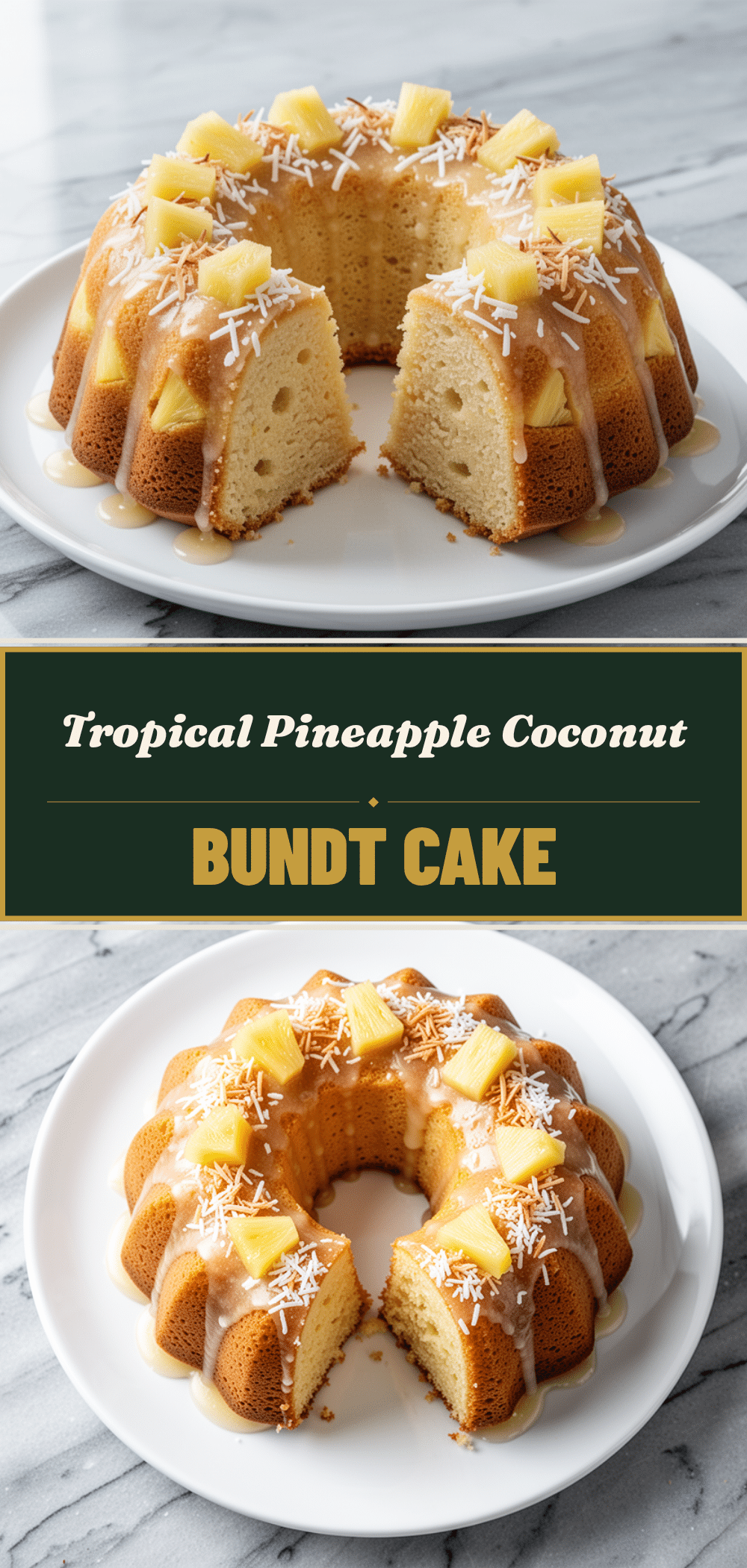
Ultra-Moist Pineapple Coconut Bundt Cake
- Total Time: 2 hours
- Yield: 12 servings 1x
Description
A dense, incredibly moist bundt cake infused with tropical pineapple and coconut flavors, featuring a tangy cream cheese glaze and a pineapple syrup soak.
Ingredients
- 1 cup (226g) unsalted butter, softened to room temperature
- 2 cups (400g) granulated sugar
- 4 large eggs, room temperature
- 2 teaspoons vanilla extract
- 3 cups (375g) all-purpose flour
- 2 teaspoons baking powder
- ½ teaspoon baking soda
- 1 teaspoon salt
- 20 oz (565g) canned crushed pineapple (do not drain)
- 1 cup (100g) shredded sweetened coconut
- 1 can (13.5 oz / 385ml) full-fat canned coconut milk
- 4 oz (113g) cream cheese, softened (for glaze)
- 1 cup (100g) confectioners’ sugar, sifted (for glaze)
- 1 teaspoon coconut extract (for glaze)
- 2–3 tablespoons heavy cream (for glaze)
- ¼ cup flaked coconut, toasted (for garnish)
- ½ cup pineapple juice (reserved from canned pineapple can)
- 2 tablespoons powdered sugar (optional, for soak)
Instructions
- Preheat oven to 350°F (175°C). Generously grease and flour a 12-cup Bundt pan, ensuring all crevices are coated.
- In a large bowl, beat softened butter and granulated sugar on medium-high speed for 3-4 minutes until light and fluffy.
- Add eggs one at a time, beating well after each addition. Scrape down bowl sides. Add vanilla extract and mix briefly.
- In a separate bowl, whisk together flour, baking powder, baking soda, and salt.
- With mixer on low, gradually add dry ingredients to wet ingredients, alternating with coconut milk, beginning and ending with dry ingredients. Mix until just combined.
- Gently fold in crushed pineapple (with juice) and shredded coconut using a rubber spatula.
- Pour batter into prepared pan and smooth top. Bake for 55-65 minutes until a toothpick inserted comes out clean.
- Cool cake in pan for 10 minutes, then invert onto a wire rack. While warm, brush generously with reserved pineapple juice.
- Once completely cool, beat cream cheese until smooth. Gradually add confectioners’ sugar, coconut extract, and heavy cream. Whisk until smooth.
- Pour glaze over cooled cake and sprinkle with toasted flaked coconut. Let set for 15-20 minutes before slicing.
Notes
Do not drain the canned pineapple; the juice is essential for moisture. Ensure all ingredients are at room temperature for best texture. Grease the Bundt pan thoroughly to prevent sticking. The cake tastes better the next day as flavors meld. Can be frozen unglazed for up to 3 months.
- Prep Time: 15 minutes
- Cook Time: 65 minutes
- Category: Dessert
- Cuisine: American
Nutrition
- Serving Size: 1 slice
- Calories: 480
- Sugar: 48
- Sodium: 320
- Fat: 24
- Saturated Fat: 16
- Carbohydrates: 62
- Fiber: 1
- Protein: 6
Keywords: pineapple cake, coconut bundt cake, moist bundt cake, tropical dessert, summer baking, cream cheese glaze