My grandmother’s kitchen didn’t just smell like food; it smelled like summer trapped in a jar. It was late August, the kind of heat that makes the air shimmer off the pavement, and inside, the windows were fogged up with steam. Grandma wasn’t rushing. She never rushed. While the rest of the family was trying to escape the oven’s heat, she was standing over a massive pot of tomatoes, stirring slowly, watching the surface break with little bubbles.
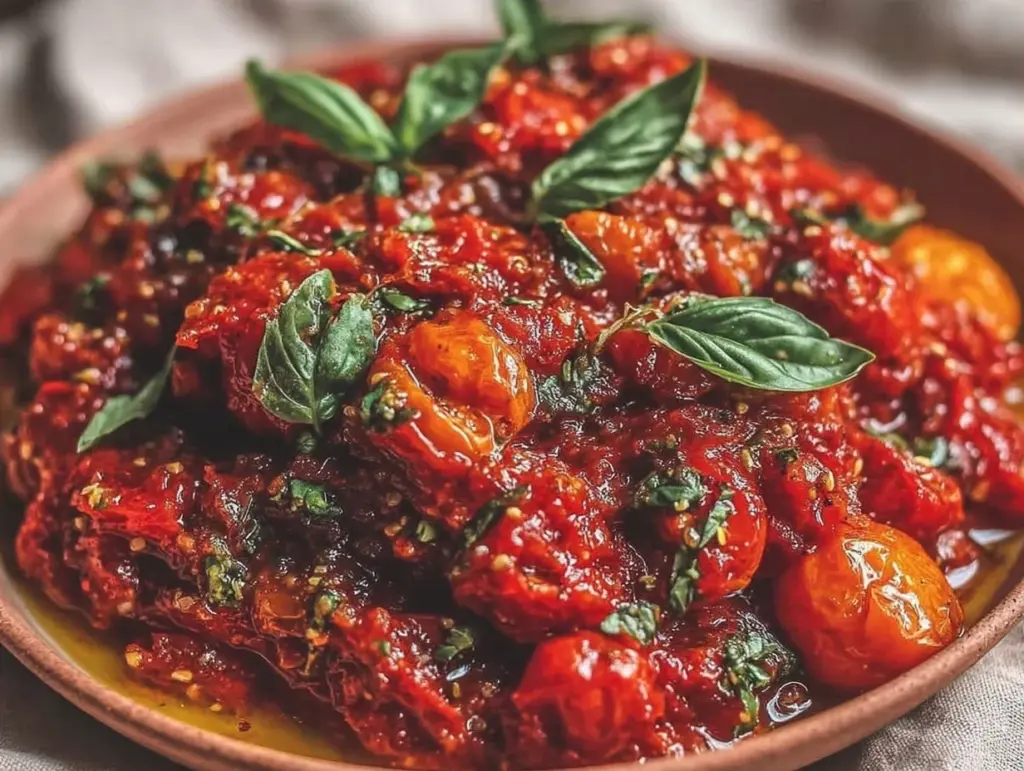
I used to think she was just making sauce. I was wrong. She was making time. She was making the kind of sauce that could sit in the pantry for a year and still taste like the first ripe tomato of the season. This slow roasted tomato sauce with garlic and basil isn’t just a recipe; it’s a memory I’ve spent years trying to recreate in my own modern kitchen. It’s rich, deeply savory, and packed with enough roasted garlic to make your neighbors wonder what you’re cooking.
I’ve tested this method more times than I care to admit. I’ve tried the quick stovetop version (too thin, not enough depth), the pressure cooker version (good, but lacks that soulful sweetness), and the raw crushed jarred stuff (please, no). This slow-roasted version is the only one that gets it right. It takes patience, yes. But when you open a jar of this in the middle of February and spoon it over fresh pasta, you’ll understand why my grandmother waited. It’s the difference between eating dinner and remembering a summer afternoon.
Why You’ll Love This Slow Roasted Tomato Sauce
There are about ten reasons I keep making this sauce every fall, but here are the big ones. This isn’t just a condiment; it’s the foundation of half our meals.
Unbeatable Depth of Flavor — Roasting concentrates the natural sugars in the tomatoes. You get this caramelized, almost jammy sweetness that you just can’t get by boiling them on the stove. It tastes complex, like it simmered for hours (even though it just sat in the oven).
Garlic That Melts in Your Mouth — We’re not chopping raw garlic and throwing it in. We’re roasting whole heads of garlic until they’re soft, sweet, and spreadable. It eliminates any harsh bite and leaves behind a mellow, savory backbone.
Perfect for Canning — This recipe is designed for preservation. The low moisture content from roasting means it’s safer and more stable for water bath canning. I make three batches every September so we have enough for pizza nights, pasta, and soups all winter long.
Versatile Comfort Food — I use this sauce for everything. It’s the base for my cheesy ground beef goulash, it’s the topping for my baked salmon with crispy garlic butter, and it’s the star of my homemade pizza. It’s also great as a dip for crusty bread.
Makes Your House Smell Amazing — Roasting tomatoes and basil fills the entire house with a scent that feels like a hug. It’s comforting in a way that takeout never is.
This sauce is my go-to when I want to feel connected to my roots. It’s reliable, delicious, and makes you feel like a good cook without any stress.
Ingredients You’ll Need
Here’s the best part: you probably have most of this already, except for the tomatoes. I’m particular about three ingredients here, and I’ll tell you exactly why.
For the Tomatoes
Roma or Plum Tomatoes (6 pounds / 2.7 kg) — These are non-negotiable. They have less water and more meat than beefsteak tomatoes. Less water means a thicker sauce that’s safer to can. Wash them well, but don’t peel them—the skins add flavor and color. They’ll break down during roasting.
Olive Oil (½ cup / 120ml) — Use a good quality extra virgin olive oil. You’ll taste it. I keep a dedicated bottle for roasting so I don’t save it for salad dressing.
Salt (2 tablespoons / 30g) — Kosher salt is best because it’s easier to control. Sea salt works too. This amount is crucial for flavor and safety in canning.
For the Aromatics
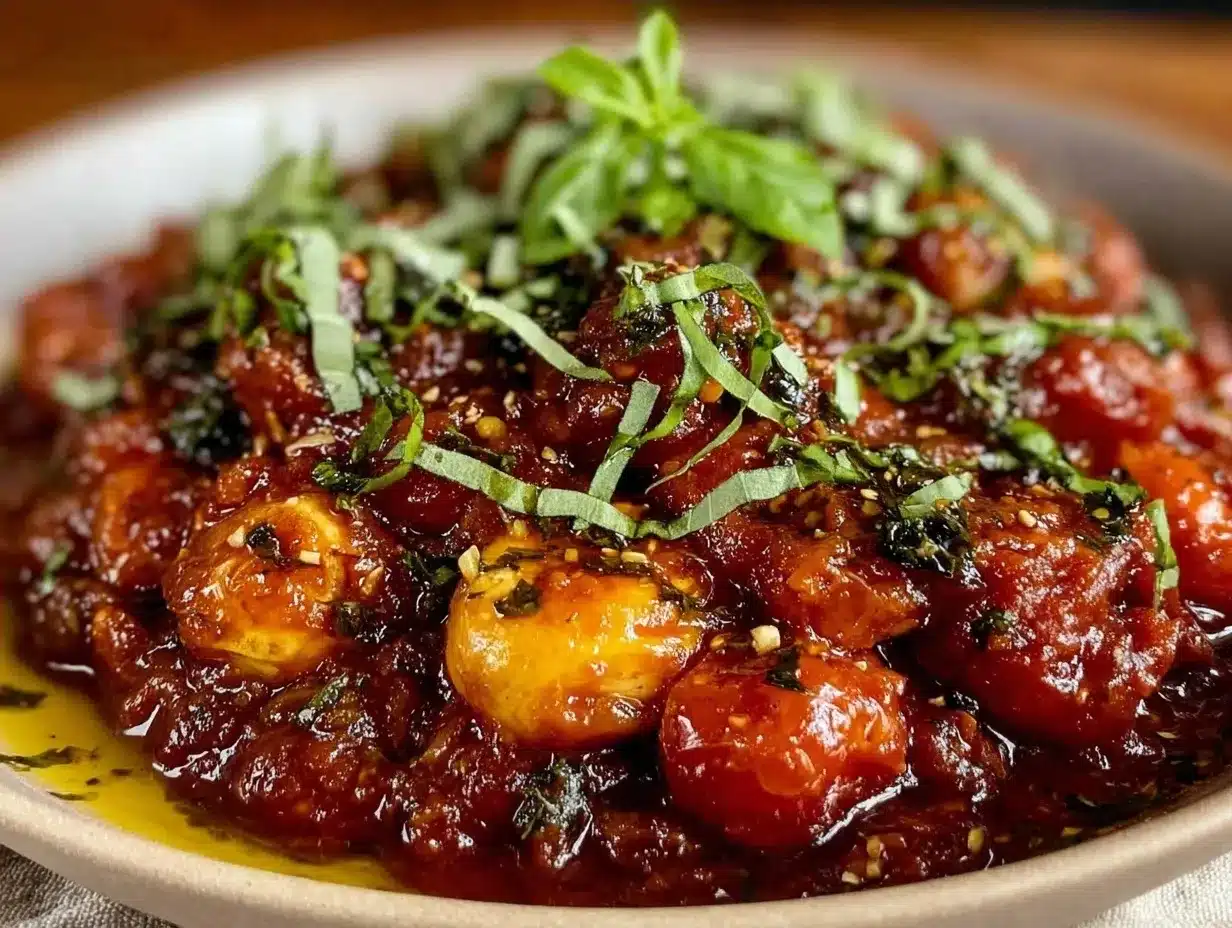
Garlic (3 heads / about 60 cloves) — Yes, three heads. Don’t be scared. We’re roasting them whole, so the flavor becomes sweet and nutty. If you hate garlic, use two heads. But really, try it. It changes everything.
Fresh Basil (1 large bunch / about 2 cups loosely packed) — Use sweet Italian basil. The stems are fine; just tie them together so they’re easy to remove later. If you can’t find fresh, use 2 tablespoons of dried basil, but fresh is so much better.
Red Pepper Flakes (½ teaspoon) — Optional, but it adds a tiny warmth that balances the sweetness. I always add it.
For Canning
Lemon Juice (½ cup / 120ml, bottled) — This is critical for safety. Bottled lemon juice has a consistent acidity. Fresh lemon juice varies, and for canning, you need that consistency to prevent botulism. Do not skip this.
Water (1 cup / 240ml) — Just enough to help everything move around in the pot.
Optional Add-ins: Oregano (1 teaspoon dried) — If you like a more herbal profile, add this. Carrots (1 large, diced) — I sometimes add a diced carrot to the roast pan. It adds natural sweetness and reduces the need for sugar.
Personal Tip: I buy my tomatoes from a local farm stand or farmer’s market in late summer. They’re cheaper and fresher. If you can’t find enough Romas, you can mix in some San Marzanos, but avoid juicy varieties like Cherokee Purple.
Equipment Needed
You don’t need fancy equipment for this. Here’s what I actually use.
Large Rimmed Baking Sheets — You’ll need two or three large sheet pans. Line them with parchment paper for easy cleanup. Roasting tomatoes creates a mess if you don’t use parchment.
Large Stockpot — A 12-quart pot or larger. You need space for the tomatoes to break down without boiling over. My old stainless steel pot works perfectly.
Food Mill or Immersion Blender — I prefer a food mill because it removes the skins and seeds, giving you that smooth, restaurant-quality texture. An immersion blender works too, but you’ll have to strain it through a sieve to get rid of the skins.
Canning Jars and Lids — Half-pint or pint jars. I use Ball or Kerr jars. Make sure your lids are new; the rubber seal only works once. Wash jars in hot soapy water.
Water Bath Canner — A large pot with a rack that holds your jars submerged in water. If you don’t have one, a large stockpot works, just make sure the jars are covered by at least an inch of water.
Ladle and Funnel — A wide-mouth funnel makes filling jars so much easier. A ladle with a drip guard is nice, but any ladle works.
Knife and Cutting Board — For quartering the tomatoes and prepping the garlic.
Optional but nice: Garlic Roaster — Those little aluminum pots that roast garlic in the oven. They work great, but I just use the baking sheet to save space.
How to Make It: Step-by-Step
Alright, let’s make this! I’m walking you through exactly how I do it, including the little tricks I’ve picked up.
Step 1: Prep the Tomatoes (15 minutes)
Wash your tomatoes thoroughly. Remove the cores. You don’t need to peel them, but quarter them. This helps them break down faster in the oven. If some are huge, cut them into halves. Toss them in a large bowl with the olive oil and salt. Make sure every piece is coated.
Step 2: Roast the Garlic (20 minutes)
Preheat your oven to 400°F (200°C). Cut the tops off the garlic heads to expose the cloves. Drizzle with a little olive oil and wrap them loosely in foil. Place them on a small baking sheet. They’ll roast alongside the tomatoes. You want them soft and golden, not burnt.
Step 3: Roast the Tomatoes (45-60 minutes)
Spread the quartered tomatoes in a single layer on the parchment-lined sheet pans. Roast for 45-60 minutes. You want them to shrink, soften, and start to caramelize on the edges. They should look jammy and dark red, not watery. Stir them halfway through if you can. If your oven has hot spots, rotate the pans.
Step 4: Combine and Simmer (30 minutes)
Transfer the roasted tomatoes and all the juices from the pans into your large stockpot. Squeeze the roasted garlic cloves out of their skins and add them to the pot. Add the basil stems, red pepper flakes, and water. Bring to a gentle boil, then reduce heat to low. Let it simmer uncovered for 30 minutes, stirring occasionally. This evaporates excess moisture.
Step 5: Mill the Sauce (10 minutes)
Remove the pot from heat. Let it cool slightly. Remove the basil stems. If using a food mill, feed the sauce through it over a clean bowl. This removes skins and seeds. If using an immersion blender, blend until smooth, then push through a fine-mesh sieve. You should have a thick, velvety sauce.
Step 6: Add Lemon Juice (5 minutes)
Stir in the bottled lemon juice. This is the final step before canning. Taste it. If you want more salt, add a pinch. But remember, it will taste slightly bland now because it will be diluted when you mix it with pasta later.
Step 7: Canning (30 minutes)
Ladle the hot sauce into hot, sterilized jars, leaving ½ inch of headspace. Wipe the rims clean. Apply lids and bands. Process in a boiling water bath for 40 minutes (for pints) or 35 minutes (for half-pints). Adjust for altitude if you live over 1,000 feet. Remove jars and let them cool undisturbed for 12-24 hours. Check seals.
Total Time: About 2 hours (mostly hands-off roasting)
Expert Tips & Tricks
Here’s everything I’ve learned from making this dozens of times. These tips will save you from my mistakes.
Don’t Rush the Roast
The flavor comes from the Maillard reaction—the browning. If you take them out too early, the sauce will taste flat and acidic. Wait for those dark, caramelized edges.
Use Bottled Lemon Juice
I know it seems weird, but for canning, acidity is safety. Bottled lemon juice is standardized to pH 2.0-2.6. Fresh juice varies. Don’t risk botulism for the sake of “freshness.”
Strain Thoroughly
If you don’t remove the skins, they’ll float in your jar and look messy. A food mill is worth the investment if you canning often. It also makes the texture silky smooth.
Check Your Seals
After cooling, press the center of each lid. If it pops, it’s not sealed. Refrigerate those and eat them first. Properly sealed lids will be concave and won’t move.
Store in a Cool, Dark Place
Once sealed, your jars can last 12-18 months. Keep them away from light and heat. I store mine in the basement. Check them every few months for any signs of spoilage.
Variations & Substitutions
Once you’ve nailed the basic version, here’s how you can mix it up. I’ve tried all of these.
Spicy Version
Add 2-3 chopped fresh jalapeños or a teaspoon of cayenne pepper when you simmer. Great for spicy dishes or pizza.
Herb-Heavy Version
Add a tablespoon of dried oregano and a teaspoon of dried thyme. This gives it a more Mediterranean profile. I love this for dipping bread.
Vegetable-Boosted
Roast carrots and celery with the tomatoes. It adds sweetness and body. This is my grandma’s secret trick. She always added a carrot.
No-Canning Version
If you don’t want to can, just cool the sauce and store it in the fridge for up to 5 days, or freeze it in freezer-safe containers for up to 6 months. Freezing works well because the sauce is thick.
Gluten-Free
This recipe is naturally gluten-free. Just make sure your canned goods are certified GF if you’re sensitive.
Serving & Storage
How to Serve:
I usually serve this straight from the jar, heated in a saucepan with a splash of cream for pasta, or as a base for street corn chicken casserole for a twist. It’s also amazing on grilled cheese sandwiches.
Sides:
Crusty sourdough bread, arugula salad, or roasted vegetables. This sauce is the star, so keep sides simple.
Storage:
Sealed jars last 12-18 months in a cool, dark place. Once opened, refrigerate and use within 1 week. If you freeze it, leave 1 inch of headspace for expansion.
Nutrition Information
I’m not a nutritionist, but here’s the breakdown if you’re tracking. This is per ½ cup serving.
| Nutrient | Amount |
|---|---|
| Calories | 45 |
| Protein | 2g |
| Carbs | 8g |
| Fiber | 2g |
| Sugar | 6g |
| Fat | 1.5g |
| Sodium | 280mg |
Look, this is comfort food. It’s not a diet recipe, but it’s made from real ingredients. It’s packed with lycopene from the tomatoes and antioxidants from the garlic. When I want to make it lighter, I skip the olive oil in the roast, but I usually don’t. I just enjoy a reasonable portion.
Final Thoughts
So that’s my slow roasted tomato sauce. I’ve probably talked your ear off at this point, but when you make a recipe this often, you have a lot to say about it. This has saved weeknight dinners more times than I can count. It’s my answer to “what’s for dinner” when I’m tired, don’t want takeout, and still want something that tastes really good.
Make it yours! Try different herbs, add vegetables, or just enjoy it as is. The best recipes are the ones you adapt to your family’s tastes. If you make this, drop a comment and let me know what you think! I love hearing how recipes turn out in your kitchen. And if something doesn’t work, tell me that too—I’m here to help troubleshoot.
Happy cooking! And I hope your kitchen smells half as good as mine does right now.
Frequently Asked Questions
Can I use fresh tomatoes instead of canned?
Absolutely. In fact, fresh Roma tomatoes are better for this recipe because they have less water. You’ll need to roast them longer to get the same concentration. Canned tomatoes are convenient, but fresh has more flavor. I always prefer fresh in late summer.
Why did my sauce turn out watery?
This usually happens if you didn’t roast the tomatoes long enough. The water needs to evaporate. Roast them until they’re dark and jammy. Also, make sure you’re using low-moisture tomatoes like Romas, not juicy beefsteaks.
Can I freeze this sauce instead of canning?
Yes! Let it cool completely, then pour into freezer-safe containers, leaving 1 inch of headspace. It will keep for up to 6 months. Freezing is easier if you don’t have a water bath canner.
How long does this sauce last in the fridge?
If you make a small batch and don’t can it, it will last 5-7 days in an airtight container in the fridge. The acidity from the lemon juice helps preserve it, but it’s still perishable.
Can I add sugar to this sauce?
My grandmother never added sugar. The roasting process brings out the natural sweetness. If your tomatoes are very acidic, you can add a teaspoon of sugar, but I find it’s rarely necessary.
Is it safe to can this without pressure canning?
Yes, because tomatoes are high-acid and you’re adding bottled lemon juice, this recipe is safe for water bath canning. Always follow tested canning guidelines to ensure safety.
Pin This Recipe!
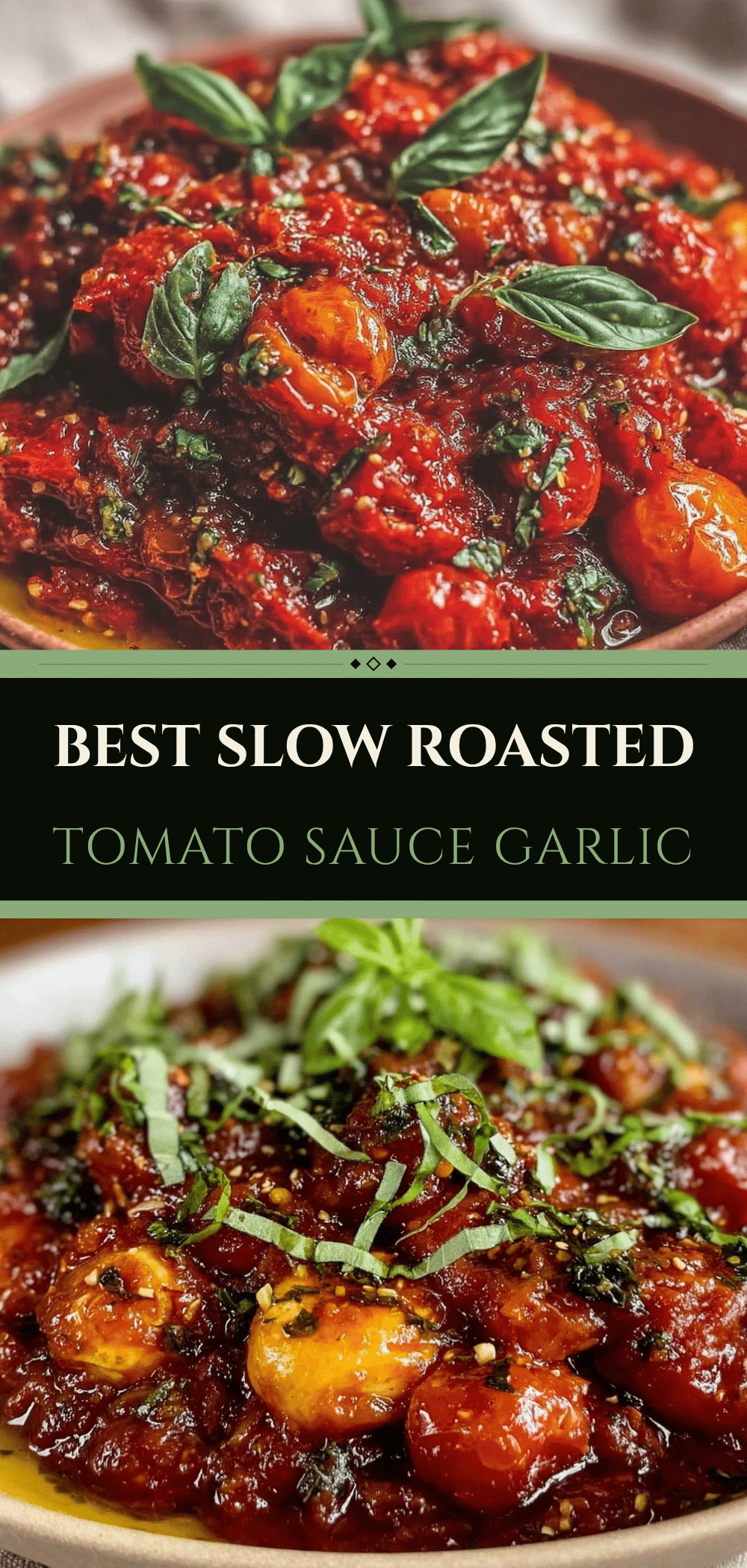
Slow Roasted Tomato Sauce with Garlic and Basil
- Total Time: 2 hours
- Yield: Makes approximately 6-8 pints 1x
Description
A rich, deeply savory slow-roasted tomato sauce made with whole roasted garlic and fresh basil. This recipe focuses on concentration of flavor through roasting and is designed for safe water bath canning for long-term storage.
Ingredients
- 6 pounds Roma or Plum Tomatoes, washed and quartered
- 1/2 cup Extra Virgin Olive Oil
- 2 tablespoons Kosher Salt
- 3 heads Garlic, tops cut off
- 1 large bunch Fresh Basil (about 2 cups loosely packed), stems tied
- 1/2 teaspoon Red Pepper Flakes
- 1/2 cup Bottled Lemon Juice
- 1 cup Water
- 1 teaspoon Dried Oregano (optional)
- 1 large Carrot, diced (optional)
Instructions
- Preheat oven to 400°F (200°C).
- Wash tomatoes, remove cores, and quarter them. Toss in a large bowl with olive oil and salt until evenly coated.
- Cut the tops off the garlic heads to expose cloves. Drizzle with a little olive oil, wrap loosely in foil, and place on a small baking sheet.
- Spread quartered tomatoes in a single layer on parchment-lined baking sheets. Roast for 45-60 minutes until shrunk, softened, and caramelized. Stir halfway through.
- Transfer roasted tomatoes and juices to a large stockpot. Squeeze roasted garlic cloves out of skins and add to pot.
- Add basil stems, red pepper flakes, and water. Bring to a gentle boil, then reduce heat to low.
- Simmer uncovered for 30 minutes to evaporate excess moisture, stirring occasionally.
- Remove from heat and let cool slightly. Remove basil stems.
- Pass sauce through a food mill or blend with an immersion blender and strain through a sieve to remove skins and seeds.
- Stir in bottled lemon juice. Taste and adjust salt if necessary.
- Ladle hot sauce into hot, sterilized jars, leaving 1/2 inch headspace. Wipe rims clean.
- Apply lids and bands. Process in a boiling water bath for 40 minutes (pints) or 35 minutes (half-pints).
- Remove jars and let cool undisturbed for 12-24 hours. Check seals and store in a cool, dark place.
Notes
Use bottled lemon juice for consistent acidity to ensure safe canning. Do not substitute with fresh lemon juice. Roast tomatoes until dark and jammy to concentrate flavor and reduce moisture. If you don’t have a water bath canner, you can freeze the sauce for up to 6 months.
- Prep Time: 15 minutes
- Cook Time: 1 hour 30 minutes
- Category: Condiments
- Cuisine: Italian
Nutrition
- Serving Size: 1/2 cup
- Calories: 45
- Sugar: 6
- Sodium: 280
- Fat: 1.5
- Saturated Fat: 0.2
- Carbohydrates: 8
- Fiber: 2
- Protein: 2
Keywords: tomato sauce, roasted tomato sauce, garlic basil sauce, homemade pasta sauce, canning recipe, water bath canning, summer preserves, gluten-free sauce