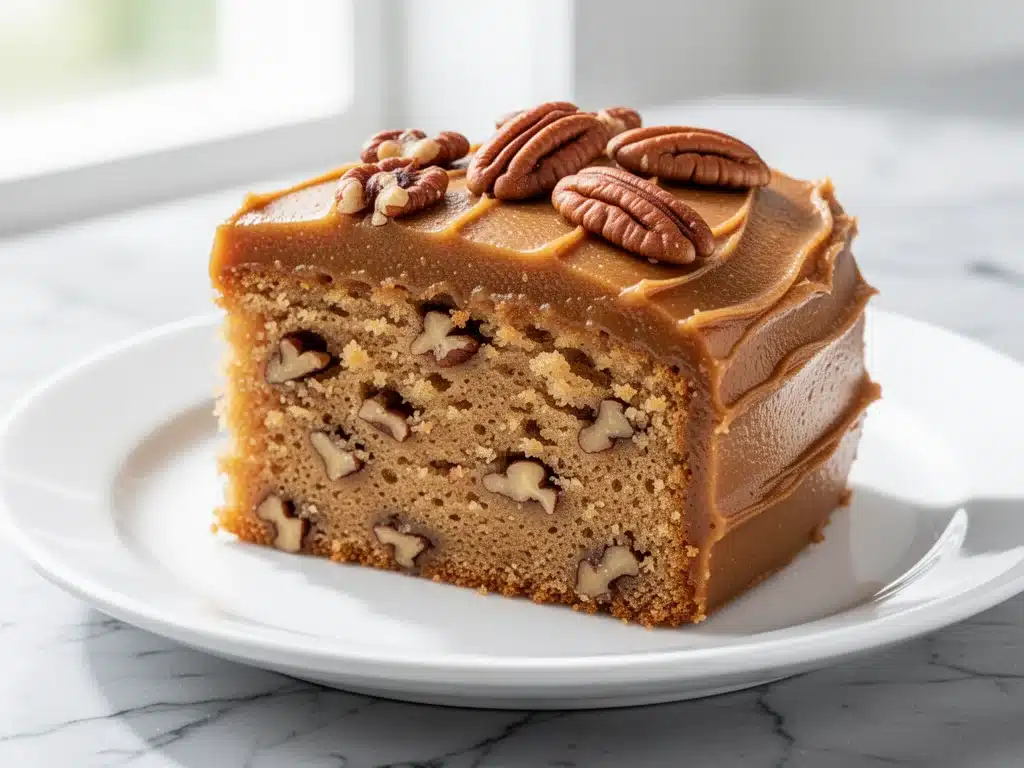
I still remember the exact moment I knew this butter pecan cake was different. It was my brother’s wedding reception, and I was standing near the dessert table, trying to look casual while secretly judging every slice of cake on display. There was the towering red velvet, the overly complicated lemon drizzle, and the standard box-mix yellow cake that everyone ignored. Then I saw it: a modest, golden-brown layer cake sitting on a lazy Susan. I took one bite, and it literally melted on my tongue. No dry crumbs, no heavy sugar crust, just pure, toasted pecan flavor and buttery softness.
That cake haunted me. For weeks, I tried to recreate it using every butter pecan recipe I could find online. Some were too dense, tasting more like a cornbread than a cake. Others were so sweet they made my teeth ache. I burned two batches of pecans because I wasn’t paying attention, filling my kitchen with smoke and disappointment. But after about ten attempts, I finally cracked the code. The secret isn’t in fancy techniques or expensive ingredients. It’s in the toasting of the nuts and the temperature of your butter.
This melt-in-your-mouth butter pecan cake is my answer to that wedding reception moment. It’s the kind of dessert that feels luxurious and special, perfect for birthdays, anniversaries, or just because you want something beautiful on your coffee table. I’ve made this for holidays, potlucks, and quiet Sunday afternoons. Every single time, people ask for the recipe. And every single time, they’re surprised by how easy it is to make from scratch. If you’ve ever wanted to bake a cake that tastes like a bakery masterpiece but doesn’t require a degree in pastry arts, this is it.
Why You’ll Love This Recipe
There are plenty of cakes out there, but this butter pecan version has earned a permanent spot in my regular rotation. Here’s why it keeps coming out of my oven:
It’s Actually Moist — I don’t say this lightly. Most homemade cakes dry out by the next day. This one stays soft and tender for days. I’ve tested it up to four days later, and it still feels like it came out of the oven that morning. The buttermilk and sour cream do the heavy lifting here.
Zero Fancy Equipment Needed — You don’t need a stand mixer if you don’t want one. A hand mixer or even a strong whisk and elbow grease will work fine. I’ve made this in small apartments with tiny kitchens, and it works perfectly.
Smells Like Heaven — The moment those pecans toast in the butter, your house will smell like a high-end bakery. My neighbors have actually knocked on my door asking what I’m baking. It’s that good.
Perfect for Beginners — This recipe is forgiving. If you slightly overmix the batter, it won’t collapse. If you bake it five minutes too long, it’s still edible (though not ideal). It’s a confidence-building recipe for anyone who’s intimidated by baking.
Make-Ahead Friendly — You can bake the layers a day ahead, wrap them tightly, and frost them the next day. This is a lifesaver for party planning because you’re not stressed on the day of the event.
Real talk? This cake is my go-to when I need to impress without trying too hard. It feels elegant, tastes incredible, and leaves you with plenty of leftovers for breakfast (yes, really).
Ingredients You’ll Need
Here’s the best part: you probably have most of these ingredients in your pantry or fridge already. This isn’t a recipe that requires a special trip to three different specialty stores.
For the Cake Batter
Unsalted Butter (1 cup / 226g) — Softened to room temperature. This is crucial. If your butter is cold, it won’t cream properly with the sugar, and your cake won’t be tender. I take mine out of the fridge about an hour before I start. If I’m in a rush, I microwave it for 5-second bursts until it yields to gentle pressure.
Granulated Sugar (1 ½ cups / 300g) — Standard white sugar. Don’t try to substitute with brown sugar here; it will change the texture and make the cake too dense. We want light and fluffy.
Eggs (4 large) — Room temperature eggs are non-negotiable. Cold eggs can cause the butter to seize up when you add them. I set them in a bowl of warm water for 10 minutes if I forget to take them out earlier.
Vanilla Extract (2 teaspoons) — Use real vanilla, not imitation. The difference is noticeable in a delicate cake like this. I keep a bottle of Nielsen-Massey in my pantry.
All-Purpose Flour (2 ½ cups / 315g) — Spoon and level method. Don’t scoop directly from the bag, or you’ll pack in too much flour and get a dry cake. Spoon it into the measuring cup and level it off with a knife.
Baking Powder (2 teaspoons) — Check the expiration date! Old baking powder is the silent killer of cake rise. If it’s been sitting in your cupboard for two years, toss it and buy fresh.
Baking Soda (½ teaspoon) — Works with the buttermilk to help the cake rise and brown.
Salt (1 teaspoon) — Enhances the flavor of the butter and pecans. Don’t skip it.
Buttermilk (1 cup / 240ml) — Full-fat buttermilk is best. If you can’t find it, make your own by adding 1 tablespoon of lemon juice or white vinegar to 1 cup of milk. Let it sit for 5-10 minutes until it curdles slightly.
Sour Cream (½ cup / 120g) — This is the secret weapon for moisture. It adds tang and richness that milk alone can’t provide. Use full-fat, not low-fat.
For the Butter Pecan Topping
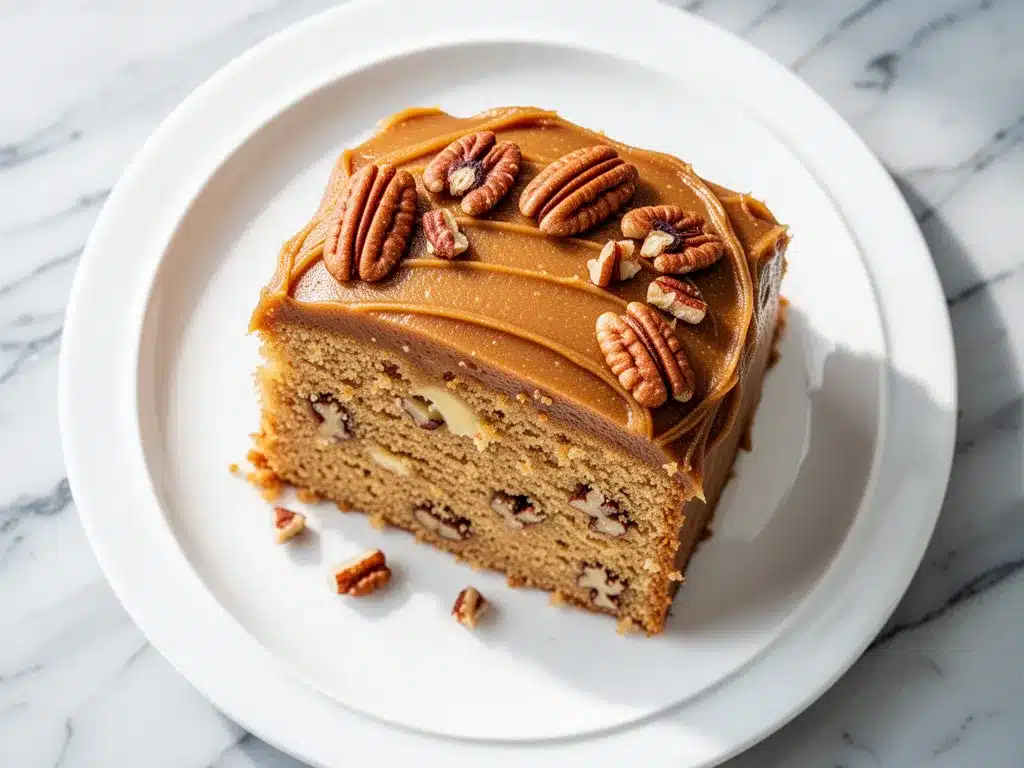
Pecans (2 cups / 220g, chopped) — Look for pecan halves or pieces. Avoid the tiny broken bits if you can help it; you want visible chunks of nut in every bite. Toasting them is the most important step.
Butter (¼ cup / 57g) — For toasting the pecans. Salted or unsalted works, but I prefer unsalted so I can control the saltiness.
Brown Sugar (½ cup / 100g) — Light or dark brown sugar both work. Dark gives a deeper molasses flavor, which pairs nicely with the butter.
Heavy Cream (2 tablespoons / 30ml) — Helps bind the topping and adds richness.
For the Cream Cheese Frosting
Cream Cheese (8 oz / 225g) — Full-fat, brick-style cream cheese. The tub kind is whipped and has too much air; it won’t hold up well. Let it soften completely.
Butter (½ cup / 113g) — Softened, same as the cake batter butter.
Powdered Sugar (3-4 cups / 360-480g) — Sifted to remove lumps. You might not need all of it, depending on how thick you like your frosting.
Vanilla Extract (1 teaspoon) — To tie all the flavors together.
Salt (¼ teaspoon) — Balances the sweetness.
Equipment Needed
You don’t need a fancy kitchen to make this cake. Here’s what I actually use:
Two 9-inch Round Cake Pans — Grease and flour them, or line the bottoms with parchment paper. Parchment is my preference because it guarantees the cake doesn’t stick. I cut circles out of parchment paper with a plate as a guide.
Mixing Bowls — One large bowl for dry ingredients, one medium for wet. I use stainless steel bowls because they’re durable and easy to clean.
Electric Mixer — Stand mixer or hand mixer. I use a hand mixer because it’s easier to clean, but a stand mixer is great if you’re making multiple batches.
Measuring Cups and Spoons — Dry and liquid sets. I’m old-school and prefer metal measuring spoons; they don’t bend.
Whisk — For mixing the dry ingredients together. Ensures the baking powder and soda are evenly distributed.
Spatula — A rubber spatula is essential for scraping down the sides of the bowl and folding in the batter gently.
Rack — A wire cooling rack. Never put hot cakes on a solid surface, or the bottom will get soggy from trapped steam.
Small Saucepan — For making the butter pecan topping. I use a small non-stick skillet.
Offset Spatula — For spreading the frosting evenly. It makes leveling the top of the cake so much easier than a regular spatula.
How to Make It: Step-by-Step
Alright, let’s make this! I’m walking you through exactly how I do it, including the little tricks I’ve picked up over the years.
Step 1: Prep Your Oven and Pans (5 minutes)
Preheat your oven to 350°F (175°C). This needs to be hot enough before the batter goes in. Grease your two 9-inch cake pans with butter or cooking spray, then dust with flour. Tap out the excess. For extra insurance, line the bottoms with parchment paper circles. This ensures your cakes come out perfectly every time, no matter how nervous you are.
Step 2: Toast the Pecans (10 minutes)
This is the flavor foundation. Melt the ¼ cup butter in a small saucepan over medium heat. Once it’s foamy, add the chopped pecans. Stir constantly for about 3-5 minutes until they smell nutty and turn a shade darker. Be careful not to burn them! Burnt pecans taste bitter and ruin the whole cake. Remove from heat and spread them on a plate to cool completely. While they cool, you’ll make the topping.
Step 3: Make the Butter Pecan Topping (5 minutes)
While the pecans are still warm, return them to the saucepan (off heat) or use a small bowl. Stir in the brown sugar and heavy cream until the pecans are evenly coated. The mixture will look like wet sand. Set this aside. It will harden slightly as it cools, creating those delicious crunchy clusters that define this cake.
Step 4: Mix Dry Ingredients (2 minutes)
In a medium bowl, whisk together the flour, baking powder, baking soda, and salt. Whisking ensures the leavening agents are evenly distributed, so you don’t get bitter bits of baking soda in your cake. Set aside.
Step 5: Cream Butter and Sugar (3-4 minutes)
In a large bowl, beat the softened butter and granulated sugar together on medium-high speed. This takes about 3-4 minutes. You’re looking for a pale, fluffy texture. Scrape down the sides of the bowl with a spatula halfway through. This step incorporates air, which helps the cake rise and stay light.
Step 6: Add Eggs and Vanilla (2 minutes)
Add the eggs one at a time, beating well after each addition. Add the vanilla extract. The mixture might look slightly curdled at this point—that’s okay. It will come together when you add the flour and buttermilk.
Step 7: Combine Wet and Dry (3 minutes)
Reduce mixer speed to low. Add half of the dry ingredients, mixing until just combined. Then add all the buttermilk and sour cream, mixing again. Finally, add the remaining dry ingredients. Mix until *just* combined. Do not overmix! Overmixing develops gluten, which makes the cake tough. It’s okay if there are a few tiny streaks of flour left.
Step 8: Fold in Pecans and Batter into Pans (2 minutes)
Gently fold in half of the toasted pecans into the batter. Divide the batter evenly between your two prepared cake pans. Smooth the tops with a spatula. Sprinkle the remaining pecans (and the topping mixture) on top of the batter. This creates a beautiful layered look.
Step 9: Bake (30-35 minutes)
Place the pans in the center of the oven. Bake for 30-35 minutes. The cake is done when a toothpick inserted into the center comes out clean or with a few moist crumbs (not wet batter). The edges should pull away slightly from the pan. Do not open the oven door too early, or the cakes might collapse.
Step 10: Cool Completely (1 hour)
Let the cakes cool in the pans for 10 minutes, then turn them out onto a wire rack to cool completely. This is the hardest part—waiting. But if you try to frost a warm cake, the frosting will melt and slide off. Trust me on this one.
Step 11: Make the Frosting (10 minutes)
Once cakes are cool, beat the softened cream cheese and butter together until smooth. Add vanilla and salt. Gradually add powdered sugar, one cup at a time, beating on low speed until incorporated, then high speed until fluffy. Add more sugar if you need it thicker.
Step 12: Assemble the Cake
Place one cake layer on your serving plate. Spread a generous layer of frosting on top. Sprinkle some of the butter pecan topping over the frosting. Add the second cake layer on top. Frost the top and sides of the cake. Decorate with remaining pecans. Slice and enjoy!
Expert Tips & Tricks
Here’s everything I’ve learned from making this dozens of times. These tips will save you from my mistakes.
Room Temperature Ingredients Are Key — I can’t stress this enough. Cold butter, cold eggs, and cold buttermilk will cause your batter to break. It sounds like a technical detail, but it’s the difference between a smooth, creamy batter and a curdled mess. Plan ahead and let everything sit out for an hour.
Don’t Skip the Toasting — Raw pecans taste flat. Toasting brings out their natural oils and deepens the flavor. It’s the single most important step for this cake. If you’re in a rush, you can toast them in the oven at 350°F for 8-10 minutes, but stovetop gives you more control.
Watch the Oven Like a Hawk — Every oven is different. Mine runs hot, so I check at 28 minutes. If your oven runs cold, it might take 38 minutes. Use the toothpick test, not just the timer.
Frosting Consistency — If your frosting is too thin, add more powdered sugar. If it’s too thick, add a teaspoon of milk or cream. You want it spreadable but sturdy enough to hold its shape.
Crumb Coat First — For a professional look, apply a thin layer of frosting to the whole cake first, chill it for 15 minutes, then apply the final layer. This traps loose crumbs and gives you a smooth finish.
Common Mistakes
- Cake is dry: You overbaked it or used too much flour. Spoon and level your flour, and check early.
- Cake sank in the middle: Underbaked, or you opened the oven door too early. Also, make sure your baking powder is fresh.
- Frosting is grainy: Powdered sugar wasn’t sifted, or the cream cheese wasn’t smooth enough. Beat the cream cheese and butter thoroughly before adding sugar.
Variations & Substitutions
Once you’ve nailed the basic version, here’s how you can mix it up. I’ve tried all of these.
Chocolate Butter Pecan — Add ½ cup cocoa powder to the dry ingredients. The chocolate and pecan combination is incredible. You’ll need a little more buttermilk to balance the cocoa.
Maple Pecan — Replace the vanilla extract with pure maple syrup. Use maple-flavored cream cheese frosting if you want to go all out. It’s perfect for autumn.
Gluten-Free Version — Use a 1:1 gluten-free flour blend. I’ve used Bob’s Red Mill and King Arthur, and both work well. Add ¼ teaspoon xanthan gum if your blend doesn’t include it.
Dairy-Free Option — Use vegan butter and dairy-free cream cheese. Use oat milk or coconut milk instead of buttermilk (add lemon juice to it). The texture will be slightly different but still delicious.
Mini Cakes — Divide the batter into 12 muffin cups for individual cakes. Bake for 18-20 minutes. Great for parties and portion control.
Other Nuts — Pecans are traditional, but you can substitute with walnuts or hazelnuts. Toast them the same way. Walnuts will give a slightly more bitter, earthy flavor.
Serving & Storage
How to Serve: This cake is beautiful on its own, but I like to serve it with a dollop of whipped cream or a scoop of vanilla ice cream. The contrast of cold ice cream and warm cake is divine. I also enjoy it with a cup of black coffee or tea in the afternoon.
Side Dishes: Since this is a rich dessert, pair it with something light. A simple fruit salad or a few fresh berries cut through the sweetness beautifully.
Storage Instructions:
- Room Temperature: Store covered at room temperature for up to 2 days. The butter pecan topping might soften slightly, but it’s still good.
- Refrigerator: Store in an airtight container in the fridge for up to 5 days. The frosting will firm up, so let it sit out for 15 minutes before eating. This is my preference for longer storage because of the cream cheese.
- Freezer: You can freeze the unfrosted cake layers for up to 3 months. Wrap tightly in plastic wrap and then foil. Thaw overnight in the fridge before frosting. The frosting does not freeze well; make it fresh.
Pro Tip: If you have leftovers, store them in the fridge. This cake actually tastes better the next day as the flavors meld together. Just bring it to room temperature before serving for the best texture.
Nutrition Information
I’m not a nutritionist, but here’s the breakdown if you’re tracking. This is a rich dessert, so moderation is key.
Per Serving (based on 12 slices):
- Calories: 520
- Protein: 6g
- Carbs: 62g
- Fiber: 2g
- Sugar: 45g
- Fat: 28g
- Saturated Fat: 14g
- Cholesterol: 65mg
- Sodium: 320mg
What’s Good: The pecans provide healthy fats, protein, and fiber. It’s a more satisfying dessert than a plain sponge cake.
What to Know: It’s high in sugar and saturated fat due to the butter, cream, and frosting. If you’re watching your intake, a smaller slice with tea is a perfect treat.
Final Thoughts
So that’s my melt-in-your-mouth butter pecan cake! I’ve probably talked your ear off at this point, but when you make a recipe this often, you have a lot to say about it.
This cake has saved me more times than I can count. It’s my answer to “I need to bring something impressive to the party” or “I want to celebrate something special.” It’s reliable, delicious, and always gets compliments. My family loves it, and I love making it.
Make it yours! Try different nuts, change the frosting flavor, or add a drizzle of caramel. The best recipes are the ones you adapt to your tastes.
If you make this, drop a comment and let me know what you think! I love hearing how recipes turn out in your kitchen. And if something doesn’t work, tell me that too—I’m here to help troubleshoot.
Happy baking! And I hope your kitchen smells half as good as mine does right now.
Frequently Asked Questions
Can I use walnuts instead of pecans?
Absolutely. Walnuts work great, though they have a slightly more bitter flavor. I recommend toasting them the same way. If you’re not a fan of pecans, walnuts are a perfect substitute.
Why did my cake sink in the middle?
This usually happens if the oven was opened too early, the baking powder was old, or the cake wasn’t baked through. Make sure your oven is fully preheated and don’t open the door for the first 25 minutes. Also, check that your leavening agents are fresh.
Can I make this cake ahead of time?
Yes! Bake the layers a day ahead, wrap them tightly in plastic wrap, and store at room temperature. Make the frosting the day of or the night before (store frosting in the fridge). Assemble the cake the day you plan to serve it. This actually helps the layers settle and makes them easier to frost.
Can I use buttermilk powder?
Yes, you can make buttermilk using powder according to the package directions. It works just as well as fresh buttermilk. Just make sure you follow the water ratio correctly.
How do I store leftovers?
Store in an airtight container in the refrigerator for up to 5 days. The cream cheese frosting requires refrigeration. Let slices come to room temperature for 15-20 minutes before eating for the best texture and flavor.
Can I freeze the frosted cake?
I don’t recommend freezing the frosted cake. The cream cheese frosting can become grainy or watery when thawed. It’s better to freeze the unfrosted cake layers and frost them fresh when you’re ready to serve.
What kind of pan should I use?
Standard 9-inch round cake pans are best. You can use two 8-inch pans, but you’ll need to add 5-7 minutes to the baking time. Do not use glass pans unless you reduce the oven temperature by 25°F, as glass retains heat differently.
Pin This Recipe!
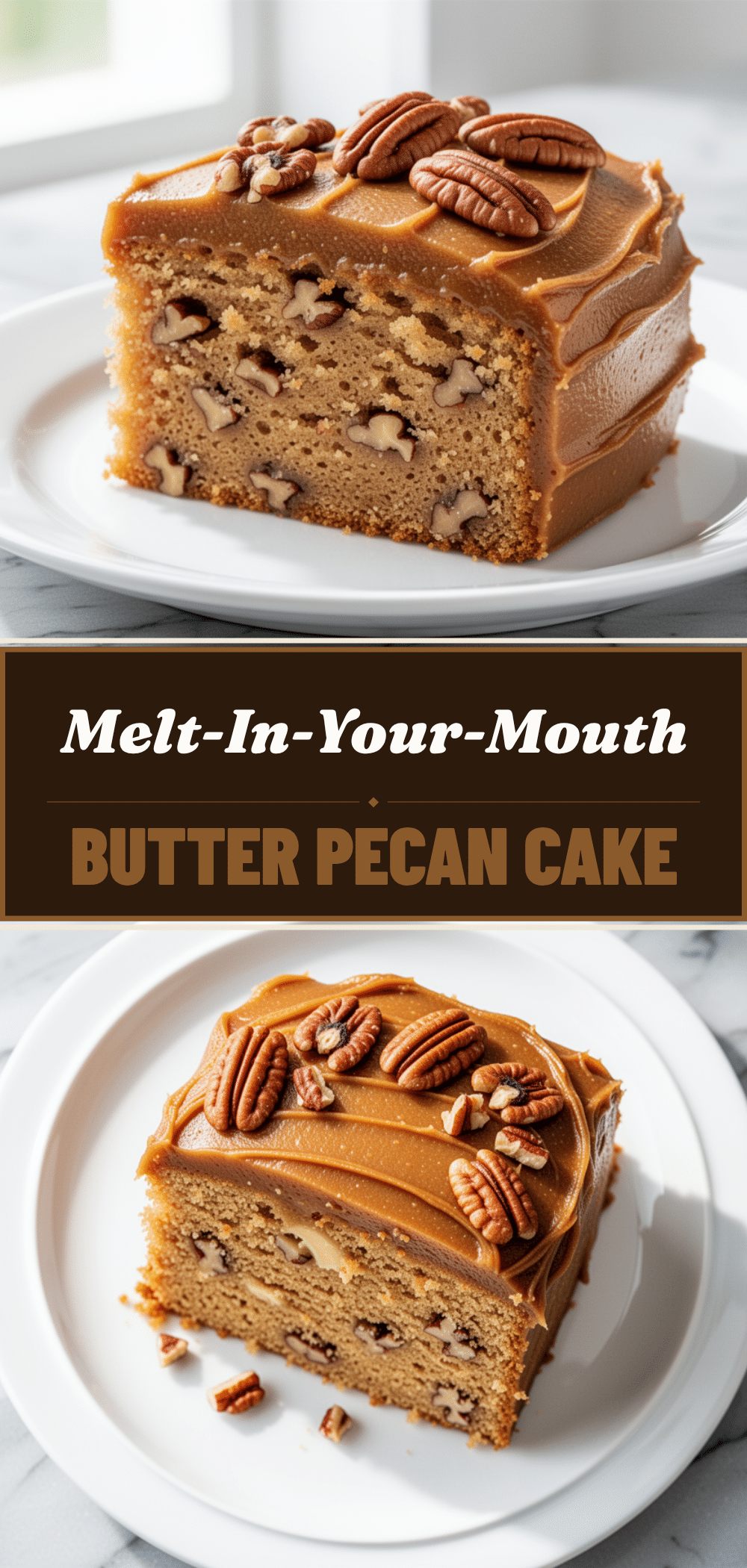
Melt-in-Your-Mouth Butter Pecan Cake
- Total Time: 1 hour 5 minutes
- Yield: 12 servings 1x
Description
A moist, tender butter pecan cake with a rich cream cheese frosting and toasted pecan topping. This easy-to-make dessert stays soft for days and is perfect for beginners.
Ingredients
- 1 cup (226g) unsalted butter, softened
- 1 ½ cups (300g) granulated sugar
- 4 large eggs, room temperature
- 2 teaspoons vanilla extract
- 2 ½ cups (315g) all-purpose flour
- 2 teaspoons baking powder
- ½ teaspoon baking soda
- 1 teaspoon salt
- 1 cup (240ml) buttermilk
- ½ cup (120g) sour cream
- 2 cups (220g) pecans, chopped
- ¼ cup (57g) butter (for toasting)
- ½ cup (100g) brown sugar
- 2 tablespoons heavy cream
- 8 oz (225g) cream cheese, softened
- ½ cup (113g) butter, softened (for frosting)
- 3–4 cups (360-480g) powdered sugar
- 1 teaspoon vanilla extract (for frosting)
- ¼ teaspoon salt (for frosting)
Instructions
- Preheat oven to 350°F (175°C). Grease and flour two 9-inch round cake pans, lining bottoms with parchment paper.
- Melt ¼ cup butter in a small saucepan over medium heat. Add chopped pecans and toast for 3-5 minutes until fragrant and darker. Remove from heat and cool.
- While pecans cool, stir brown sugar and heavy cream into the warm pecans to create a topping mixture. Set aside.
- In a medium bowl, whisk together flour, baking powder, baking soda, and salt.
- In a large bowl, beat 1 cup softened butter and granulated sugar on medium-high speed for 3-4 minutes until pale and fluffy.
- Add eggs one at a time, beating well after each addition. Mix in 2 teaspoons vanilla extract.
- Reduce mixer speed to low. Add half the dry ingredients, then all the buttermilk and sour cream, mixing until combined. Add remaining dry ingredients and mix until just combined.
- Gently fold in half of the toasted pecans. Divide batter between prepared pans. Sprinkle remaining pecans and topping mixture over the batter.
- Bake for 30-35 minutes until a toothpick inserted in the center comes out clean. Cool in pans for 10 minutes, then turn out onto a wire rack to cool completely.
- Beat 8 oz cream cheese and ½ cup softened butter until smooth. Add 1 teaspoon vanilla and ¼ teaspoon salt. Gradually add powdered sugar, beating until fluffy.
- Place one cake layer on a plate, spread frosting, sprinkle with topping, add second layer, and frost top and sides. Decorate with remaining pecans.
Notes
Ensure all ingredients are at room temperature for best results. Do not overmix the batter to avoid a tough cake. The cake stays moist for up to four days if stored properly. For a professional finish, apply a crumb coat of frosting and chill before the final layer.
- Prep Time: 30 minutes
- Cook Time: 35 minutes
- Category: Dessert
- Cuisine: American
Nutrition
- Serving Size: 1 slice
- Calories: 520
- Sugar: 45
- Sodium: 320
- Fat: 28
- Saturated Fat: 14
- Carbohydrates: 62
- Fiber: 2
- Protein: 6
Keywords: butter pecan cake, cream cheese frosting, moist cake, easy baking, dessert recipe, pecan topping